As a reporter on assignment, I recently travelled to three Greater Bay Area (GBA) cities in one day. I had lunch in a new restaurant in Macao, then drove across the border to Zhuhai’s Beishan Village, before finally heading to Hong Kong for an indie music festival organised by the Hong Kong promoter Chris B. That day, I had unknowingly become the poster child of the ideal GBA cross-border lifestyle.
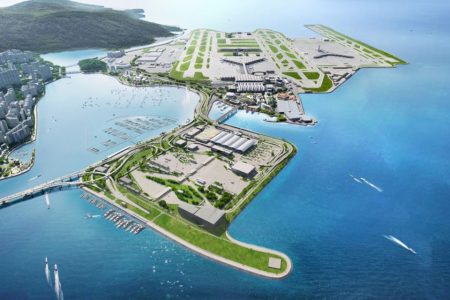
Outside of work, weekend trips driving into Hengqin and Zhuhai for something as frivolous as a meal or for cheaper groceries have become ingrained in my family’s routine. Since the opening of the Hong Kong-Zhuhai-Macao Bridge (HZMB), Hong Kong has no longer been a city across the muddy waters of the estuary that I visit once a year. Other GBA cities nearby are now equally feasible and appealing options for a weekend trip away.
[See more: Here’s a guide to the ‘other’ Greater Bay Area cities]
Yet, it was through these increased sojourns into Macao’s neighbouring cities that I realised how little we knew about each other. I’ve been surprised by the amount of Hong Kongers who have never taken the HZMB to Macao. Some have expressed genuine curiosity over the type of ID I use to enter the mainland, and wondered whether I required a visa to work in their city. More than one Shenzhen native expressed surprise at my ability to speak Mandarin upon finding out I was from Macao. And how much do I know about our GBA neighbours outside of their restaurants and shopping centres?
[See more: “My life changed completely in Hong Kong”: In conversation with comedian Jordan Leung]
Yes, the GBA is slowly but surely becoming more integrated through the national government’s ambitious policies, and true, many of us share the Cantonese and Mandarin languages, but is it wishful thinking that 11 distinct cities encompassing a vast population of 87 million could feel a sense of cultural identity within our lifetimes?
Top-down success in the Greater Bay Area
Policymakers have a grand vision: to transform the GBA into a globally influential integrated economic zone and innovation hub by 2035. The region’s GDP is expected to exceed 15 trillion yuan in 2025 (surpassing that of countries like South Korea and Australia) and an announcement was made last month that half of China’s six cities with GDP exceeding three trillion yuan are located within the GBA.
[See more: GBA travel boom: Guangzhou and Zhuhai drive tourism rebound and regional integration]
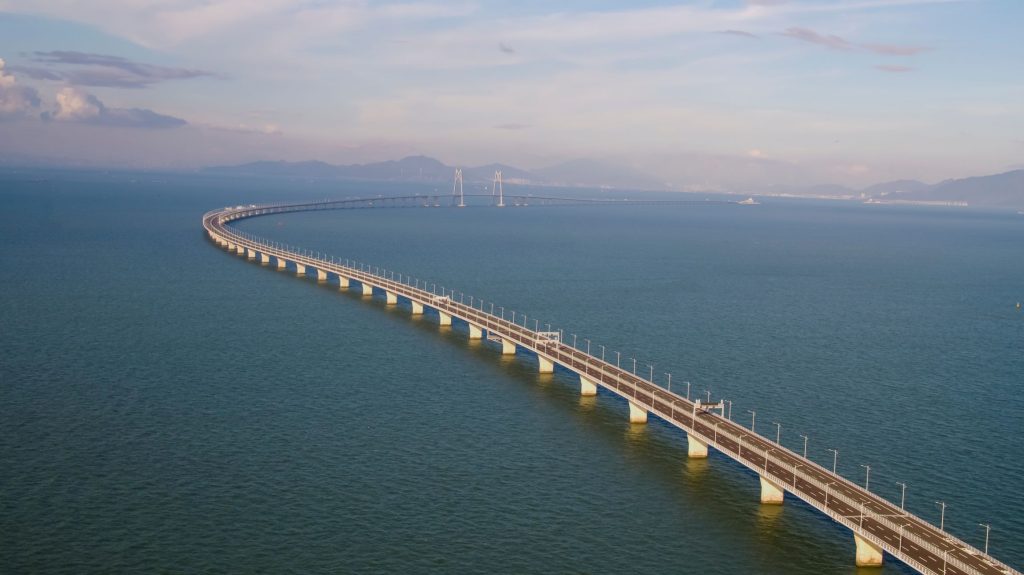
Each of the area’s 11 cities have their functions. Hong Kong and Shenzhen drive global finance and innovation, Guangzhou acts as an international gateway city, while manufacturing hubs like Foshan, Dongguan, Jiangmen, Zhaoqing and Huizhou form the region’s industrial backbone. Macao focuses on tourism diversification with Zhuhai’s support, while Zhongshan serves as a critical bridge connecting the east and west banks of the Pearl River.
All 11 cities are being connected through physical infrastructure like railways, bridges and ports, with aligned rules and regulations to allow for seamless movement.
The central government’s ambitious aims of creating a “one-hour living circle” are also coming into fruition – for instance, the Shenzhen-Zhongshan Link, a 24 km bridge, has cut travel time between Shenzhen and Zhongshan by more than half. The high-speed rail journey from Shenzhen Futian to Hong Kong West Kowloon station takes just 13 to 15 minutes, while Hengqin, a special economic zone of Zhuhai, is just a two-minute ride on the Light Rapid Transit line from Macao. Three separate major high-speed railway routes now pass through Huizhou and Zhaoqing to connect to other GBA cities like Foshan and Guangzhou.
[See more: The Shenzhen-Zhuhai road-rail link project is being fast-tracked]
There have also been many concrete steps taken toward greater integration of the SARs into the rest of the GBA. Since September of last year, Macao students that live in Hengqin can board shuttle buses that take them across the border to schools in Macao. Hong Kong and Macao residents can now conveniently open businesses, register property, or pay taxes in Guangdong, while professional licenses for jobs such as lawyers, doctors and architects are now recognised in the mainland.
It is undeniable that growing infrastructural and legal links are uniting the GBA with admirable speed, but how does this translate into daily lived experience?
How do you identify?
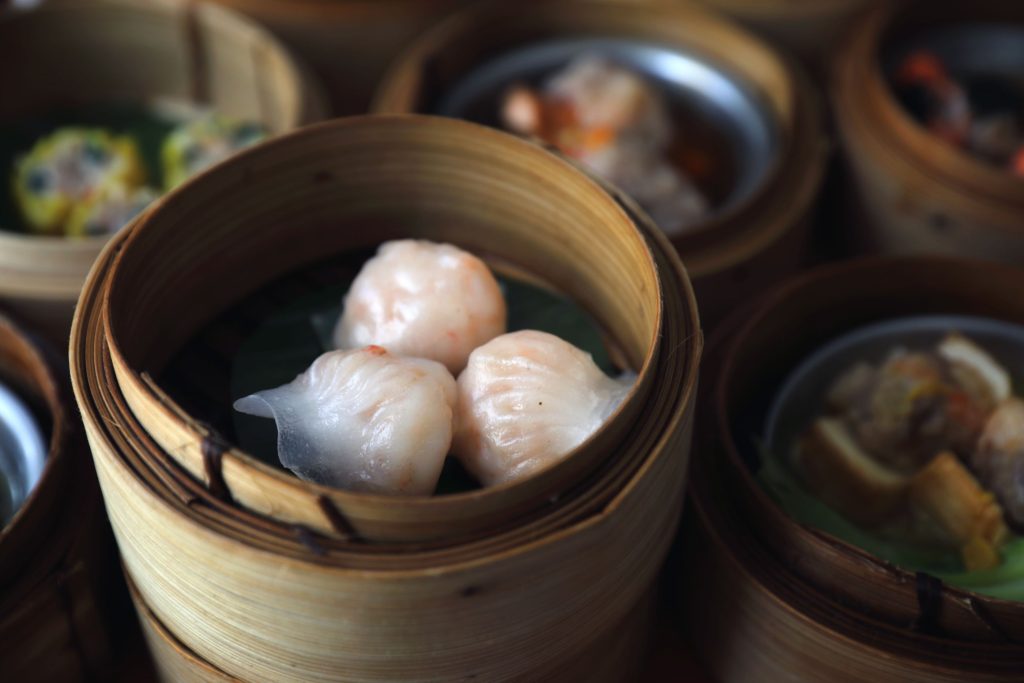
In terms of the Greater Bay Area, the success of the government’s policies and time itself are intrinsic to the formation of a tangible regional cultural identity across 11 cities. I have noticed this particularly from speaking with various GBA residents, since their professional and economic circumstances strongly influence their perceptions on whether a GBA identity can cohere. Of course, many cite Lingnan culture, food, and language as commonalities when asked whether they think a Greater Bay Area cultural identity exists, but they are often shared as cultural givens that aren’t particularly personal.
Business owner Yangyang, who describes herself as a “second-generation Shenzhen native”, is the founder of the city’s iconic underground club Oil. When asked what she thinks the general commonalities between the GBA cities are, she jokingly says “watching TVB dramas” before acknowledging that we all share “a common dialect and cultural background.” Not much has changed in her own travelling habits around the GBA, and neither does she pay particular attention to news from other GBA cities since the implementation of the central government’s assimilation policies. The main change she’s observed, however, is that more Hongkongers cross the border for leisure purposes, including for a night at her club.
[See more: An oasis of sound: How Shenzhen’s Oil Club is fuelling China’s underground club scene]
Chan Yat Man, a DJ and founder of the club Gum in Guangzhou, has lived in Hong Kong, Shenzhen and Guangzhou. Chan acknowledges that his experiences technically make him an example of a “Greater Bay Area person,” but despite this, Chan identifies strongly as a Hongkonger. “Personally, I think the term ‘Greater Bay Area’ is no different from ‘Pearl River Delta’ or ‘Hong Kong-Zhuhai-Macao’ to me. Whenever I hear those words, I just associate it with government policies.”
Russian-born and Hong Kong-based entrepreneur Ashley Dudarenok, who is a member of the Entrepreneurs Organization’s Greater Bay Area Metropolitan chapter, tells The Bay in an interview published last December that despite how well the GBA is flourishing in the finance and tech world, “it still remains a very much misunderstood concept” to the international community, usually bringing to mind America’s San Francisco Bay Area. In the interview, she emphasised the importance of telling “more compelling human stories” and “fostering cultural exchange” as ways to add human dimensions to the GBA’s heavily business-coded and policy-driven narrative.
[See more: GBA Voices: How Hong Kong entrepreneur Ashley Dudarenok learned to decode China]
As for the state of that cultural exchange, the assistant professor of cultural studies at the Chinese University of Hong Kong (CUHK), Dr Ashley Lee Wong, says “The scene is currently emerging with new developments, but they continue to be distinct. It’s hard to create broad generalisations.” Dr Wong also observes that global exchanges are more established within the field of contemporary art, while regional cultural scenes, such as within the Greater Bay Area, are “relatively small.”
Some people, however, are slowly starting to see themselves as part of a Greater Bay Area cross-border community. Jason Tam, executive director of tutoring centre Inspiring Education, commutes daily across the border from his native Macao to Hengqin to run his business. His self-described “dual identity” is not conflicting; rather, Tam finds that it enriches his sense of self. Significantly, Tam finds great value in following news from GBA cities like Zhuhai, Guangzhou, and Shenzhen because keeping up to date with regional information gives him a good understanding of the GBA’s developmental direction as a business owner.
Tam’s experience demonstrates that perhaps for some the Greater Bay Area identity may manifest itself as one that overlaps with another already existing local identity, but he does appear to be in the minority.
[See more: For the love of ink: Meet Zhuhai tattoo artists Beibei and Qiqi]
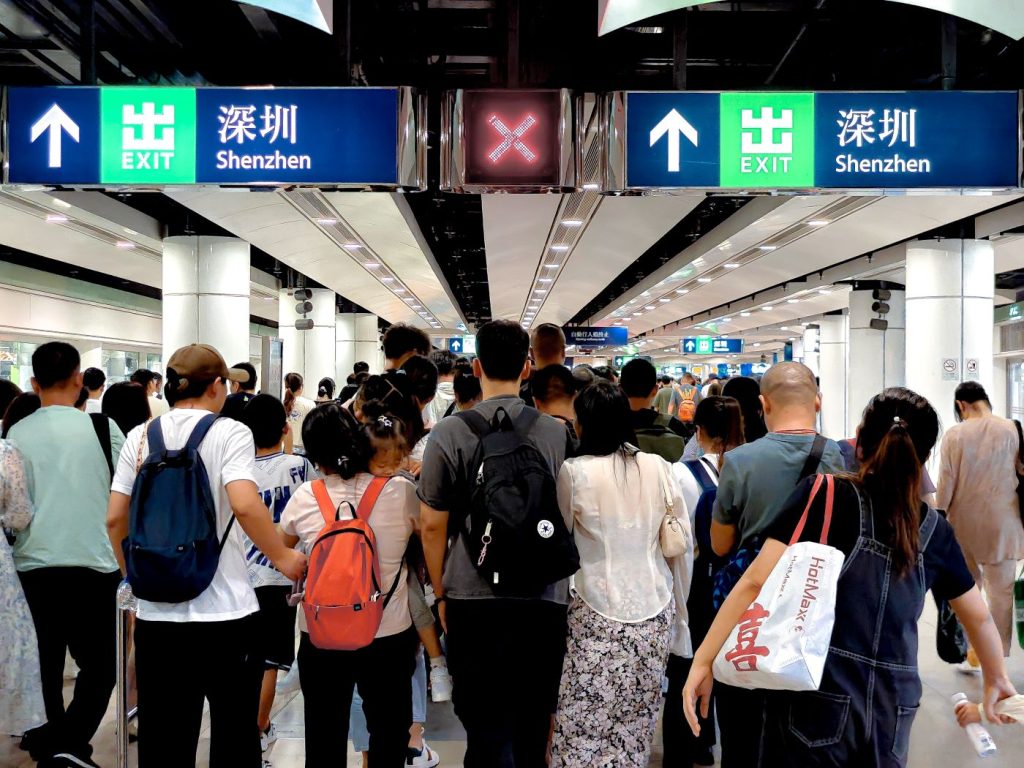
While entrepreneurs and business owners in the GBA have experienced more obvious changes from the policies, the emotional narrative is more nuanced. Cities in the GBA may be increasingly attractive places to occasionally visit and spend money, but home is still elsewhere, especially for your average person.
[See more: GBA Voices: Macao architect Christine Choi on doing business in the Greater Bay Area]
Ellie Lee (not her real name), a teacher living and working in Zhuhai, admits that although she has travelled to some cities in the GBA for tourism, she doesn’t find them particularly special and rarely revisits them. Similarly, Jack Ho (not his real name), who relocated from Hunan to Zhuhai for work, says that his trips to other cities in the GBA are mainly for tourism, never for work, and have not increased since the policies have been put in place. Neither identify with the “Greater Bay Area identity,” rather they identify with the city or province they grew up in.
For residents of Macao and Hong Kong, on the other hand, heading north into neighbouring GBA cities like Zhuhai and Shenzhen has become synonymous with leisure and cheaper spending.
CUHK’s Dr Wong shares that she knows many who simply head to mainland cities for “exhibitions, dinners and massages.” Meanwhile, Guangzhou native Lisa Chan (not her real name) who currently studies at a Macao university completely understands and relates to the weekend exodus that occurs in the SARs. “I often go to Zhuhai for meals, to shop, and to pick up packages; it’s very convenient due to its proximity.”
[See more: Indie forever: Chris B’s lifelong devotion to Hong Kong’s live music scene]
Notably, for those SAR residents who do choose to move into mainland GBA cities, their reasons echo those of the more casual travellers: significantly increased affordability and thus a higher quality of life.
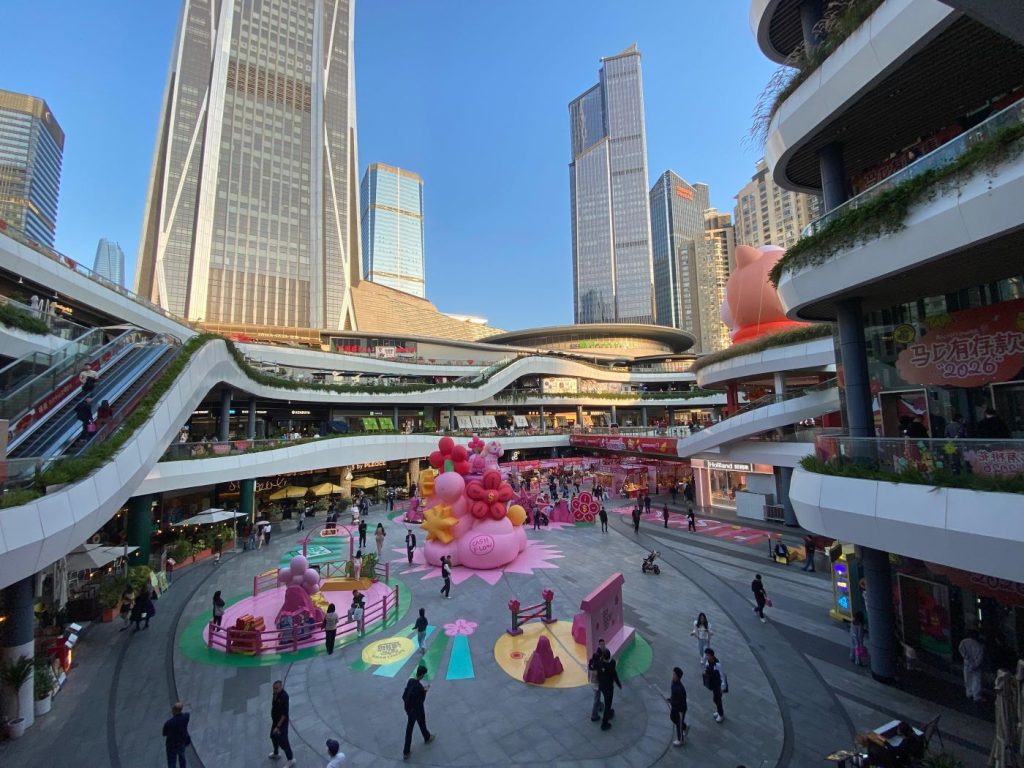
Statistics show that the number of SAR residents choosing to travel up north continues to rise. According to statistics from the HZMB, in the first quarter of this year alone, a record-breaking 1.03 million vehicles with Hong Kong and Macao license plates entered and exited through the Zhuhai Port, a significant increase of 17 percent year-on-year. Similarly, in a forecast published in January 2026, Asian Tourism Exchange Center estimated that the number of trips made by Hong Kong residents to the mainland this year will be approximately 99.5 million, an increase of 7 percent compared to last year.
[See more: Hou Kong Middle School’s Hengqin branch to open secondary section in September]
While a Macao study presented just last week by the Macau Management Association (MMA) found a 160 percent increase in interest among Macao residents to work in the mainland cities of the Greater Bay Area (GBA) compared to 2024, 65.4 percent of respondents are concerned about income disparity, and 50.6 percent admitted to being unfamiliar with the Greater Bay Area.
Similarly, another Macao study published by the Chinese Youth Advancement Association last December found that over 86 percent of Macao youths were interested in starting a business in Hengqin and more than 52 percent said they were open to living there, but disparities in salaries, shortages of high-quality education and healthcare resources, and the lack of living amenities aligned with Macao’s were factors hindering commitment. Loss of access to Western social media platforms and a “different lifestyle” are also cited as disincentives by some local young adults.
On other hand, Guangzhou native Chan does actively consider looking for jobs around the Greater Bay Area because of how “salaries are relatively higher than in other southern cities, and there is more international exchange and job opportunities.” Neither she nor other mainland residents that The Bay interviewed mention any lifestyle differences or cultural shifts as negative factors when considering relocation.
[See more: Macao businesses are being encouraged to move to Hengqin. Here’s how it’s going for three of them]
Cultural barriers to belonging?
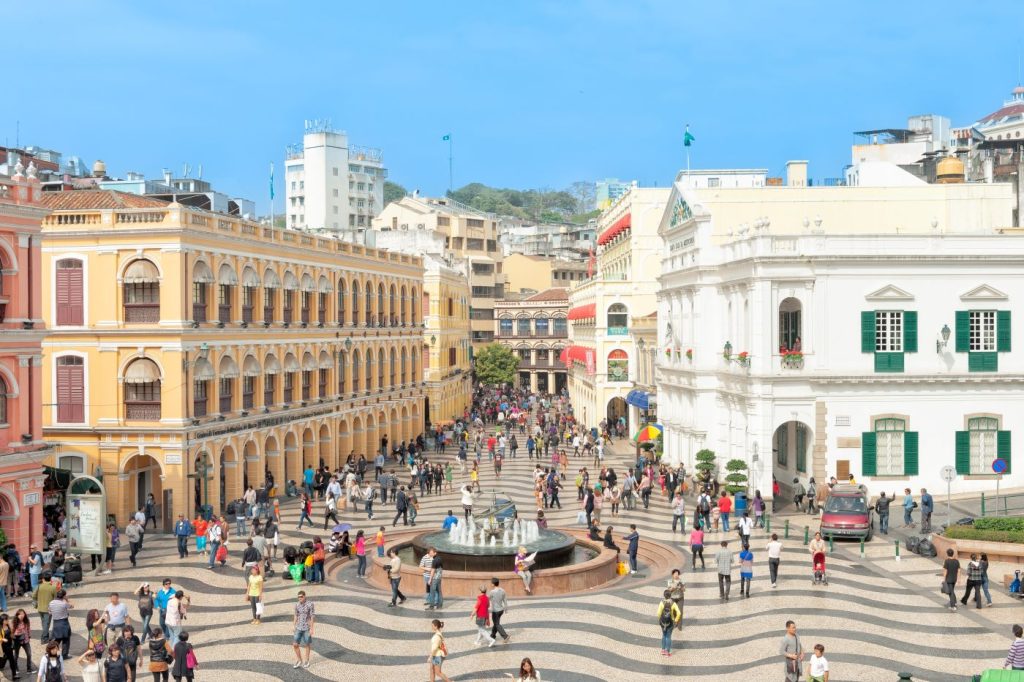
As post-colonial cities whose identities have been shaped by Western political and historical experiences which have been partially preserved by the “one country, two systems” framework, it is undeniable that cultural differences between mainland China and the SARs remain.
Even “small” things, like driving on the left side, speaking distinctive forms of Cantonese, different currencies and forms of identification, additional official languages and of course the physical act of crossing a hard border to enter the mainland contribute to shaping distinct local identities. As a result, some residents still identify strongly as “Hongkongers” or “Macao Chinese” rather than citizens of the GBA.
[See more: Meet Diwa’s Lam Wai Hong, who is nurturing the electronic music scene in Macao]
While it’s undeniable that people are moving and bridges are opening, a clear Greater Bay Area identity is yet to be fully formed. Dr. Wong argues that community formation and cultural exchange “take time and require space and opportunities for convergence, which also needs to happen organically and can’t always be planned top-down.”
In other words, we need time for policies to marinate and time for more organic movement across the region for people to develop collective memories and experiences to naturally identify with the Greater Bay Area. At this moment in time, it appears that many if not most people identify more with the GBA cities they’ve grown up in, even if we’re all becoming more and more familiar with them through work, casual meals out and weekend trips.