Tattoos have long been frowned upon in China, not the least because of their association with criminals and gangs. As far back as the Zhou Dynasty (1100-221 BC), the imperial authorities would mark out criminals by tattooing their faces in a practice known as “mo xing” (墨刑).
Traditionally, tattoos were also seen to be contrary to the Confucian ideal of respecting one’s body and by extension, one’s parents. As the ancient Chinese text, Classics of Filial Piety, points out, “our body, with its hair and skin, are received from our father and mother, and not daring to destroy or injure them is the beginning of family reverence”
While the Chinese attitude towards tattoos has relaxed in recent decades, especially among the younger generation, there is sometimes a lingering stigma attached to this form of body art in mainstream society.
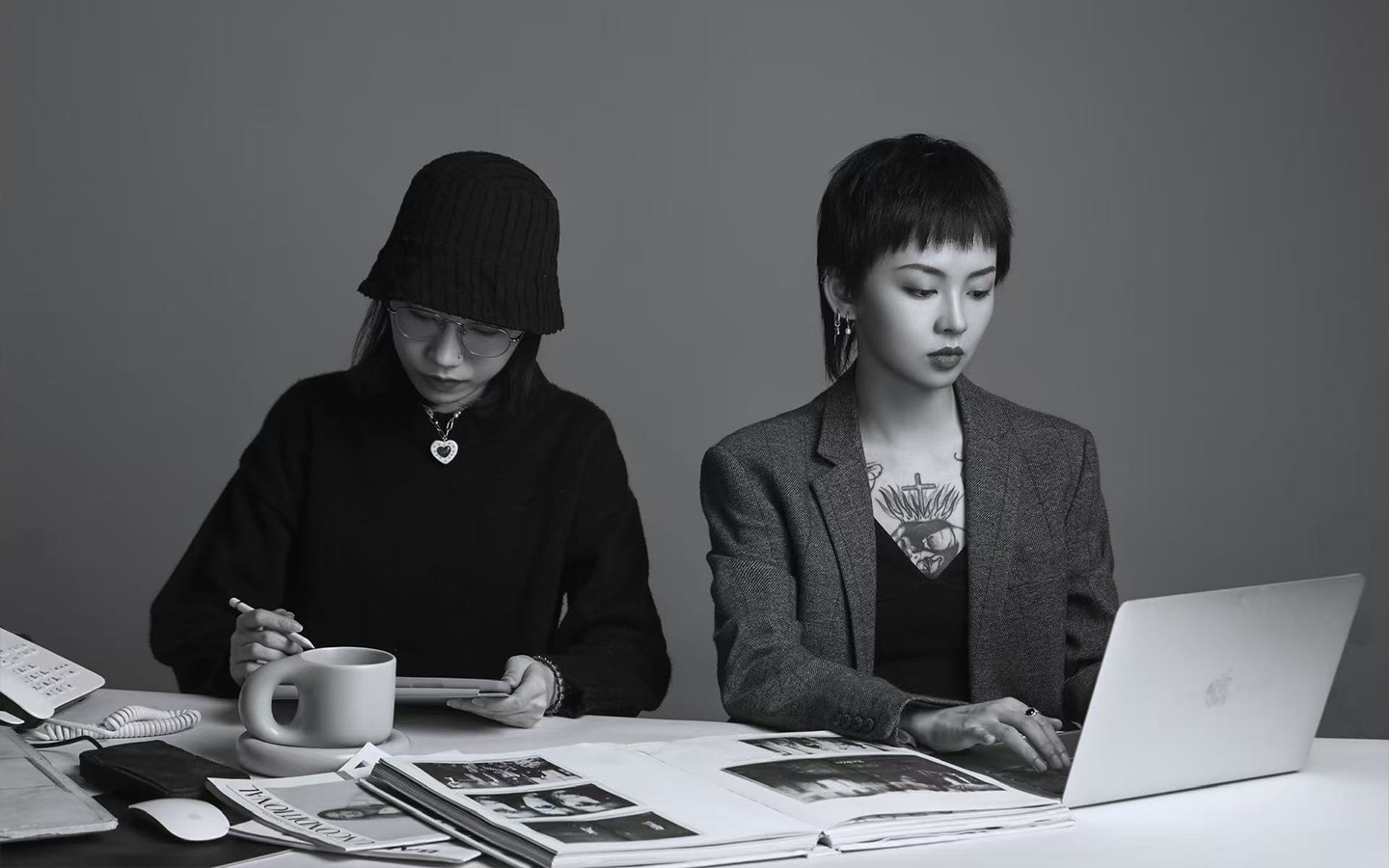
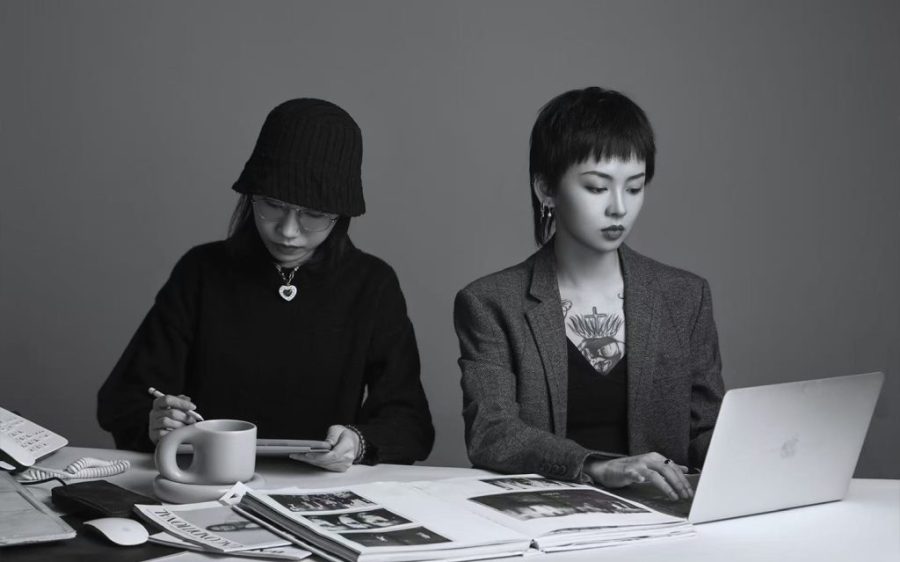
Millennials Beibei (北北) and Qiqi (七七) understand this better than most, as the two female friends are intimately involved in the tattoo business, operating their tattoo parlour Ebony Tattoo (乌木刺青) in the Greater Bay Area city of Zhuhai.
[See more: Body of work: These Macao entrepreneurs are inking a new era for tattoo culture]
“The public servant examinations you see [in China] don’t allow you to have tattoos,” explains Beibei, a native of Hubei province. “When you take the physical exam, you are required to take off your clothes, so they can examine if you have any tattoos.”
She adds that this no tattoo restriction extends to those wishing to join the police force, the army, as well as larger firms, which refuse to recruit workers with visible tattoos.
Meanwhile, Shunde native Qiqi says that tattoos remain polarising in Chinese society; some consider them cool, others regard body art to be indecent.
Within Beibei and Qiqi’s families, the attitude towards body art is more ambivalent. Qiqi’s family are of the view that “you can tattoo other people, but you can’t tattoo yourself.” By contrast, Bebei’s loved ones are more accommodating in that they are fine with her getting tattoos, so long as the designs are limited and not visible.
Familial connections
Despite the taboo surrounding body ink in China, Beibei and Qiqi remain passionate about their craft. For Beibei, her interest in tattoos emerged after a chance discussion with a family member when she was still a teenager.
The talk, which was centered around a scar on the family member’s body, ended up being Beibei’s initiation into the world of tattooing after the topic of inking was brought up when she asked about the aesthetics of the scar.
Beibei’s interest in tattoos blossomed thereafter, so much so that on her 20th birthday, she got her first tattoo on her wrist to commemorate the dates of a deceased family member’s birth and death.
[See more: I Ask, You Answer with Macao artist Alley Leong]
“At the time, what probably mattered the most to me was that the tattoo would remain on your skin forever.” Beibei says. “You could have what you considered to be important tattooed where you wanted and it would give you a certain level of strength or companionship.”
Qiqi’s love for tattoos was also inspired by a family member. “When I was little, I saw my brother had several tattoos on him and that got me interested,” she points out. “I would search for tattoo photos [using Weibo]…after looking at the images, I found that tattoos were actually quite stylish.”
The Shunde native would end up inscribing the phrase “human nature is evil” (人性本恶, rén xìng běn è) on her side waist as her first tattoo at age 18, after a traumatic family incident convinced her that this was the case.
A shared passion for body art
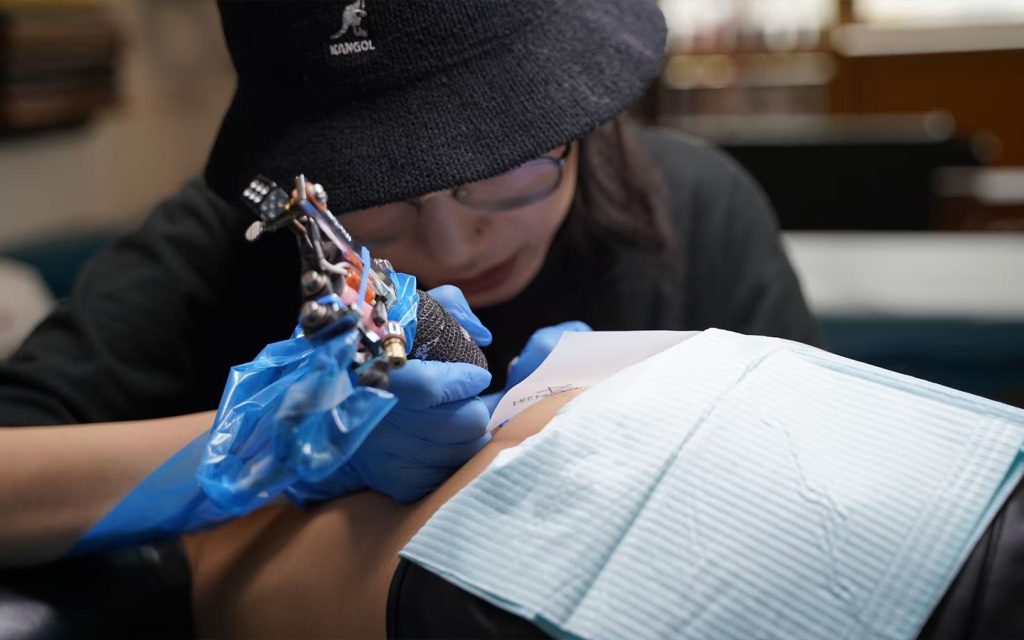
Beibei and Qiqi’s shared passion for tattoos eventually brought them together, with their paths crossing in 2016 when they apprenticed at a tattoo parlour in Zhuhai’s Beishan Village.
Early in their training, the pair spent most of their time drawing in order to learn the fundamentals in this area and accumulate enough experience. Afterward, their mentors provided them with group instruction, teaching them skills such as tuning a tattoo machine and tattooing techniques, before allowing them to experiment on fake practice skins.
“The amount of effort you put into the initial stages of learning to tattoo and the physical toll is extremely large” Bebei notes, adding that she and Qiqi were required to train well into the night during their apprenticeship. On top of this, the apprentice tattooists had to deal with the financial pressures of tuition, tattoo equipment and daily expenses such as accommodation and meals.
[See more: Beishan Village: A guide to Zhuhai’s coolest neighbourhood]
A year later, the two friends completed their training, working as tattoo artists in the Beishan store until 2018. That year would mark a turning point, as the owners of the Beishan parlour, which had around dozen team members, decided to downsize in response to a multi-fold increase in rent.
Not wanting to go their separate ways, Beibei and Qiqi, along with other like-minded tattoo artists from the Beishan store, began toying with the idea of creating their own platform that would allow them to continue pursuing their shared passion.
A platform for tattoo artists
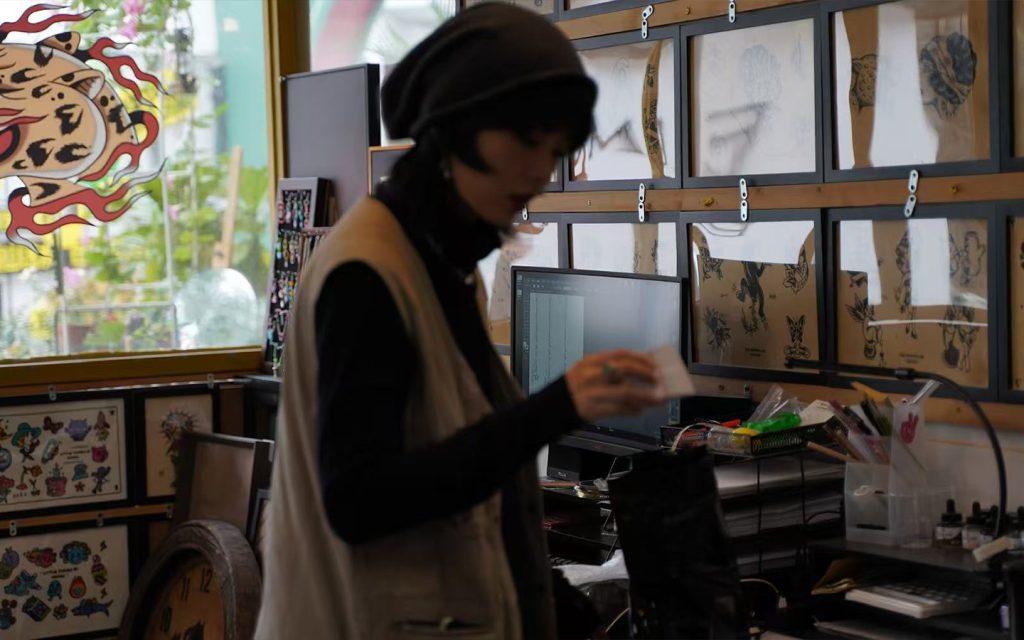
The platform would end up being called Ebony Tattoo. “I think it [the name] was [chosen] because we wanted our store to bring to mind something a little vintage,” Beibei notes.
Establishing the parlour was a rapid process. On the night that Beibei, Qiqi and the other tattooists were due to permanently depart from the Beishan store, they agreed over a meal to actualise their idea of setting up a store. The next day, the artists went to view a shop front in Zhuhai’s Aoyuan Square, ultimately settling on that very location and sorting out the paperwork the same evening.
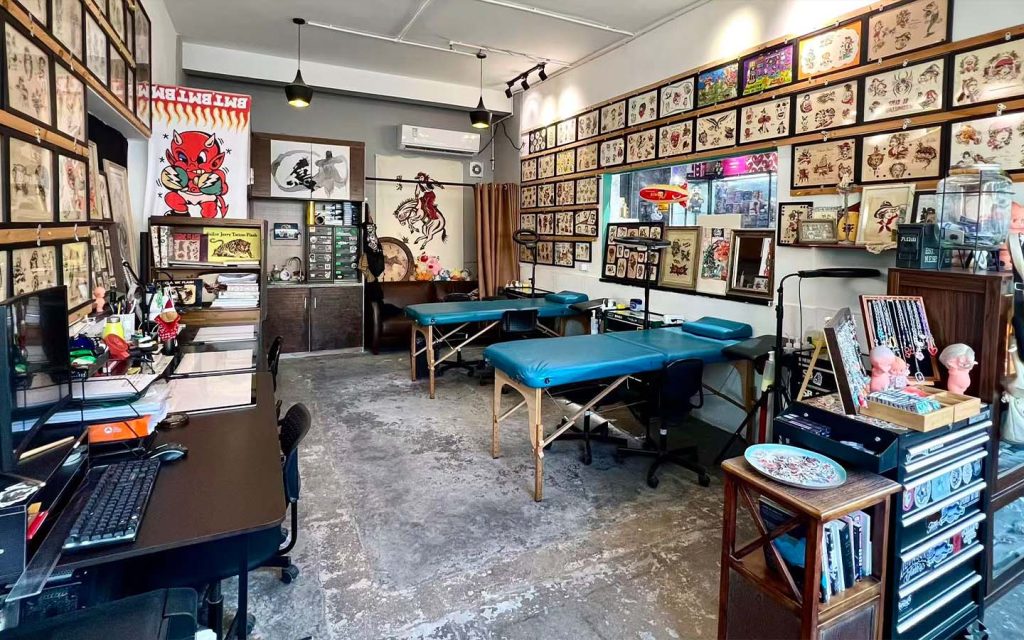
After operating in Aoyuan for a year, the tattoo artists decided to switch to their current location – Leshi (LETS) Cultural District.
“At the time Leshi was being developed into a kind of collective utopia [for culture]. The hope was to gather together those with ideas and creative young people,” Beibei explains. “We submitted our store’s CV [to the management] to indicate that we were a business in the cultural sector. We spoke, they were very supportive, and we moved in afterwards.”
Even though Ebony Tattoo’s early operations coincided with the outbreak of the Covid-19 pandemic in late 2019, the business was able to weather the storm thanks to support from the government.
[See more: South Korea will finally allow tattooing by non-medical professionals]
Still, Beibei acknowledges that the economic downturn in China in recent years has had a significant negative impact on the local tattooing industry, with those engaged in the sector still relatively low.
“It doesn’t matter if it’s Zhuhai or in places such as Guangzhou, Chengdu or Shanghai, where tattooing is popular, the industry is experiencing an overall slump,” she points out.
These days, Ebony Tattoo’s team consists of roughly six tattoo artists, who work based on an appointment system, charging for their service by the hour. Sometimes, the staff number can shift, as the parlour also partners up with other stores, inviting artists from different locations to collaborate.
“I can’t say the tattoo sector in Zhuhai has reached the level of competition” says Beibei, who juggles another job on top of her work as a tattoo artist. “I think in the tattooing world, it’s more characterised by peaceful exchange…[and] everyone learning from each other.”
Inking with principle
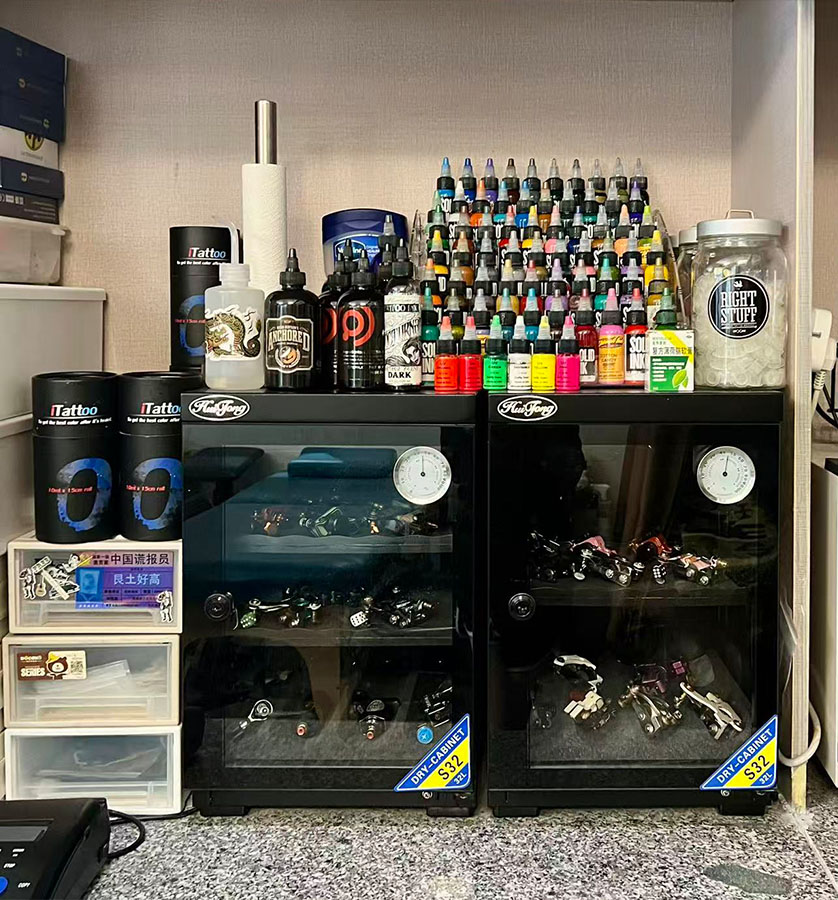
In the nearly 10 years since its establishment, Ebony Tattoo has served clients of all backgrounds and needs. Whereas some only wish to have a small letter or marking tattooed, which would only cost them between 400 to 500 yuan, others are seeking more elaborate designs that could cover an entire limb and set them back at tens of thousands of yuan or even more than 100,000 yuan.
Ebony Tattoo’s clientele also comes from various age groups, although Beibei points out that many of them tend to fall within the 20 to 35 year bracket. The store’s oldest customer so far has been in his late fifties. “He’s an independent musician. Not married and really laid back,” Beibei recalls.
Meanwhile, Qiqi vividly remembers one particularly memorable pair of love birds whose tattooing experience resulted in Ebony Tattoo implementing a special rule against couple tattoos.
“When I was working at my mentor’s [Beishan] store before, a couple came in to have each other’s names tattooed. The girl had the boy’s name tattooed, but the boy left before he could get her name tattooed,” Qiqi says. “The boy said he had something to do and would come back tomorrow, but he never did.”
Drawing from this experience, Beibei and Qiqi’s store declines to tattoo the names of couples, even though there have been requests.
The Zhuhai tattooists also have a policy of only using original designs and not recycling them once they have been tattooed on a client, who must be of legal age. Neither are the artists willing to do hateful tattoos or ones that feature superstitious symbols such as Southeast Asian Sak Yant or the third eye.
[See more: There’s a new official guide to living and working in Zhuhai]
“Before there was a client who wanted a Daoist image or symbol tattooed on them,” Qiqi notes. “We didn’t do it because we’re quite superstitious and we don’t dare to tattoo these.”
Says Beibei, “we don’t really understand these [beliefs], and we don’t want to randomly get involved in other people’s karma or do something of that sort, so we don’t dare do these types of tattoos.”
Speaking to Beibei and Qiqi, it becomes abundantly clear that they see tattoos as being much more than just skin deep creations. For the two friends, tattoos exist on a deeply profound and almost sacred plain, with their work representing meaningful and permanent manifestations of a person’s journey through life.
Nowhere is this better reflected than in the advice that Beibei gives to those looking to get their first tattoo
“We hope that they will do more homework and not just tattoo an image because it looked good in an online post,” she says. “We hope they will understand the style that they truly like and tattoo the theme they personally want. Only then can one really say they won’t have any regrets.”