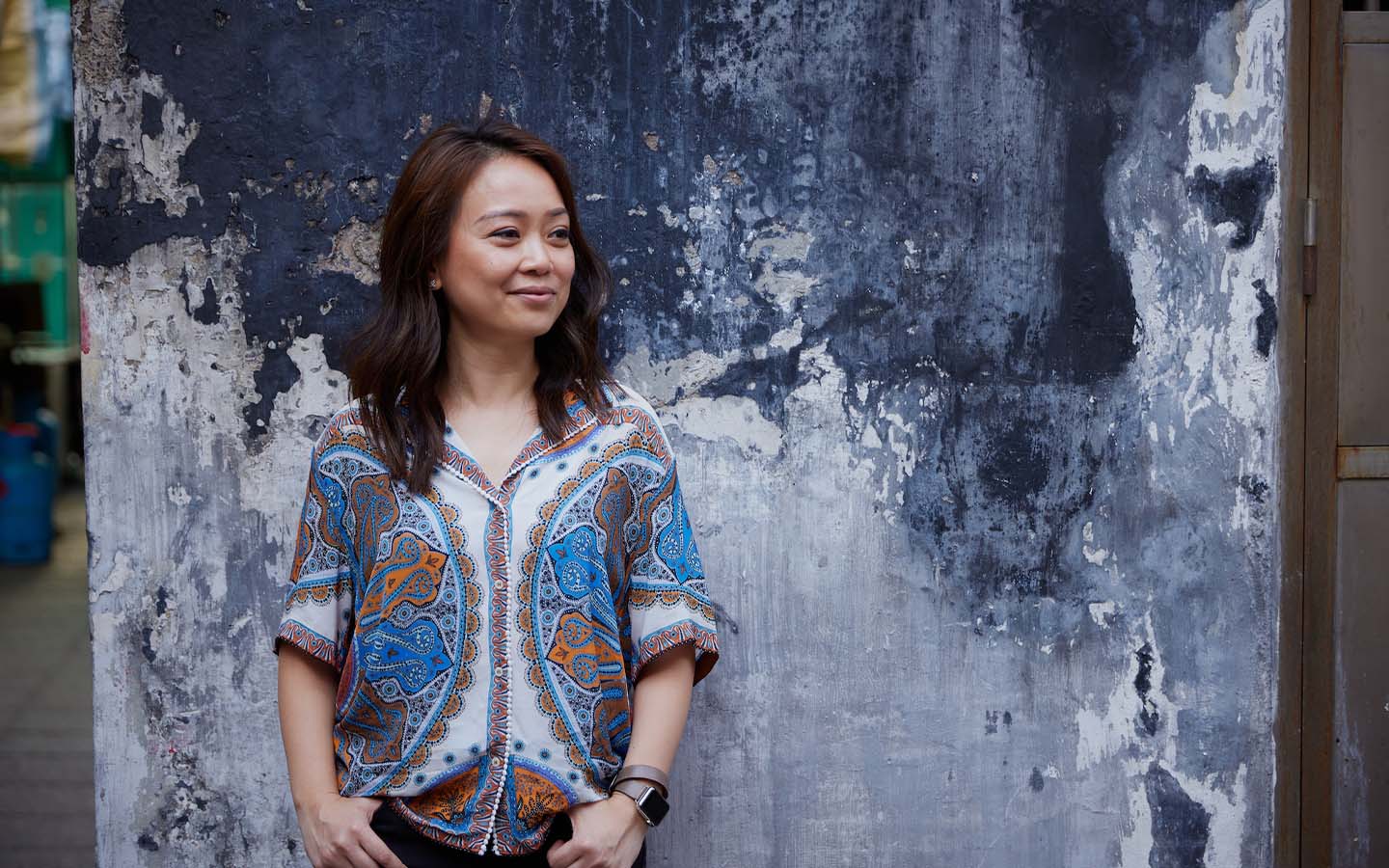
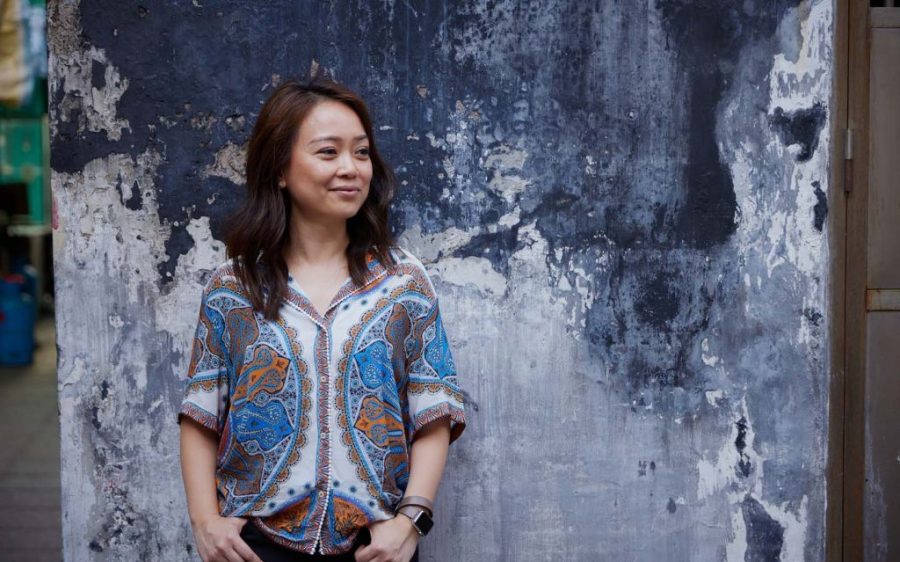
When Macao-born, Australia-raised architect Christine Choi and her husband, Jimmy Wardhana, first established their firm JWCC Architecture back in 2010, it was a small studio exclusively focused on residential interior projects.
In the 15 years since, JWCC has gradually evolved into what Choi describes as “a multi-disciplinary architectural practice” that now handles an array of projects relating to hospitality, as well as civic architecture such as pedestrian walkways, flyovers and public spaces. JWCC, Choi says, especially enjoys projects of the latter category, as it provides them with an opportunity to design and create architectural space for the local community.
Some of the JWCC’s most notable award-winning projects include the One Guia Hill luxury residential development, The Studio apartment complex and Fortuna Cafe located in the FIT Fortune Centre’s lobby.
[See more: GBA Voices: How Hong Kong entrepreneur Ashley Dudarenok learned to decode China]
“Currently, the majority of our projects are in Macao, but we are seeking to reach out into the Greater Bay Area [GBA] and beyond,” says Choi, who is a 40 Under 40 award recipient.
We spoke to the architect to find out more about her practice’s expansion into the GBA and to learn more about her views regarding the region’s development.
This interview has been edited for brevity and clarity
What GBA-related projects has JWCC been involved in?
Around seven or eight years ago, we did an architectural enhancement project in Hengqin, where we looked into how to enhance the architectural layout, but that was a very small role.
[See more: Over 80 percent of Macao youths are open to working in Hengqin, survey finds]
Recently, we won a design competition in Hengqin, which is a wetland tourist information centre. It’s still in a design stage, but that will be one of the first architectural projects we’ll be working on in Hengqin.
Have you recruited any talents from the GBA into JWCC?
In 2019, [the Hengqin government] had a policy where Macao architects could extend our architectural registration into Hengqin. We started this back in 2019 and then it was the Covid pandemic.
It was not until this year that we established a physical office and started to have our team extend into Hengqin. There’s only three [people in the Hengqin team at the moment]. We feel it’s best to set the foundation right and look forward to making further progress in our expansion.
[See more: Hong Kong-Shenzhen tech park eyes 90 percent occupancy by early 2026]
In terms of the policies, they are different. The legal regulations are different. Accounts and finance are different. The HR policies are different. We need to get everything right, so once we get that all right, we hope to see how the momentum picks up, and then we can move forward a bit further.
What has JWCC’s collaboration with mainland companies been like since your expansion into Hengqin?
I think it’s great. We have a lot of communication [with our mainland partners] and the direction is more clear for us now, especially because the identities between Macao architectural practice and Chinese architectural practice are very different.
In terms of scale, they [the mainland] have huge projects and they’re able to wrap up the production very quickly. In terms of Macao architects, we feel that our value lies between our communication with the external, because we are a more international city and we have different types of project topology. We also have the expertise when it comes to executing projects and leading the consultant team.
[See more: Guangdong sets out plan to drive Greater Bay Area integration]
We’re exploring how we can integrate both our values in terms of the architectural practices in China and Macao – either reaching outwards like going beyond the GBA, China and Macao, or helping those from the outside who want to start developing in China. We [in Macao] can be that bridge and it will be quite a strong team. We have started communicating with different practices and believe it’s going to go in a positive direction.
How has the rapid expansion of the GBA benefited your firm?
Throughout the years, I think that the increase in physical accessibility and transport accessibility allow us to travel across the Greater Bay very efficiently. Technology has also played a big role. We can now communicate online easier. The potential is great in terms of the talent pool and the potential of developing a greater project in innovation, sustainability and culture.
What are some of the challenges that you’ve faced in entering the GBA market?
When entering the GBA, you will be confronted with the same types of challenges faced when entering any new market. For example, you need to understand the local way of doing things and building a team that has a global vision, but is able to execute the project locally.
What’s one piece of advice you would give to an overseas firm that’s looking to get into the GBA?
You need to go in there and start talking to different companies and potential collaborators, and understand what they need. Then, you need to find a matching channel to bring your value into the Greater Bay Area because what you see as valuable in your country might not be valuable or may not be needed in the Greater Bay Area.
[See more: Here’s a guide to the ‘other’ Greater Bay Area cities]
Go into the different GBA cities, which includes the nine mainland cities, plus Hong Kong and Macao. Do a loop regularly to understand what the market needs, what the local needs are, and what potential value you can bring to the GBA. At the same time, you need to understand what you can bring out of the GBA and that will be of value to a lot of external places as well.
Is there a big language barrier for overseas firms hoping to establish a presence in the GBA?
Definitely and I can speak Chinese. I need to emphasise it’s not just the language. It’s the way of communication. You might understand everything your GBA clients say, but the message they portray might not be the message they want to say.
[See more: Top US economist: Hong Kong is positioned for ‘volcanic’ growth]
The communication style or the message that is brought across a meeting room can be perceived very differently if you don’t have that experience in communicating with them. That’s why I advise people to just go in and communicate more. Once they have the experience, they can really pick out what the client’s request is and then deliver.
Are there any GBA policies that have benefited your company?
Definitely. Being able to register in Hengqin is a big step – we can start bidding for projects and we can practice our professional practice in Hengqin, but that’s currently only limited to Hengqin. In the future, we hope to see this policy extended throughout the whole GBA. For example, if you register in the GBA, then you can practice all across the GBA. This is what we want to see on a professional level.
[See more: Foreign investors are flocking to Guangdong]
On the business level, there’s a lot of policies that came out in Hengqin that help local Macao businesses, especially young entrepreneurs, to set up their businesses. The authorities have policies in terms of tax and talent, so you can recruit talents through subsidies.
They also have government offices that help you establish and open your company very quickly. Everything can really be done online, or if you go into the government’s offices, you can set up your company very quickly. The process is so convenient that it helps to reduce a lot of stress.
Where do you see the GBA in 10 years?
I cannot predict so far, but even in just a few years, I believe it’s going to be a talent hub. I think it’s a very exciting area where a lot of talents can be grouped together.
What I see is everyone is now in the preparation stage. They’re excited, but they really haven’t thought much about it. Everyone is analysing and exploring what the potential is. Once we have some synergy, group together and start to develop some projects, that will attract a lot more talent, I feel. That will really bring out creativity, culture and the next phase of the GBA.
[See more: Guangdong claims 54 spots in China’s top 500 companies]
But now, I think everyone is on the preliminary exploration stage, researching and exploring what the potential is. I’m very excited, but I’m still yet to really pick up on a special project that we can work on, and that will be the next phase.
[See more: There’s a new official guide to living and working in Zhuhai]
Once that next phase has developed from the different parties, I will say it might even be an exponential curve in growth. You will attract so much more talent, investors and new types of businesses.
What are your hopes for architecture in the GBA moving forward?
How do we use space beyond just our normal daily function? It’s something that I want to see and I think the Greater Bay has great potential, as people don’t just inhabit buildings now, but they move beyond. That can be a park, a public space or it can be multi-functional. For example, when a park turns into an open-air cinema or when a bus station turns into a community hub. It’s how we bring multiple uses and add that extra dimension into the ordinary space.
This interview was produced in partnership with the Entrepreneurs Organization’s Greater Bay Area Metropolitan chapter.