
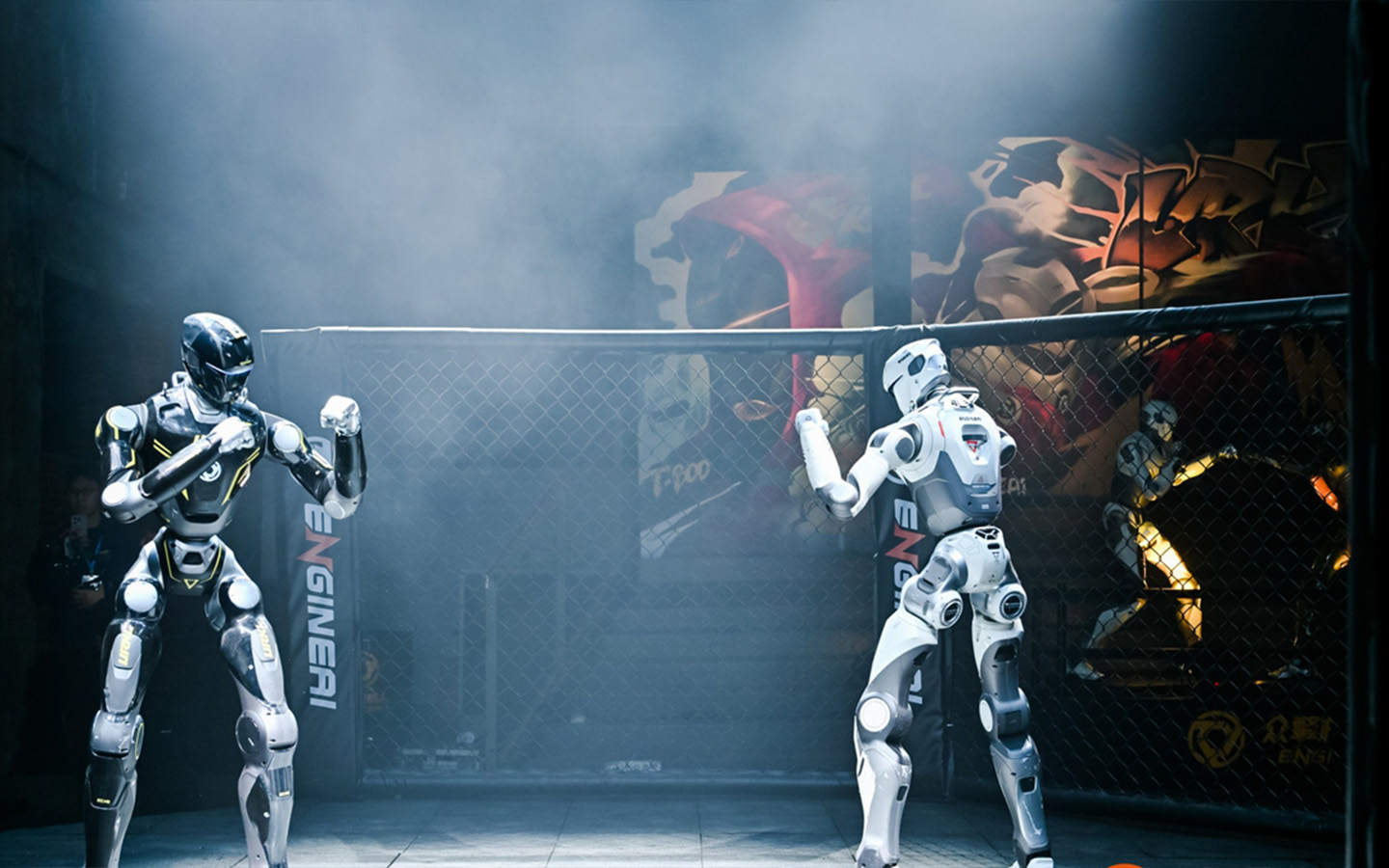
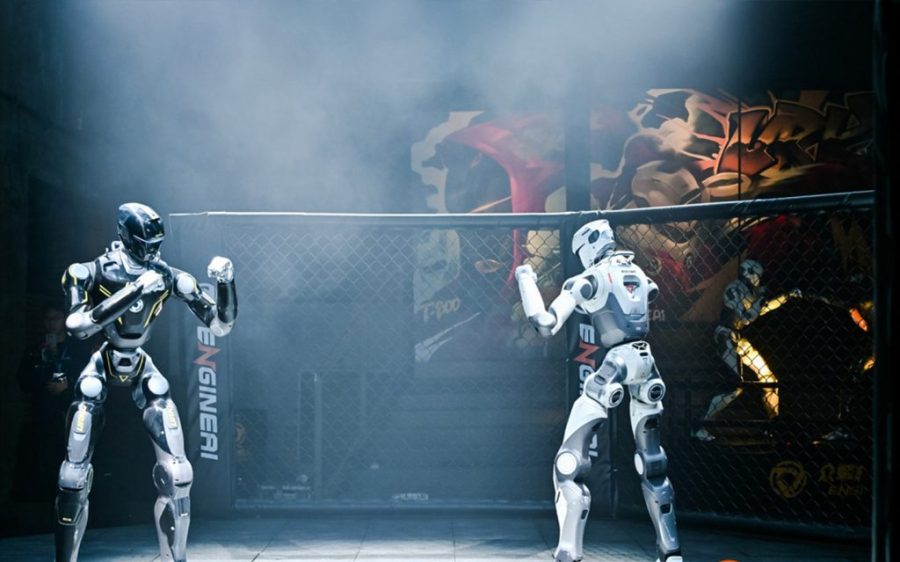
Shenzhen has become the launch pad for the world’s first humanoid robot free combat league, pitting domestically developed robots against each other in physical fights as China looks to fast-track real-world testing of embodied artificial intelligence (AI) and advanced robotics.
The Ultimate Robot Knockout Legend (URKL) 2026 season kicked off Monday and will run through December, with participating teams competing using T800 humanoid robots supplied free of charge by organiser EngineAI, the Global Times reports. Each robot is capable of complex kung fu movements, including 360-degree aerial rotations and sidekicks, and the winner will receive a gold championship belt worth 10 million yuan (US$1.44 million).
According to EngineAI, merging technology with competitive sports is a rising trend. The company said it hoped the new combat league would showcase the sector’s ingenuity and culture while attracting international interest. Forbes has described the T800 models – which are 173 centimetres tall and weigh 75 kilograms – as “the Arnold Schwarzenegger of humanoid robots” and “probably the strongest” in the world.
[See more: ‘Humanoid’ robots could soon become common in China, says Morgan Stanley]
Analysts told the Times that the URKL – and similar initiatives – would help raise public awareness around humanoid robots and could widen the range of situations they’re used in.
Beijing-based analyst Pan Helin said combat scenarios forced robots to operate under extreme conditions, testing motion control, dynamic balance and impact resistance in ways laboratory simulations could not. Tian Feng, former dean of SenseTime’s Intelligence Industry Research Institute, described robot combat as a high-pressure testing ground for key components, noting that these sorts of real-world trials could significantly shorten technology iteration cycles.
The country’s humanoid robotics sector has been growing in recent years, with the Chinese Institute of Electronics projecting the market could reach 870 billion yuan (US$125.8 billion) by 2030 in China alone. Future roles for the robots could include the likes of elderly companionship, infant care and patient rehabilitation, according to Tian.