
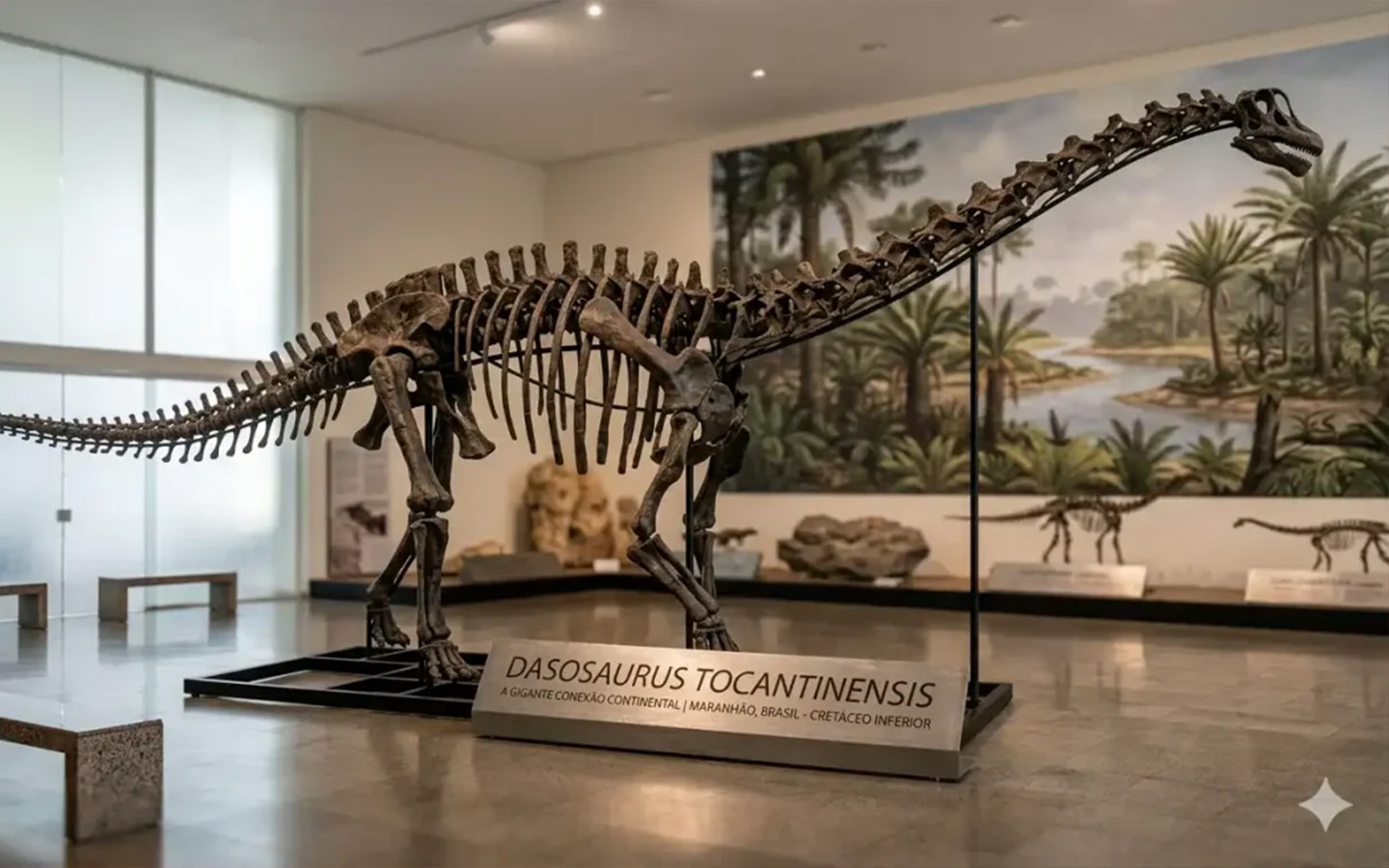
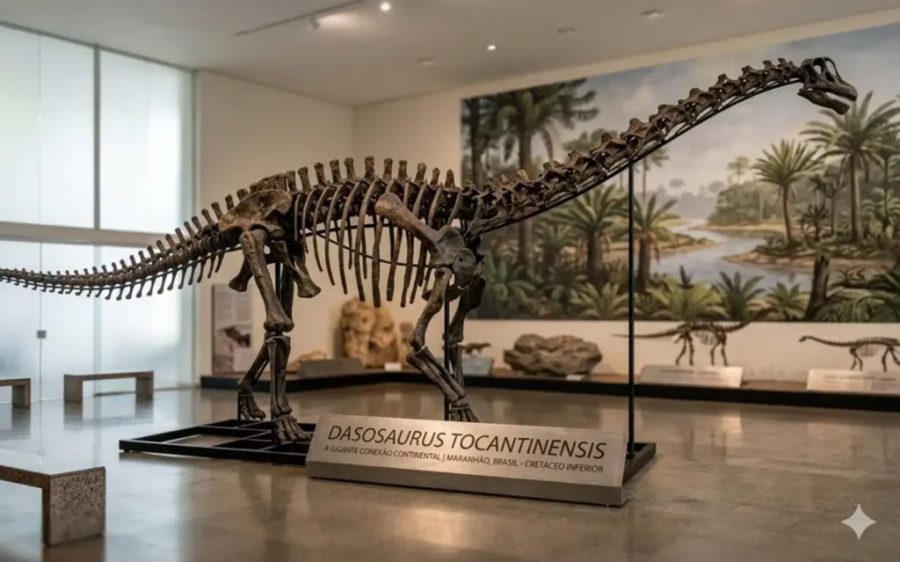
Brazilian scientists have identified a new species of giant dinosaur whose remains are helping to redraw the prehistoric map of how continents were once connected. The plant‑eating animal, named Dasosaurus tocantinensis, lived around 120 million years ago and ranks among the largest dinosaurs ever found in Brazil.
The fossils were uncovered in 2021 during infrastructure works near Davinópolis, in the northeastern state of Maranhão, and have now been described in the Journal of Systematic Palaeontology. Excavations revealed a thigh bone about 1.5 metres long, allowing researchers to estimate that the dinosaur reached roughly 20 metres from head to tail – about the length of two standard city buses.
Dasosaurus belonged to the sauropods, the long‑necked, long‑tailed group that includes some of the biggest land animals in Earth’s history.
[See more: Portuguese researchers unearth unusual dinosaur egg nest on beach cliff]
Palaeontologist Leonardo Kerber, of Brazil’s Federal University of Santa Maria, said the femur and tail vertebrae showed distinctive ridges, grooves and a prominent bulge not seen together in any other known species, confirming that this was a dinosaur new to science.
Analysis by Brazilian universities indicates Dasosaurus is the closest known relative of Garumbatitan morellensis, a sauropod described from Spain. That link supports the idea that, before the Atlantic Ocean fully opened, land routes allowed dinosaur lineages to move between what are now South America, Africa and Europe, probably via northern Africa about 130 million years ago.
The species name honours the Tocantins River, a major waterway that flows near the fossil site. Researchers say the discovery not only adds to the diversity of Early Cretaceous dinosaurs known from northern Brazil but also offers fresh evidence of how ecosystems across ancient Gondwana were connected long before today’s continents took shape.