
It’s no surprise that Chinese cuisine is every bit as complex and diverse as its country of origin. Thankfully, there are various online resources available to shed light on this rich culinary tradition, including the highly popular YouTube channel, Chinese Cooking Demystified.
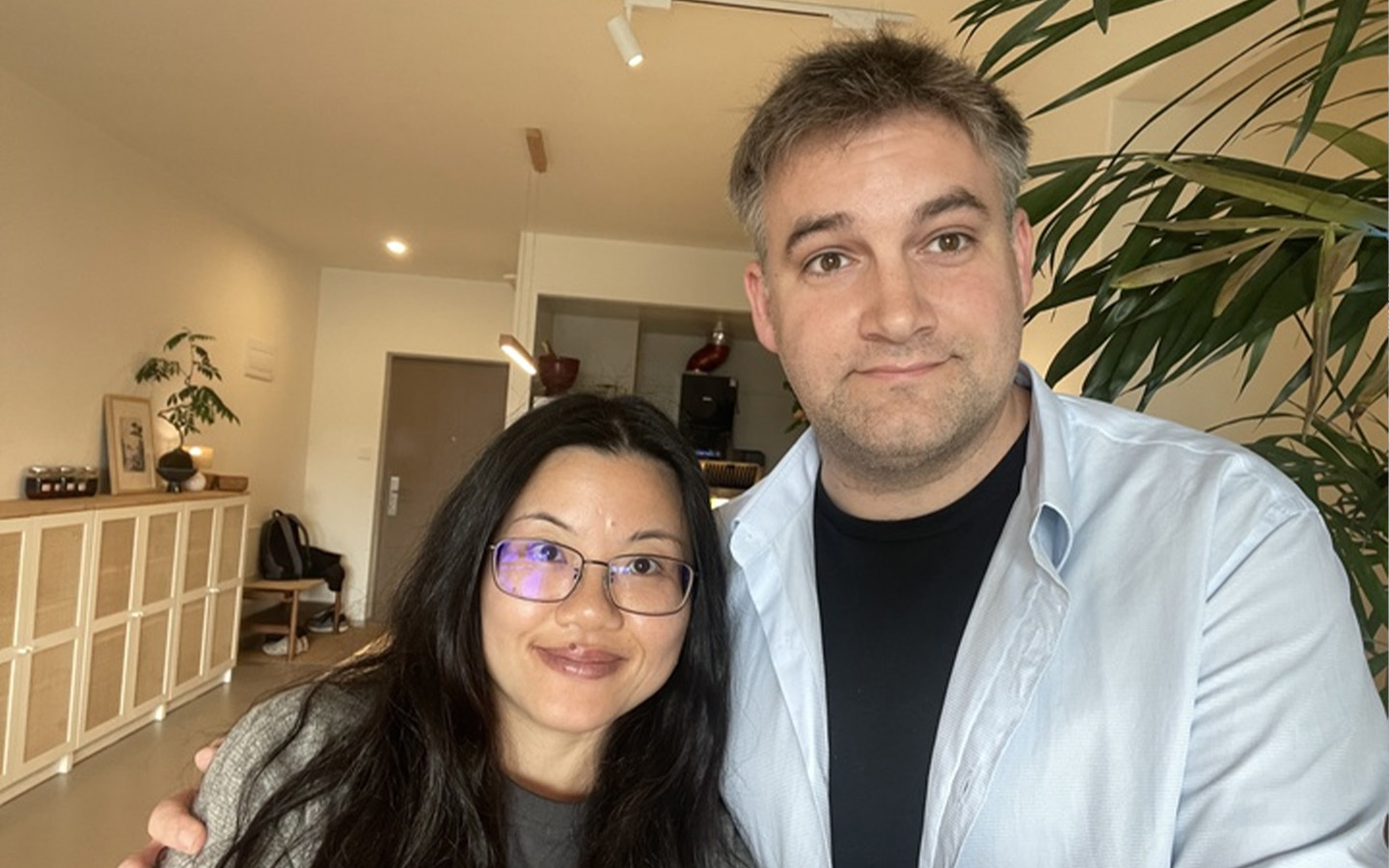
The brainchild of Guangzhou native Stephanie Li and her American partner Chris Thomas, Chinese Cooking Demystified grew out of their shared love for cooking and a desire to provide authentic and accurate English language information about Chinese cooking.
However, the initial catalyst for their channel was the YouTube cooking content that they would spend time watching.
“Whenever the subject [of the videos] ended up turning to any kind of Chinese food, we would end up just yelling at our screen and being like, ‘no that’s not how you do it!’” recalls Thomas, who has spent the past decade in China.
[See more: “Be ready for anything at any time,” lessons from the White House executive chef]
Hoping to “improve the overall conversation,” the pair plunged into the world of content creation by uploading their first video on cooking authentic Chinese Kung Pao Chicken (宮保雞丁, gōng bǎo jī dīng) in 2017.
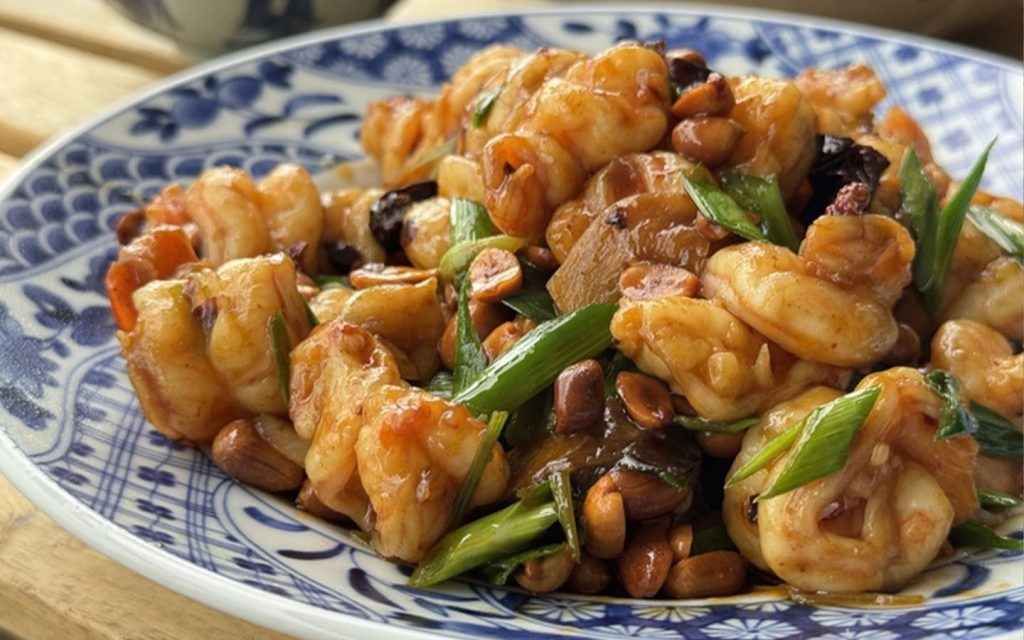
In the nine years since, the food vloggers have continued to cover all aspects of Chinese cooking, touching on everything from Lao Gan Ma chilli sauce and MSG to Macanese cooking and Cantonese style scrambled eggs.
With their no-frills approach and focus on tried-and-tested Chinese cooking techniques, Li and Thomas have unsurprisingly garnered a strong following. Their channel’s subscribers are poised to hit the million mark.
Li and Thomas took some time off from filming and cooking to speak to Macao News from their current home in Yunnan.
This interview has been edited for brevity and clarity.
What are some tasty dishes from your channel that you would recommend?
Li: We like the Tomato and Egg Noodles (番茄雞蛋麵, fānqié jīdàn miàn) recently. The Doggy Duck Pot (狗仔鴨, gǒu zǎi yā). I think for Cantonese viewers it will be interesting because it’s a very familiar flavour profile.
[See more: In memory of Tony: Retracing Anthony Bourdain’s steps in Macao]
The Shanxi Big Plate Chicken Noodles (運城大盤雞, yùnchéng dàpánjī). Homestyle “Hainan” Coconut Chicken Hotpot (椰子雞, yē zǐ jī). Old school Sichuan Hot Pot (四川火鍋, sìchuān huǒguō) and old school Mapo Tofu (麻婆豆腐, mápó dòufu). Last one, the Cantonese Fish Tofu Puffs (皺紗魚腐, zhòu shā yú fǔ).
How do you come up with ideas for your videos?
Li: What we usually do is we like to go around China often and then we’ll eat around and see something. It’s like “this is interesting or delicious or the world needs to know about this dish.”
Then we’ll start talking to people – first the person selling the thing – to get some detail. You also walk around the city to gather some more information. We’ll go to the market, look at the produce and get some more background knowledge of what the food and cooking is like in that place.
[See more: The iconic pork chop bun is about to become official ‘intangible heritage’]
We’ll come back and often we’ll do some more research on the Chinese internet and also go through our cookbook selection, if it’s relevant, to see if there’s any information because we really like to collect old secondhand cookbooks. There’s a lot of buried information in those sources.
As for something like Macanese food, it will mostly be looking into our cookbook selections and trying to eat around in Macao to get a little bit of context of what the dish is like.
If you could only eat in one city for the rest of your life, where would it be?
Li: For me, it’s probably New York because you can get pretty decent Chinese food and also pretty decent Cantonese [food]. You also get decent Southeast Asian. Then, you have a lot of South American, basically New World Food, and also Western.
[See more: New places to eat and drink at in Macao this November]
Thomas: If you could magically order wai mai [Chinese for takeout] from any city anywhere in the world, New York is probably objectively the correct answer, as much as I love many other cities in the world.
Stephanie, you were one of the translators of Annabel Jackson’s book The Making of Macau’s Fusion Cuisine: From Family Table to World Stage. Did you discover anything interesting about Macanese cooking during your translation work?
Li: When I was doing the translation, I was living in Bangkok and flipping through the book, first I realised that it actually mentioned a lot of Southeast Asian aspects.
Everything was just meeting at that point because we’ve been researching Chinese cooking for a long time and personally, we also cook Western food at home too and that was the time when we were also adding Southeast Asian cooking elements into our own cooking system.
[See more: Kristang culinary traditions explored at Slow Food Macau luncheon]
It’s almost like experiencing your own cooking and your own kitchen, but on a very highly intellectual level. You’re also looking into the history at the same time and looking into this historical lens, while being based in Southeast Asia, where you are using all these ingredients.
Can you suggest some Chinese dishes that can keep our readers warm this winter season?
Li: I’ll say the Dongbei [Northereastern Chinese] Big Pot Stew (鐵鍋燉, tiě guō dùn). It’s definitely a good one because who else in China does cold weather food [better] than Dongbei? The big iron pot stew has wraps, potatoes and long beans. It’s just so soothing and big and you can just put some mantou or pancake on the side of the wok. You have one big pot and that helps you to feel full and satisfied.
[See more: Hong Kong’s Bar Leone tops the World’s 50 Best Bars list]
I would like to recommend one very weird and impossible-to-do-thing, but if someone’s living in a village, I think it will be great. It’s the huo pen shao kao (火盆燒烤, Brazier Charcoal Grilling). It’s kind of popular in [the] southwest [of China] in general, where you are sitting around a fire pit and grill things over it. But the most famous [variation] is in Liangshan, Sichuan. It’s like a big fire pit and you just grill big chunks of meat on top. It gets very fiery.
Can you recommend any Chinese cook books?
Li: Not anything that’s available right now. We have a lot of these cookbooks from the 70s or 80s. Most of them are all Chinese cookbooks. We do recommend the [Chinese language] series Zhong Guo Ming Cai Pu (中國名菜譜).
[See more: Four more Macao restaurants have been added to the Michelin guide]
They started compiling it in the early 50s and they actually got a lot of very good Chinese classic dishes and the slightly older school way of making it. It’s a very good series and they kept on updating that series all the way into the 90s. I would definitely recommend that series.
What do you think is the best Chinese food and drink pairing?
Thomas: The Shaoxing double stinky [tofu] with some of the local Shaoxing wine.
Li: For me personally, it’s actually the Shunde congee or Shunde sashimi with Yu Bing Shao [玉冰燒, a type of rice wine from Guangdong].
What’s your go-to food movie?
Li: I think for us, it’s often more food scenes in movies that will get deep into our heads, but not necessarily the [movie with] the theme that’s about food. I really like In the Mood for Love (2000), where Chow Mo-wan goes to buy wonton noodles because that’s how we grew up, having that little [lunchbox] and going to get wonton noodles.
Thomas: The best cooking scenes I think are Eat Drink Man Woman (1994).
Do you have any controversial food opinions?
Thomas: Probably our most controversial food opinion [for a western audience] is related to fried rice. It’s the practice of using steamed rice for fried rice. This might seem a little bit in the weeds, but I think that for a lot of people [Western or English-speaking audience], especially if they grow up with fried rice, you use leftover rice for fried rice.
It almost just becomes a religious conviction, but a lot of restaurants, they’ll use steamed rice for their fried rice, and it fries up very well. Also, if you look at certain historical books, they’re talking about the benefits of steamed rice for fried rice, but in our little corner of the internet, it’s a very controversial opinion.
[See more: Macao residents prefer eating out in Zhuhai, survey says]
Li: Actually, in southwest China, there is actually a lot of rice that is just steamed. You go outside at eateries and these kinds of places, all the rice is steamed.

What’s the future of your channel? Can we expect a transition into “Asian Cooking Demystified?”
Thomas: The time where it was most tempting to do that was when we were living in Bangkok. Ultimately, I think in order to really do what we do, you need to be able to read extensively in a language. The issue with broaching things like Thai food, Japanese food [and] Vietnamese [food] is we don’t know those languages.
We’ve [also] done almost nothing comparatively north of the Yangtze River. Now we’re based in Yunnan, there’s more Yunnan food. Long-term, we want to be based out of here, move around the country a little bit and touch on different kinds of regions. We’ll probably end up exploring this country more.
[See more: How to do the Three Lamps food quarter like a pro]
Li: We also don’t come from that cooking system either. We feel most comfortable [with Chinese food] and [we’re] able to do Chinese food well, so we’ll stick with it. And China’s so big, there’s just too much.