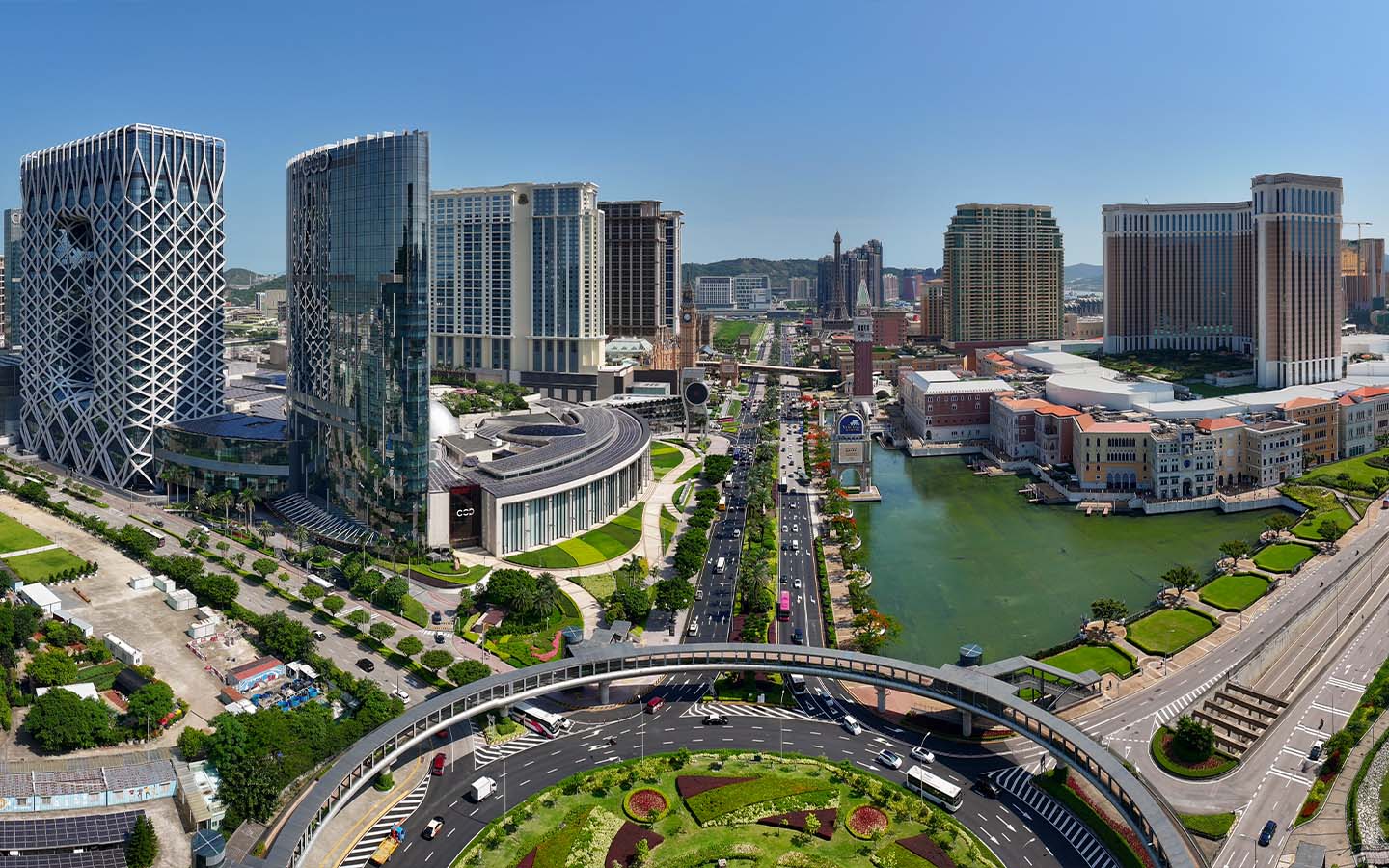
Persistent margin pressure has prompted Morgan Stanley to downgrade its Macao’s gaming outlook, triggering a wave of target price cuts by an average of 14 percent. Analysts lowered their sector view from “attractive” to “in-line” as the integrated resorts under coverage continue to maintain promotional and non-gaming spending to protect market share positions at a time when industry revenues brace for a slowdown later this year.
[See more: Gaming revenues topped 247 billion patacas in 2025. Here’s what to expect going into 2026]
The non-consensus call comes as Macao’s gaming equities have underperformed the broader market. The Bloomberg Macau Gaming Index, which tracks gaming stocks proportionally to their float-adjusted market cap, has lost nearly a third of its value since the start of October compared to a ten percent fall for the Hang Seng Index.
Competing for a smaller cohort of mass players, Macao’s integrated resorts are under increasing pressure to keep reinvestment rates elevated to capture premium mass customers, the Morgan Stanley report highlights. Besides cost pressures weighing on margins and market multiples, analysts have raised their free cash flow yield assumption by 100 basis points, reducing stock valuations when calculated from a discounted cash flow model.
EBITDA falling behind topline numbers
The momentum behind Macao’s robust tourism has fuelled gross gaming revenues (GGR) with the Gaming Inspection and Coordination Bureau (DICJ) reporting a 14 percent rise over the first two months of the year. Sell-side brokerages are forecasting high single-digit growth to carry through April before tapering off in the second half as last year’s base effect kicks in.
Despite GGR numbers exceeding double-digit growth rates in seven of the past nine months, operational improvements have not kept pace. According to Morgan Stanley estimates, while last year’s earnings before interest, taxes, depreciation, and amortisation (EBITDA) of $7.8 billion remains 15 percent below its 2019 levels, matching the shortfall in industry GGR, the full recovery in higher margin mass players has not resulted in better operational metrics, reflecting rising competition and fading operating leverage, analysts say.
[See more: Macao’s gaming revenues jump 24 percent as cost controls and dividend payouts set investment tone]
After the industry reported 5 percent EBITDA growth against a 9 percent GGR last year, Morgan Stanley is forecasting a 2 percent EBITDA increase against a 6 percent GGR uplift for 2026, with the lower margin VIP segment expected to outpace mass players which would further weigh on financial performance.
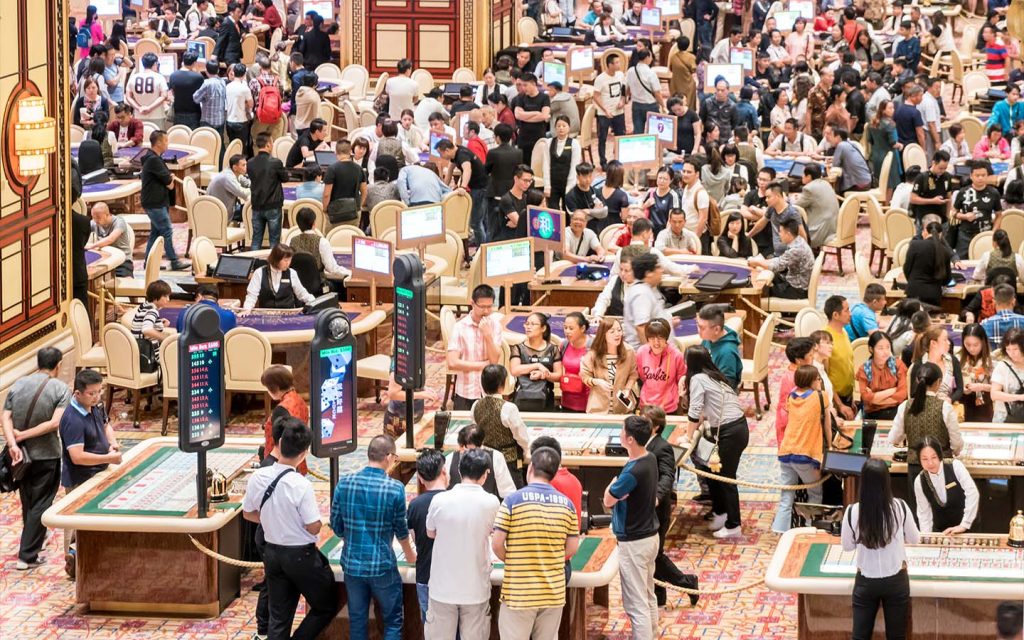
To offset the pressure, new investments like smart tables are being rolled out to help improve casino yields and win rates, comments Andrew Pearson, managing director of Intelligencia Limited, a Macao-based software consulting company.
Speaking to The Bay, the data analytics expert remarks that even with better digital intelligence, physical bottlenecks are hindering better investment returns while also amplifying cyclical costs. The calendar plays a critical factor, he says, adding that each integrated resort wants to pull in the most foot traffic during peak holidays and popular weekends.
“However, this might force customers to choose between seasonal events and attractions if they’re staying for a limited time, creating latent cannibalisation,” he explains.
Valuations unlikely to re-rate
In spite of the downgrade, prospects for the world’s largest gaming market remain upbeat, as extended public holidays have lifted average daily rates for five-star hotels, according to various brokers. Morgan Stanley’s 6 percent GGR forecast for Macao is also higher than the 1 percent growth pencilled in for Singapore and Las Vegas.
Tourism flows remain unabated. Macao welcomed nearly a fifth more tourists over the first two months of this year, attracting close to 8 million visitors and keeping pace with Hong Kong, which saw almost 10 million arrivals. Both SARs are aiming to capture a share of China’s growing tourism demand, projected to be worth 12 trillion ($1.7 trillion) yuan by 2030.
[See more: What does the typical mainland Chinese tourist in Macao look like in 2026?]
While market valuations for Macao’s gaming stocks remain below historical average, a sector re-rating remains unlikely until operational margins become more visible and sustainable. Dividend yields have climbed higher and are insulated from the Middle East conflict, though this comes as US treasury yields have also risen, widening the spread between the two classes.
The industry is not without its own surprises. Back in December, the Bloomberg Macau Gaming Index fell almost 13 percent after MGM China announced it would raise royalty payments to its parent company. The index has continued to decline this year, easing an additional 15 percent since then.