Chefs often describe their work as all‑consuming, leaving little room for life beyond the kitchen, farm or hunting grounds. Within that demanding frame, some push their ideas further than most, using their platforms to redefine how – and where – people eat.
[See more: Six questions for superstar chef Alain Ducasse]
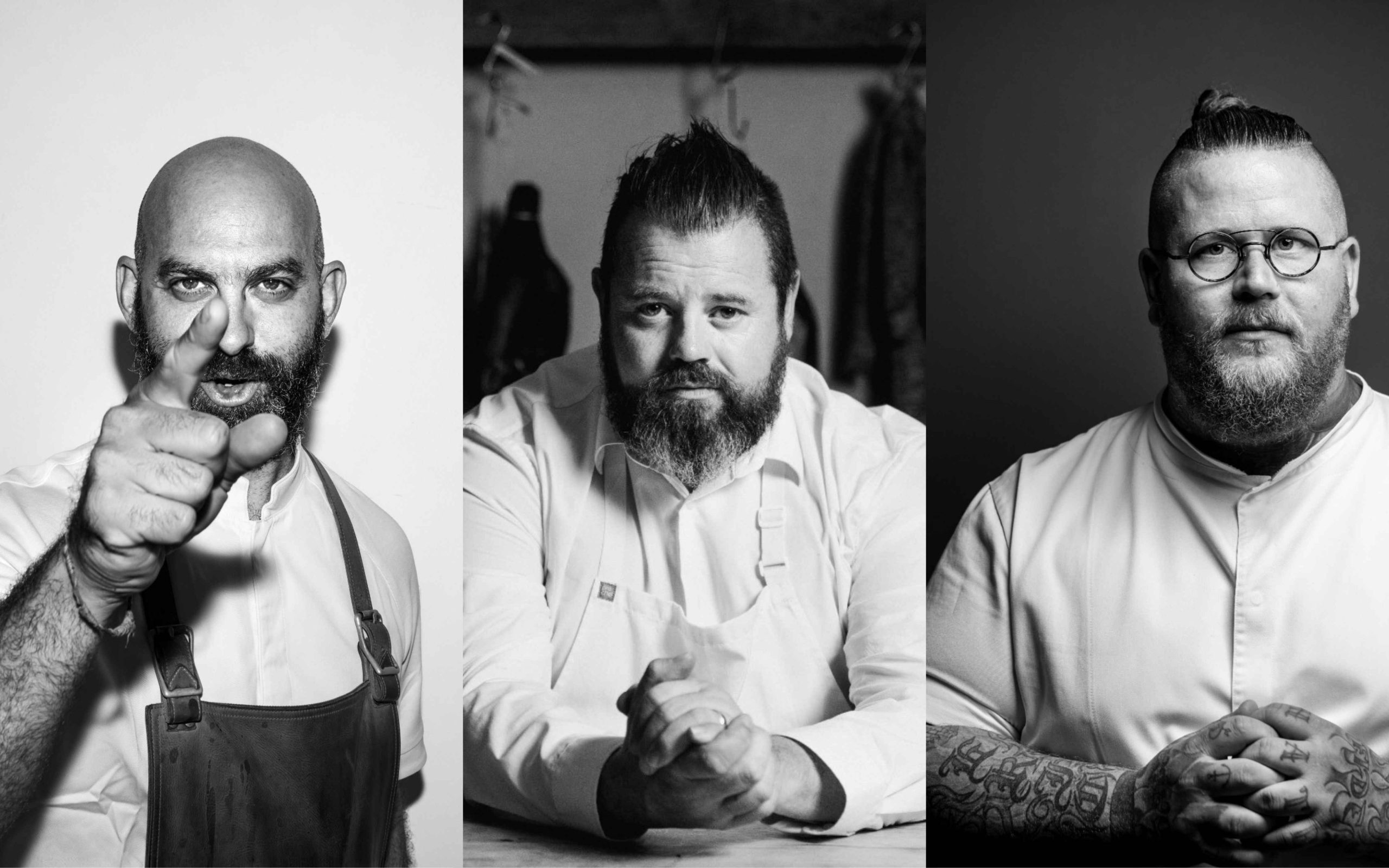
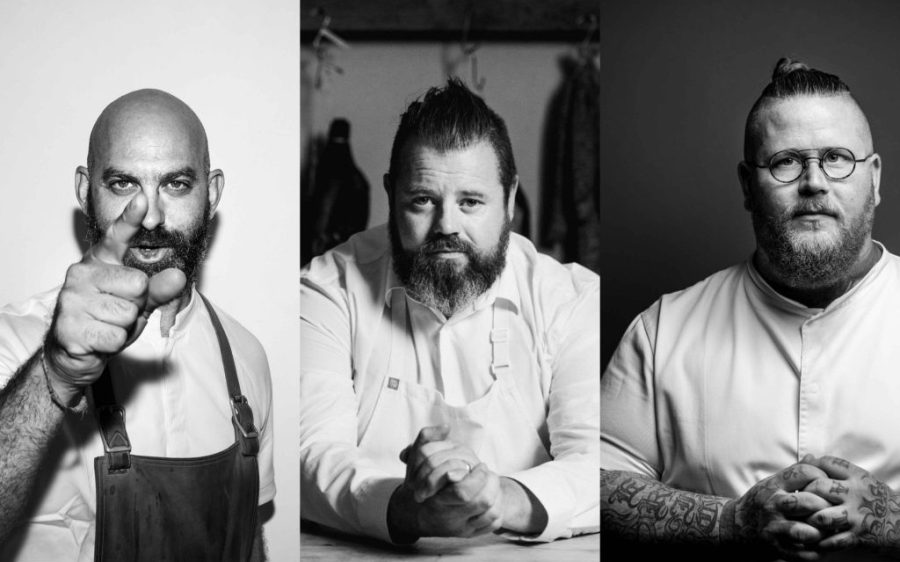
Among them are Eric Vildgaard, Dave Pynt and Vaughan Mabee. All three have roots at Noma and now run restaurants that reflect distinct approaches: Vildgaard champions hyper‑seasonal Nordic cooking at Jordnær in Copenhagen; Pynt has built a contemporary barbecue restaurant at Singapore’s Burnt Ends; Mabee has developed a rigorous farm‑to‑table model at Amisfield in New Zealand.
During the World Gourmet Festival at Bangkok’s Anantara Siam last September, The Bay connected with these culinary wavemakers redefining the scene, uncovering their distinctive visions behind the shift in fine dining.
Eric Vildgaard: Hyper‑seasonal Nordic cuisine
Danish‑born chef Eric Vildgaard has an unorthodox background. As a teenager in Copenhagen, lacking direction, he was drawn into gang life. His path shifted when he discovered cooking and later met the woman who would become his wife and business partner, Tina Vildgaard. Together, they opened Jordnær in 2017, an understated restaurant in a hotel in the affluent Gentofte area just outside Copenhagen.
Jordnær offers a 20‑course menu that focuses on seafood and plants. The restaurant has since earned three Michelin stars and appears on the extended World’s 50 Best Restaurants list, ranked 56th. The couple balance the demands of the restaurant with raising six children and overseeing a farm; Vildgaard notes that he relies on staff to manage the land and its more than 100 sheep.
[Watch: I Ask, You Answer with chef Richard Ekkebus of three-Michelin-starred Amber restaurant]
Years spent in some of the world’s best‑known kitchens have informed his emphasis on ingredient quality. “We’re not better than the food we cook with,” he says, describing his approach to sourcing. That commitment has financial implications. Jordnær took three years to break even, and during the first five years Vildgaard says he earned less than commis chefs in comparable restaurants. It was, he acknowledges, a sacrifice he chose to make. “Chefs have the obligation to gatekeep quality,” he adds.
The Vildgaards are known for trying to foster a respectful work environment, attracting staff from around the world. When hiring, Vildgaard says he prioritises personality and values over technical training. “I hire based on character. Everything else, I can teach my staff. But character? You either have it, or you don’t.”
Dave Pynt: Fire‑cooking in Singapore
Few restaurants have championed barbecue quite like Burnt Ends in Singapore. Australian chef Dave Pynt runs the one‑Michelin‑starred restaurant, which reinterprets Australian barbecue culture in a city‑state where virtually all produce is imported.
After a short stint at Noma, Pynt worked at Asador Etxebarri in Spain’s Basque Country, renowned for its open‑fire cooking. There, he says, he recognised barbecue’s potential as a serious dining format rather than “a backyard affair with your mates.”
What began as a London pop‑up called Burnt Endz evolved into Burnt Ends, which opened in Singapore in 2013. The restaurant quickly built a following, leading to a move in 2021 to a larger site at Dempsey Hill. Pynt is often credited with helping popularise this style of barbecue in Asia, sourcing ingredients internationally and, as he puts it, “letting it speak on the grill.”
[See more: Who is Kristian Brask Thomsen, the Ambassador of Pleasure]
His team works with a custom four‑tonne dual‑cavity oven and four elevation grills; more than 90 percent of dishes are cooked over fire. “The way we cook at Burnt Ends is actually very technical,” Pynt says. “We incorporate hot roasting, slow roasting, hot smoking, cold smoking, soft grilling, hard grilling, and cooking directly on the coals, or a combination of various techniques. There’s a huge variety of techniques within barbecue.”
Because Singapore farms very little, Pynt’s sourcing is global and seasonally driven. While many guests arrive expecting meat‑heavy menus, Burnt Ends’ vegetable dishes – including garlic shoots, eggplant and leeks, the latter a holdover from the London pop‑up – are among the plates the team most often recommends.
Burnt Ends’ approach has earned it a Michelin star and a place on the 2025 extended list of The World’s 50 Best Restaurants.
Vaughan Mabee: Farm‑to‑table in the New Zealand landscape
Also a Noma alumnus, New Zealand chef Vaughan Mabee has built an especially stringent interpretation of farm‑to‑table at Amisfield. The restaurant sits on a 200‑acre winery outside Queenstown, surrounded by mountains, and uses its setting as a central part of the experience.
Amisfield is ranked 99th on the extended World’s 50 Best Restaurants list and is the only New Zealand restaurant on it. The tasting menu runs to nearly 20 courses, composed entirely of local ingredients. “I want to showcase New Zealand through food and wine,” Mabee says. Wines from Amisfield’s own vineyard, particularly its pinot noirs, play a prominent role.
Mabee and the suppliers he works with hunt, fish or harvest everything served, an intensive process that helped Amisfield win the Best Dining Experience award at the Best Chef Awards in 2024. Animals are used from head to tail, reflecting his commitment to minimising waste. One dish, a wild boar mortadella presented with the animal’s snout, underscores the restaurant’s “wilderness” aesthetic.
[See more: Dozens of Greater Bay Area restaurants honoured on 2026 Black Pearl Restaurant Guide]
He stresses that working with wild ingredients requires constant adjustment. Only what can be sourced from the surrounding area makes it into the kitchen. “The way an animal died, or whether it’s mating season… this impacts its flavour,” he notes. “You have to be able to switch things up to make the best of what’s available.”
To do that, Mabee looks to older cooking methods, contrasting them with contemporary techniques such as sous vide – which he jokingly describes as “cooking in plastic.” Drawing on detailed knowledge of the land and its animals, he adapts recipes, cooking times and temperatures to get the results he wants.