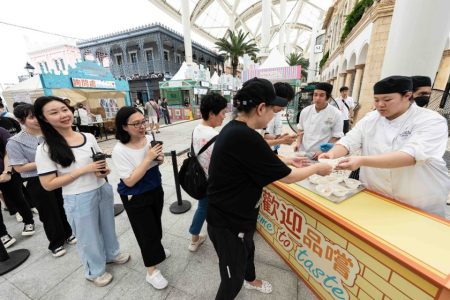
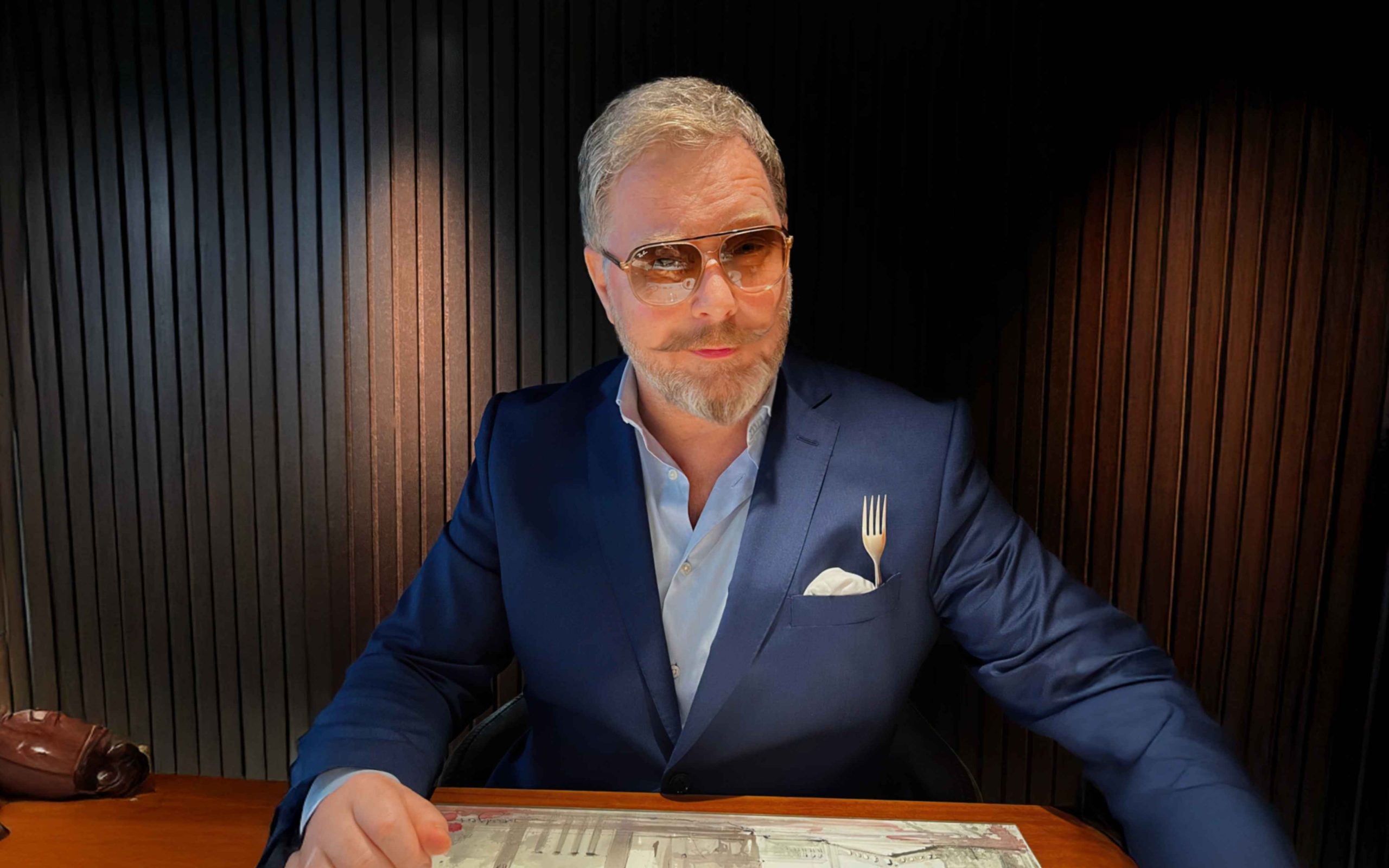
At the World Gourmet Festival, held last September at Anantara Siam Bangkok, Denmark‑born Kristian Brask Thomsen cut a conspicuous figure. As founder of Bon Vivant Communications, he oversees gastro publicity for exclusive dinner parties, star‑chef world tours, cultural marketing, culinary filmmaking and entrepreneurial ventures – and, in this case, manages PR for the festival itself.
Impeccably dressed, he welcomed food and travel writers as well as content creators from around the globe. The five-day programme saw acclaimed chefs such as Jordnær’s Eric Vildgaard and Amisfield’s Vaughn Mabee collaborating on menus built around dishes central to their restaurants’ reputations, and sharing insights on restaurant ownership and industry best practices.
Brask Thomsen acted as host and facilitator. The moniker “ambassador of pleasure” – bestowed on him during a function hosted by the Thai ambassador to Denmark, who introduced him to diplomats with that title – captures the way he has branded his role in the high‑end dining world.
The Mission Impossible of fine dining
Brask Thomsen is the founder of Dining Impossible, launched in 2012. Conceived as a “three‑day eating extravaganza,” the concept offers celebrities, business leaders and wealthy gastronomy enthusiasts access to notoriously hard‑to‑book restaurants and their chefs. “I called it Dining Impossible because everyone told me it was impossible to pull off,” he says.
Dining Impossible spun off from the Dinner Party, started in 2009, a one‑night gastro event whose origins are tied to Noma, René Redzepi’s Copenhagen restaurant that became famous globally for its innovative, seasonal take on Nordic cuisine.
At the time, demand for Noma was intense. “Everybody wanted a seat at Noma, and those were different times, where booking processes were very democratic,” Brask Thomsen recalls, noting that the restaurant received about a million requests for roughly 22,000 seats a year.
He spotted an opportunity to add an extra 16 seats each month by clearing the staff table for one night, turning those places into coveted tickets at one of the world’s most talked-about restaurants. Redzepi agreed.
[See more: New places to eat and drink at in Macao this January]
Brask Thomsen went on to host these dinners, fielding calls from a broad range of guests. “From dignitaries to sports stars to porn stars,” he jokes, recalling the mix of high‑paying diners that even included a prominent arms dealer. These events unfolded under strict discretion.
Geranium and AOC in Copenhagen were subsequently added to the Copenhagen itinerary, with Brask Thomsen hosting dinners for three nights in a row. From there, Dining Impossible expanded. Destinations such as San Sebastián, Barcelona and Lima joined the map, with itineraries featuring some of the most talked‑about restaurants in the world. With the help of his friend, food writer Matt Goulding, Brask Thomsen connected with Joan Roca; soon the three‑Michelin‑star El Celler de Can Roca in Girona – frequently ranked among the world’s best – was part of the programme.
“As luck would have it, we had just started to host at Can Roca when it was named no. 1 restaurant in the world by World’s 50 Best, and everybody went, ‘Who is this guy [who can get tables at Noma and El Celler de Can Roca]?’” he says. Business grew rapidly and the events attracted media attention. Remarkably, his business model was still largely a one‑man operation at that stage, run from Barcelona, where he had settled.
Aiming for the skies
As similar concepts emerged, Brask Thomsen says competition pushed him to think bigger. “Competition is good, it keeps you on your toes. It forced me to create something bigger. That’s when DI:Jet was born,” he explains.
Launched in 2019, DI:JET offered a four‑day itinerary by private jet to some of the world’s most celebrated restaurants, including Osteria Francescana in Italy, Mirazur in France and El Celler de Can Roca in Spain. At the time, all three appeared at the top of the World’s 50 Best Restaurants list.
[Watch: I Ask, You Answer with chef Richard Ekkebus of three-Michelin-starred Amber restaurant]
The experience, priced at 20,000 euros per person, targeted a small group of diners. “It was a mix of people – richer than the sun, or people who would take a good chunk of their savings to be a part of it,” Brask Thomsen says.
Despite the headline‑grabbing price tag and lavish framing, he insists the underlying driver is food’s ability to connect people. “Food is the common language we all speak. I’ve connected with people from different backgrounds, colours, religions, and political beliefs,” he says, adding that such encounters do not have to take place only at award‑winning restaurants. “It can be over beef tacos from a food stall in Guadalajara.”
Culinary diplomacy and storytelling
Today, Bon Vivant Communications says it has a waitlist of chefs seeking to work with the agency. Brask Thomsen argues that maintaining a high‑end reputation depends on limiting the number of restaurants and chefs they represent at any given time.
His focus now is increasingly on Asia. He plans to launch cross‑country press trips linking top restaurants in Southeast Asia. As a writer himself, he emphasises the role of lifestyle journalism in building restaurant brands, contending that success depends on both food and narrative. He has also invested in storytelling projects.
Brask Thomsen’s professional image leans heavily on personal hosting. He is known for his polished manner and for keeping guests engaged, while showing interest in their stories. During a recent video interview from Tbilisi, he offered a tour of his modern, Scandinavian‑leaning loft, introducing his team at work and pointing out a balcony overlooking the ruins of a church and the city’s skyline.
His career has taken him from Barcelona to Moscow and Armenia, as he developed the “culinary diplomacy” label he now uses. Today he is based in the Georgian capital, where his young daughter lives. She might not know it yet, but she’s in for some seriously good food.