The Asia-Pacific is set to remain the world’s main engine of economic growth, and its next core is increasingly taking shape in China’s Greater Bay Area (GBA), according to leading political economist Zheng Yongnian, who was speaking with Shenzhen reporters as APEC launched its 2026 agenda in Guangzhou.
On the sidelines of the meetings, Zheng, dean of the School of Public Policy at the Chinese University of Hong Kong in Shenzhen, described the Asia-Pacific as the world’s fastest-growing and most stable economic region for the past four decades, and predicted that pattern would continue for another 20 to 30 years. The key question was where the region’s economic centre would ultimately settle.
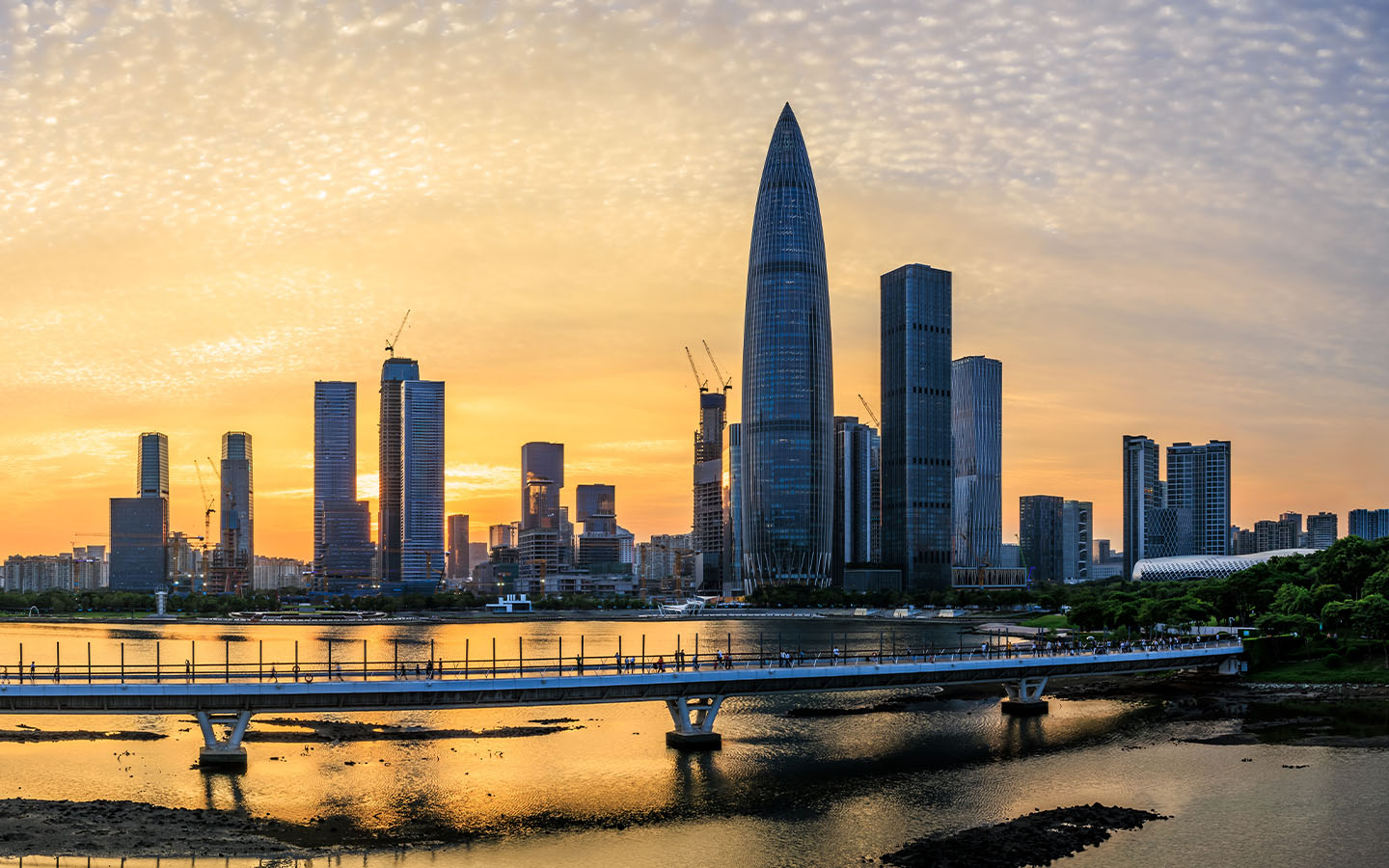
By scale, Zheng said, the GBA had already surpassed the San Francisco and New York bay areas and is now comparable to Tokyo, though much of its capacity has yet to be fully realised. He pointed to Shenzhen as a crucial link between Hong Kong and Guangzhou, combining advanced manufacturing and technological innovation with Hong Kong’s services-based economy and Guangzhou’s commercial depth.
“If these three core cities are fully integrated, the Greater Bay Area would already qualify as a world-class bay area,” Zheng said.
[See more: The Pearl River Delta’s GDP hit 11.9 trillion yuan in 2025]
He also noted that both developed and developing economies currently faced the same fundamental issue: sustaining development amid rising geopolitical tensions, de-globalisation and a turn towards economic and technological nationalism.
Zheng stressed that economic growth depended on the free flow of capital, goods and talent across borders rather than tighter controls and fragmentation – making openness “even more important” during such times.
Officials from APEC’s 21 member economies are meeting in Guangzhou from 1 to 10 February for the First Senior Officials’ Meeting and related sessions, laying the groundwork for the Asia-Pacific Economic Cooperation (APEC) Economic Leaders’ Meeting to be held in Shenzhen in November.
Around 60 meetings and workshops have been scheduled over the 10-day gathering, covering topics such as digital transformation, services competitiveness, investment, standards-setting and customs modernisation. These discussions are expected to shape APEC’s work under China’s three stated priorities for 2026: openness, innovation and cooperation.