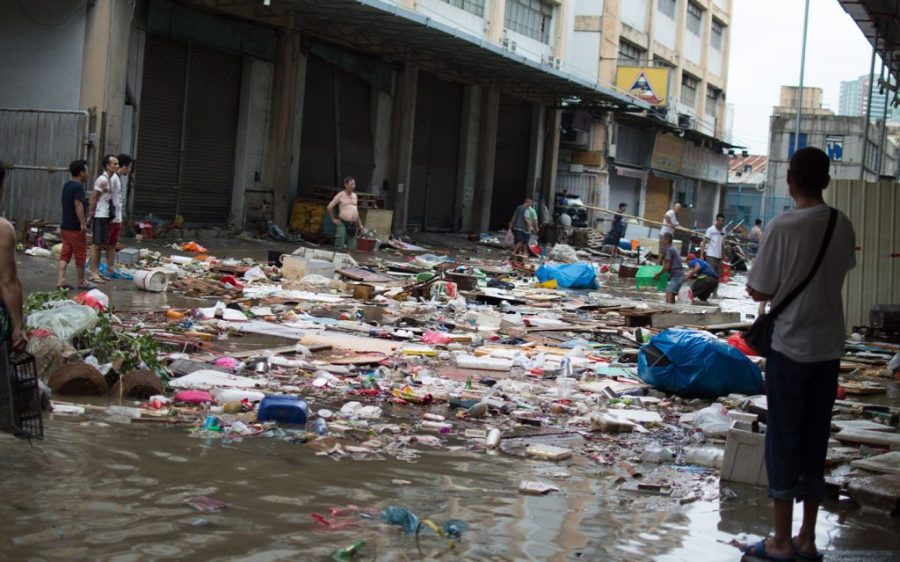
Macao’s weather in 2025 was marked by a series of extreme events that broke historical records, according to a year-end report released by the Macao Meteorological and Geophysical Bureau (known by the Portuguese abbreviation SMG).
The report, which was cited by the Macau Post Daily, noted that the city was affected by 14 tropical storms during the year, the highest number since local records began in 1968 (the previous record of 12 was set in 1974).
Typhoon Wipha and Super Typhoon Ragasa both triggered no. 10 typhoon signal, marking the first time the highest storm warning was issued twice in the same year.
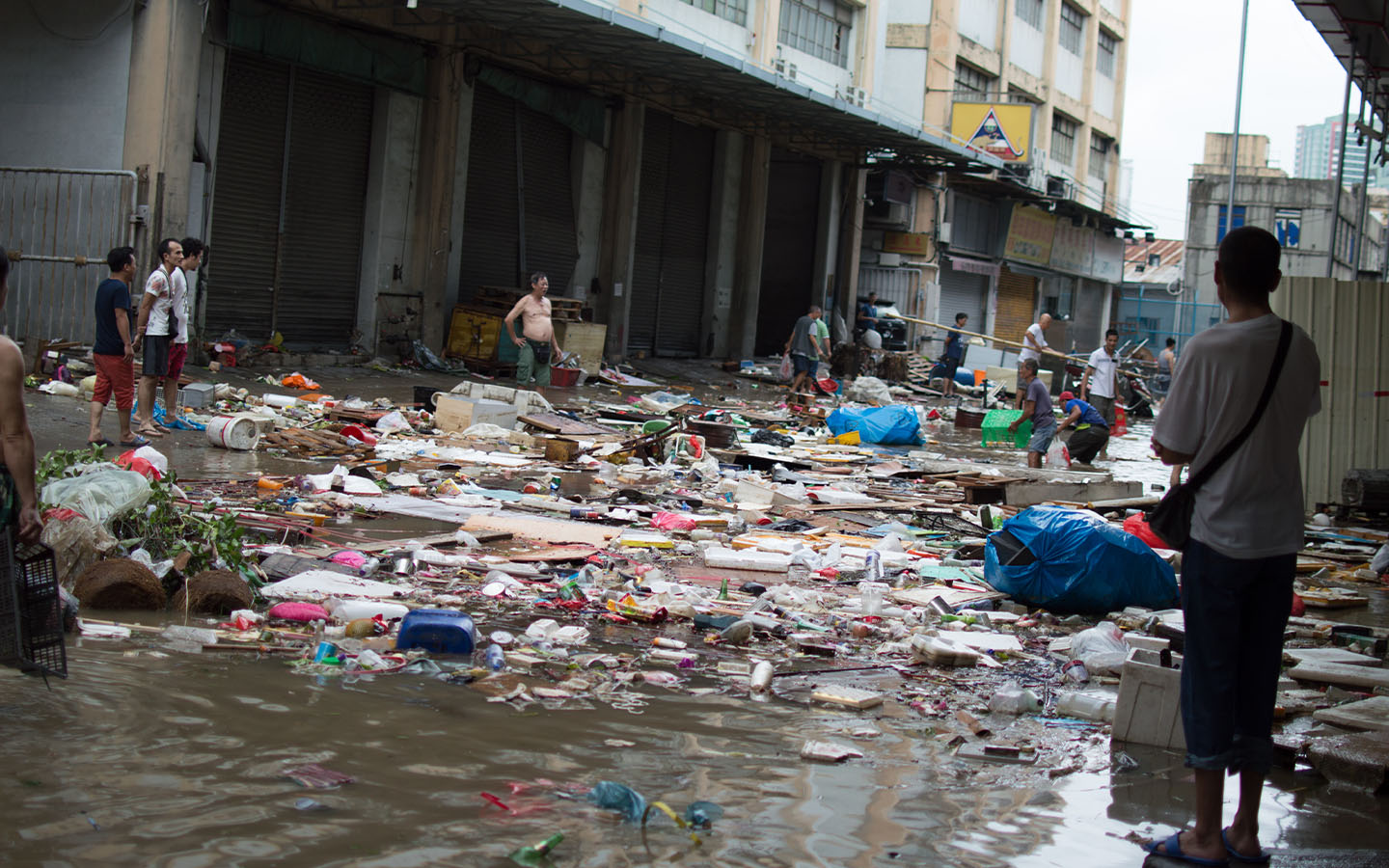
The no. 10 alert linked to Ragasa remained in effect for 10 hours and 30 minutes, the longest duration on record, as the storm passed about 90 kilometres from Macao. The typhoon caused severe storm-surge flooding, with tide levels reaching 4.67 metres and floodwaters in parts of the Inner Harbour rising to 1.51 metres, the fourth-highest level recorded since 1967.
[See more: Climate change has cut Portuguese wine yields by 14 percent]
Heavy rainfall was also more frequent than usual. Although total annual precipitation of 1,891 millimetres was considered normal, the heavy rain warning signal was issued 37 times during the year – making 2025 the second-highest on record after 2021.
Temperatures continued to trend upward. The annual average temperature reached 23.2°C, about 0.4°C above the climatic average and likely placing 2025 among the city’s five hottest years since 1952.
Macao recorded 37 hot days during the year, exceeding its climatic average by 5.7 days. The number of cold days fell sharply to 27, 12.1 days fewer than the climatic average.
In its report, SMG noted that global warming was causing more frequent extreme weather events around the world. “In Macao, 2025 stood out as a year marked by extreme phenomena, setting several records,” it stated.