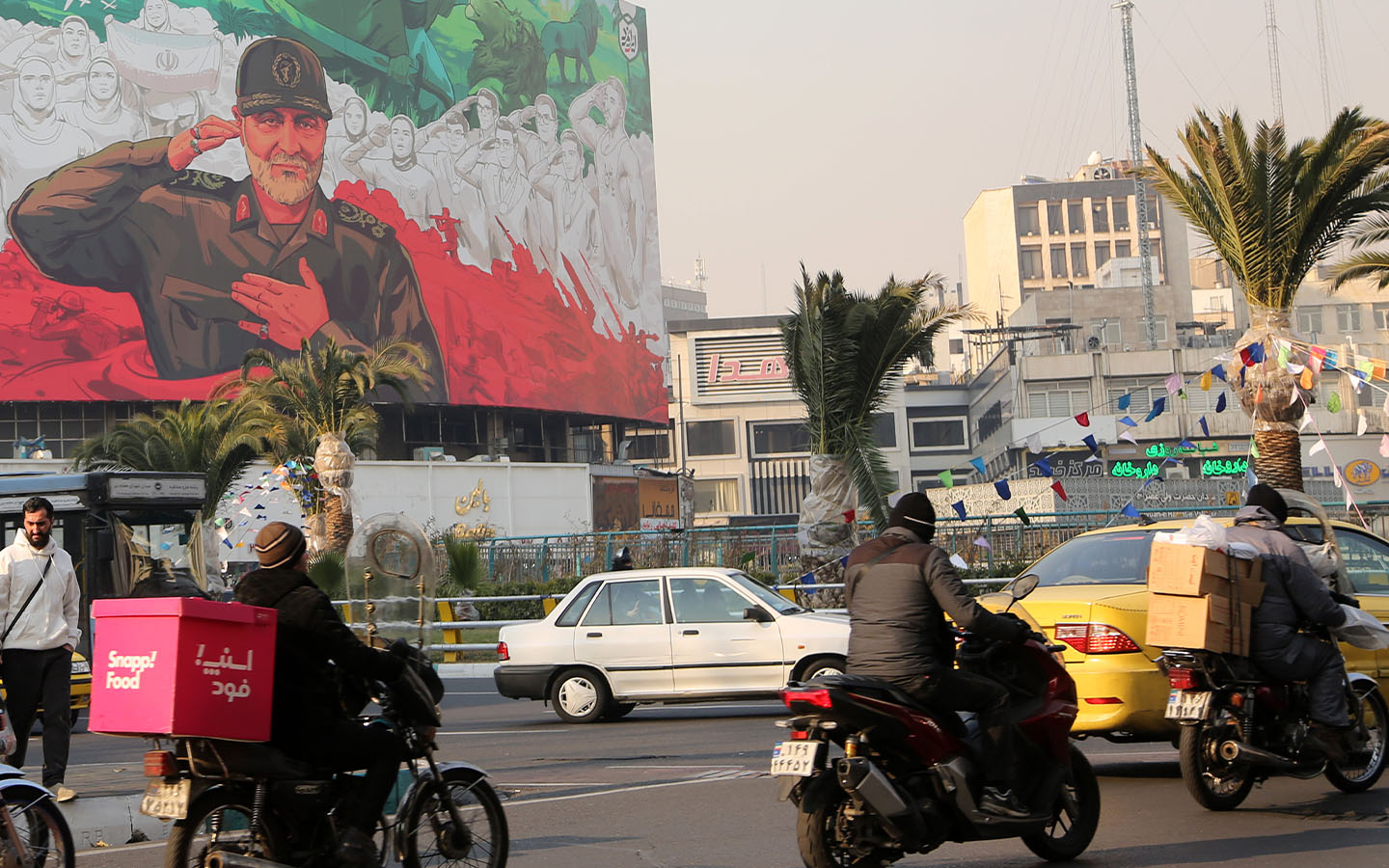
A heavy crackdown by Iran’s security forces appears to have led to a decline in the size of anti-government protests that have rocked the country for more than two weeks, according to assessments of the situation by conflict monitoring groups
Iranian officials say that the situation is now “under total control,” while media reports suggest that people are too afraid and exhausted to sustain the bloody clashes that have led to hundreds of deaths of both protesters and security personnel. (The exact toll is impossible to ascertain as Iran has imposed a communications blackout on the country, with the internet, mobile phones and even landlines not working.)
Analysts point out that the absence of unified leadership among the demonstrators, and the lack of defections from the military or political elite to the anti-government side, mean that Iranian authorities may be able to ride out the unrest – for now. The communications blackout may also encourage even more draconian repression by the country’s rulers. In the medium term, however, the breadth of participation in the protests, and the depth of economic and political grievances, suggest that renewed surges are likely.
Meanwhile, a decisive military intervention from the US, which many protesters were hoping for, has yet to materialise in spite of President Donald Trump’s several threats against Tehran and pledges to stand with the anti-government uprising.
[See more: As Iran’s protests enter their 15th day, Tehran accuses Washington of stoking unrest]
Trump said in a social media post on Monday that “Effective immediately, any country doing business with the Islamic Republic of Iran will pay a tariff of 25% on any and all business being done with the United States of America.”
However, he gave no details on what legal basis he would impose the tariffs, nor did he elaborate on whether US allies would be exempt. Several US‑aligned or US‑strategic partner countries appear among Iran’s trading main partners, including the UAE, India, South Korea and Germany.
In the meantime, Washington has indicated a willingness to begin talks with Tehran. Exploratory contacts and signaling are underway and Iran has also said that it is open to dialogue over the protests, which began in late December over a litany of economic woes, including a declining currency, and quickly took on a broader anti-government dimension.