Nearly nine years after a brutal crackdown on its Rohingya Muslim minority, hearings begin to determine whether Myanmar’s actions constitute genocide.
Landmark proceedings kicked off in the Hague this week, according to multiple media reports, as the International Court of Justice (ICJ) embarks on three weeks of hearings to determine whether acts allegedly committed during “clearance operations” by Myanmar’s military, the Tatmadaw, constituted a breach of the 1948 Genocide Convention.
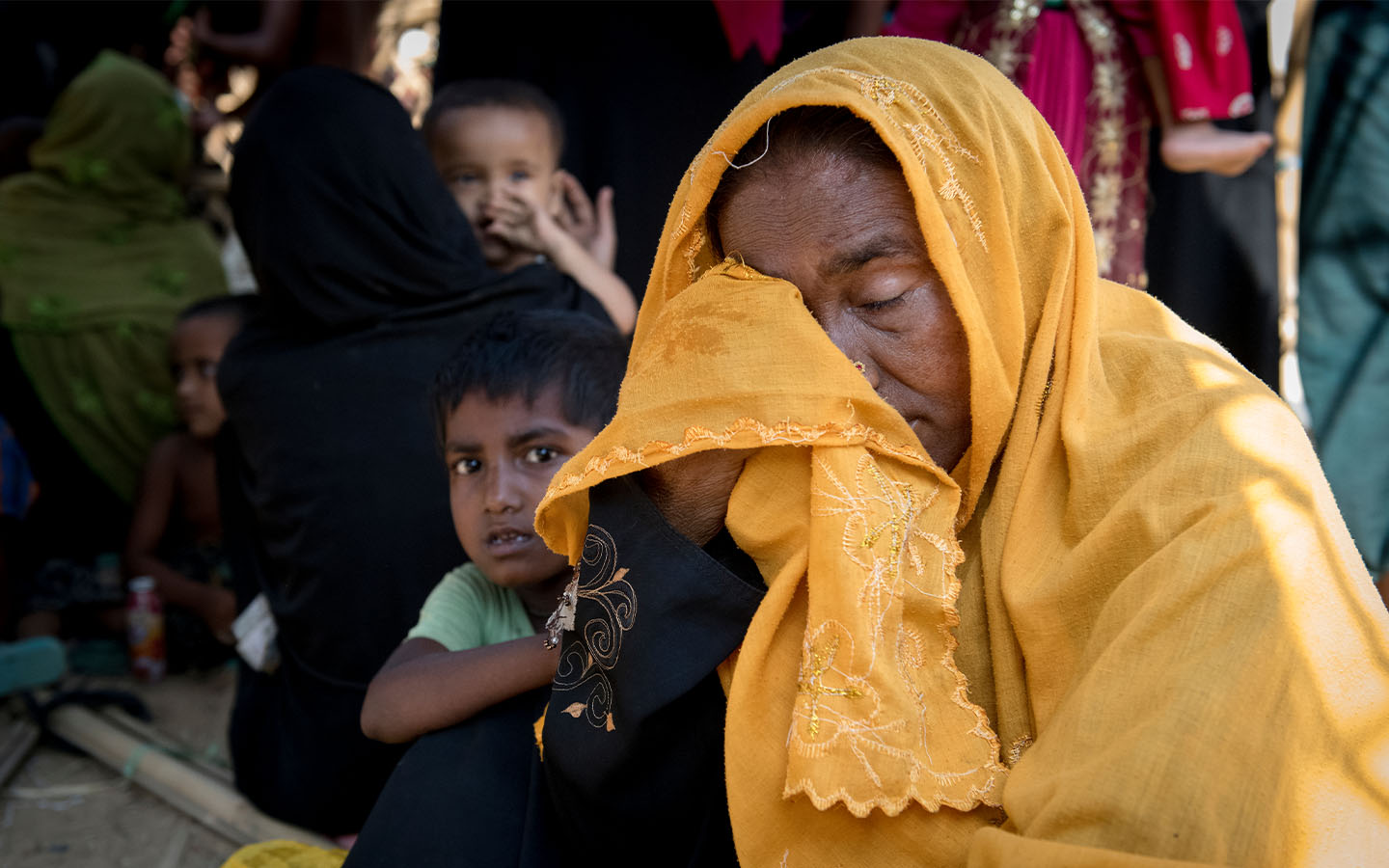
Those operations escalated dramatically in August 2017, a wave of brutality that sent more than 700,000 Rohingya Muslims fleeing across the border to neighbouring Bangladesh. They brought harrowing accounts of widespread killings, sexual violence, village burnings and other abuse at the hands of the military and Buddhist militias.
Over 1.1 million Rohingya currently live in dozens of cramped, dilapidated camps spread across some 8,000 acres in Cox’s Bazar. More than half of those sheltering in the Bangladeshi camps are children.
“By all measures, this case is not about esoteric issues of international law,” Attorney General and Minister of Justice Dawda Jallow, representing the Gambia, told the court. “It is about real people, real stories, and a real group of human beings.”
[See more: ICJ hearings begin in landmark climate change case]
The results of a UN fact-finding mission to Myanmar, published in August 2018, concluded that crimes against the Rohingya included murder, rape, torture, sexual slavery, persecution and enslavement.
“The fact-finding Mission has concluded, on reasonable grounds, that the patterns of gross human rights violations and serious violations of international humanitarian law that it is found, amount to the gravest crime under international law,” investigator Christopher Sidoti told reporters at the time, adding that “these have principally been committed by the military, the Tatmadaw.”
Zeid Ra’ad al-Hussein, then serving as the UN High Commissioner for Human Rights, called the Myanmar military’s actions a “textbook example of ethnic cleansing”.
Nobel Peace laureate Aung San Suu Kyi, then Myanmar’s de facto head of government, disagreed. Speaking at the Hague in December 2019, early in the genocide case, she dismissed the Gambia’s argument as a “misleading and incomplete factual picture” of what she said was an “internal armed conflict.” Myanmar has long maintained that the crackdown was necessary to root out Rohingya militants that had launched deadly attacks on dozens of police posts.
Legal experts believe the outcome of Myanmar’s case could offer insight into how the ICJ will handle similar accusations against Israel.