Food and water are life’s essentials, occupying the bottom tier of Maslow’s pyramid of needs, together with shelter. From an anthropological perspective, food is also deeply tied with notions of identity and community. Further still, as a commodity, it can be used as a political tool within the realm of power relations.
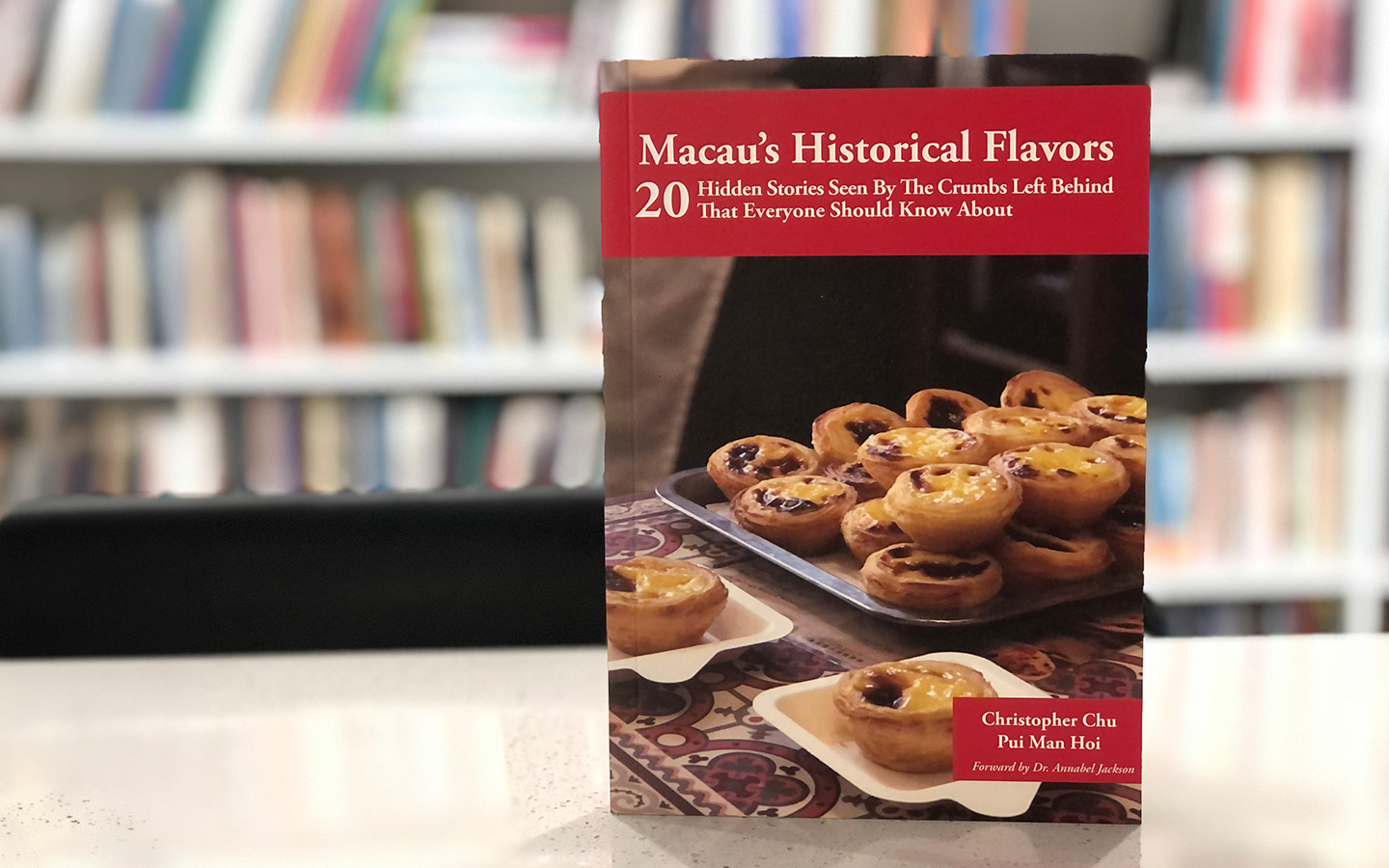
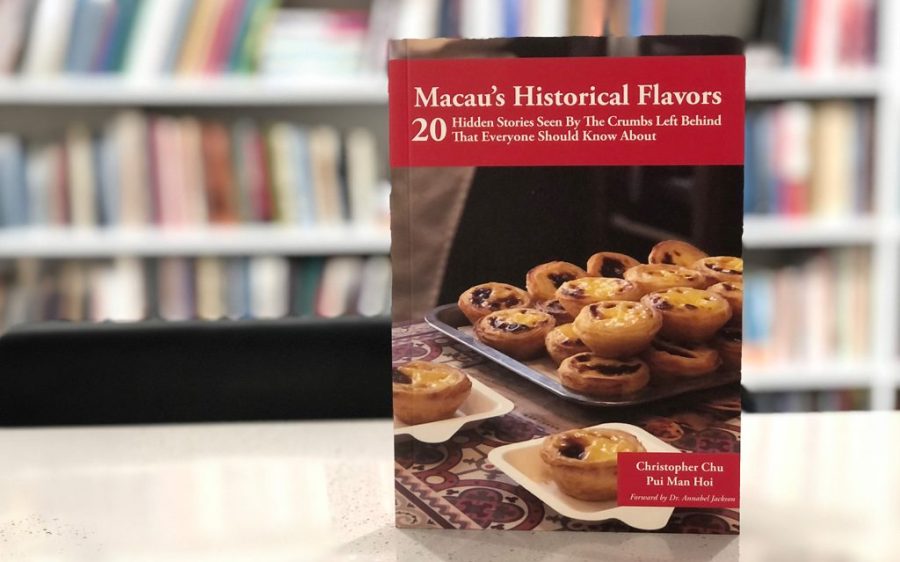
As the writers declare on the back cover, Macau’s Historical Flavors: 20 Hidden Stories Seen By The Crumbs Left Behind That Everyone Should Know About (2025) is not a book about food. But as can be seen within these pages, foodways present as an intriguing lens through which to navigate the history and culture of the space we call Macao. Pui Man Hoi and Christopher Chu, who is a contributor to Macao News (The Bay), offer up food and flavours as what they refer to as “crumbs” – but these are crumbs of depth that pique interest and raise questions.
What has been achieved in this volume is an exploration of the vast spread of Macao’s history across oceans; a history set against a complex web of the Columbian Exchange and the Manila Galleon and their life-changing introduction of the sweet potato alongside chilies, peanuts and more; a history punctuated by silks and spices, fortification and flapjacks, and missionaries, miscegenation and marmalade.
Historical flavours are traced back to the maritime campaigns of Chinese explorer Zheng He who, 200 years ahead of the Europeans, was trading spices and chocolate – “which were valued for medicinal purposes” – and exotic delicacies such as bird’s nests. Following the disapproval of Confucian scholars, who favoured scholarly efforts over trade.
He’s campaigns were curtailed, from 1430, and it was this suspension which resulted in the opening up of Asia’s waterways “to European ships like [Vasco] da Gama’s San Gabriel, reaching India in 1498.” Incompatible religious philosophies emerged again in 1692 with the Edict of Tolerance in China which “allowed Christians to practice their faith alongside Chinese ancestral worship.” The Catholics did not approve, causing many religious figures to flee to Macao, an influx which in turn destabilised the security of the city.
Such moments of history are cleverly condensed into bite-sized pieces that at the same time complement the telling of the simple, or not so simple, realities of everyday life in a place today promoted as a paradigm of East-meets-West. In Macao, Chinese women were not allowed to marry – or had no interest in marrying – Portuguese men. Indeed, the Portuguese and Chinese lived “with a physical wall separating their communities.”
[See more: How Macao’s enduring landmarks stand witness to a never-ending story]
The presence of orphanage Santa Casa de Misericórdia indicates that liaisons occurred, and Macao’s inequality was so “deep rooted” that youngsters emerging from such institutions found limited life chances. It was, then, the practice of Portuguese men to marry and procreate with women from Portuguese colonies as far afield as Goa and Malacca, though these unions created racial prejudices between “families who viewed themselves as Lusitanian descendants” and Portuguese communities.
But food is a soft power, and the women in the kitchens “became the early custodians of Macanese cuisine”; a cuisine which, like Kristang in Malacca before it, demonstrated an affinity with European cooking, and favoured cutlery over chopsticks.
Even so, understandings around ingredients for medicinal purposes failed “to breach cultural hurdles” and it took the vision of political philosopher Sun Yat-sen to begin to bridge these gaps. As a doctor (he qualified in Hong Kong) he ambitiously opened in 1893 an East-meets-West pharmacy, and it is remarked that in 1912 he utilised his political skills to bring Macao’s Chinese and European leaders together “just as adeptly as he had handled traditional and modern drugs inside Chong Sai Pharmacy decades earlier”.
The success of these negotiations no doubt contributed to universal support for the 1926 Trade Fair among prominent Portuguese and Chinese leaders alike. These included director of port works and interim governor, Hugo de Lacerda (who has an avenue named after him), and wealthy merchant Lou Lim Ieoc, who gives his name to perhaps the most beautiful Chinese garden in contemporary Macau. At this Fair, Portuguese canned fish and olive oil were readily promoted alongside Macao-manufactured firecrackers and textiles, and it was deemed a business and marketing success. Still, it did nothing to lessen the “persistent wealth gap” with neighbouring, bourgeoning, Hong Kong, just the latest thorn in Macao’s side.
The book ends, appropriately enough, with an evocation of Darwinism and the need to continually adapt to external challenges in order to survive. This, the writers conclude, “is a story that Macao knows too well.” In this city, power, identity and survival have always been served on a plate.
Annabel Jackson is the author of several books about Macau including The Making of Macau’s Fusion Cuisine (2020) and Taste of Macau (2003), and co-author with Francisco Caldeira Cabral of Macau Gardens and Landscape Art (1999).