

Christmas is a wonderful time of year where many of us share gifts, indulge in lavish meals and decorate our houses with sparkling fairy lights and festive ornaments. However, at the end of the good cheer, what is often left is a mountain of torn gift wrapping, more unfinished food than you’d like, and possibly a mild spike in your energy bill.
[See more: Here are five of the world’s weirdest Christmas traditions]
Here are five ways to have a more sustainable Christmas.
Gift an experience, give to charity or only buy presents for the kids
Not sure what to get your loved ones? There are only so many times that you can get someone scented candles or socks, which you’re not even certain if they would want. Gifting someone an experience, like a dining voucher for a restaurant they love, or tickets to a concert by their favourite artist, or a day out to an amusement park, is much more meaningful and reduces unnecessary material waste.
Gifting an experience not only shows how well you know them and gives them something to look forward to, it also gives them lasting memories of the event. You can still present the gift in creative ways, such as enclosing it with a small item that would be useful for that experience. Say, ear plugs with those concert tickets.
[See more: The Tap Seac Christmas Market opens on 16 December]
If you would prefer to give a physical gift, buy them something that you know they will use and love for a long time. Buy less, but better, and prioritise items made with natural materials rather than plastic.
You could also consider whether you need to buy anything at all. Why not agree with your family members and friends to give donations to charity this year? You could also make an agreement to only get presents for the children and save yourselves some money.
Use recyclable or reusable packaging
Avoid tape, plastic ribbons, and shiny or glittery wrapping paper as none of these can be recycled. If in doubt, try the “scrunch test”, If the wrapping paper is scrunchable, that means it’s recyclable. If not, there’s plastic or foil content inside.
Instead, use simple brown paper or pages torn from old cool artsy magazines to wrap up your gift. You can also use paper boxes or gift bags that are not shiny and glittery.
[See more: Top 6 unconventional Christmas movies]
If you’re down to get more creative with it, why not make the packaging part of the gift too? Furoshiki, the traditional Japanese method of using cloth to wrap gifts, is a simple and gorgeous way to present a gift. You can even use scarves, or nice shawls as an alternative.
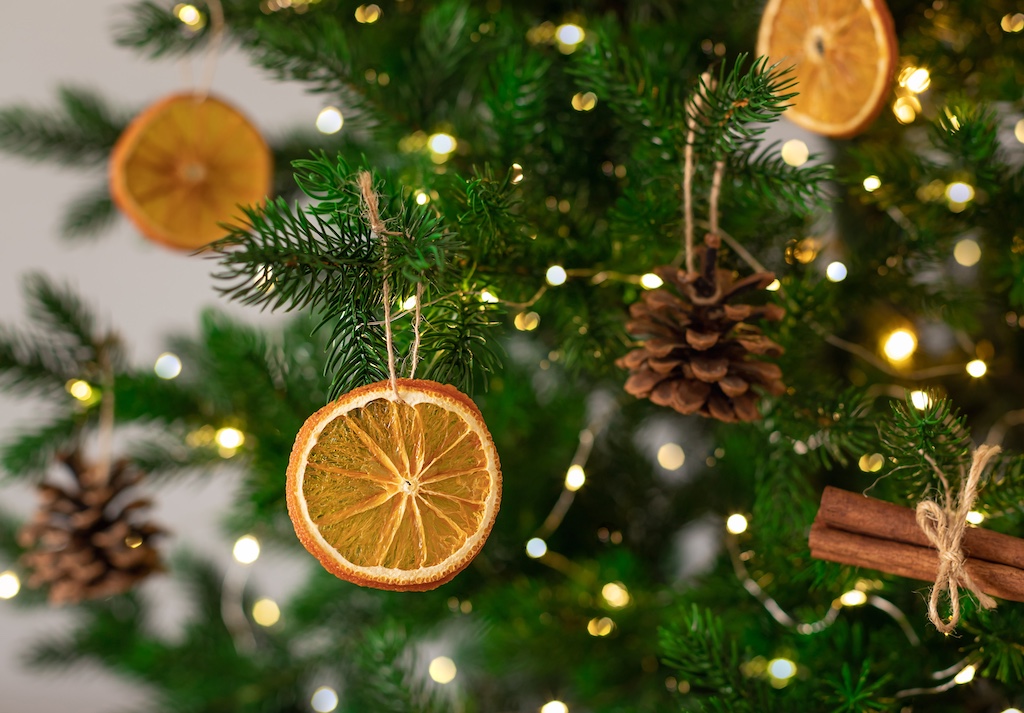
Make your own Christmas decorations
Most Christmas decorations that you can buy from a shop are not recyclable, so a fun, kid-friendly alternative is to make your own decorations through a crafts making session. Make paper chain decorations to use instead of tinsel. Make Christmas-themed origami. Create crochet or felt ornaments. Check out some of the things you can make through tutorials here.
[See more: Mark your calendar: sports to watch over the Christmas break 2025]
If you have already bought Christmas decorations from a shop, the most sustainable thing for you to do is reuse those decorations yearly by storing them safely away until Christmas rolls around again.
Switch to LED lights
During the festive season, fairy lights are a great way to decorate, especially If you’ve got a Christmas tree at home. Opt for LED lights, because they use less energy and last longer.
[See more: Ralph Lauren Christmas: Why this nostalgic decor trend is replacing beige minimalism in 2025]
Avoid using lights that require batteries, because single-use batteries are a major source of hazardous waste. Instead, choose lights that have plugs. Rechargeable batteries are also a reasonable alternative.
Reduce food waste by planning ahead
Festive food waste in the UK alone is estimated at 200,000 tonnes each Christmas, according to Business Waste. Now imagine that on a global scale.
[See more: How the Christmas spirit at a hospital bedside brought Katy Weatherly home to Macao]
Plan ahead and be realistic about how much food you actually need. By all means, indulge in your favourite Christmas treats, but realise that you will not eat much more than you normally will. Encourage your friends and family to bring containers with them to take leftovers home, and avoid using plastic clingfilm.