AI glasses sales in China jumped roughly 80 percent year-on-year in Shenzhen’s Huaqiangbei electronics market this winter – and that acceleration is now rippling across the industry.
Industry projections estimate that smart glasses shipments in China could reach around 2.75 million units in 2025, more than doubling from the previous year. Globally, the AI smart glasses market is valued at approximately $2.9 billion this year, with long-term growth expected as hardware improves and prices fall.
[See more: Shenzhen’s Huaqiangbei market fuels Greater Bay Area’s AI spending surge]
Those numbers remain small compared with smartphones. But the growth curve is steep, and some of China’s largest technology companies are now entering the category simultaneously.
New contenders are emerging, including XGIMI’s MemoMind glasses and Meizu’s StarV Air2, as more companies experiment with AI-powered eyewear.
Other contenders and experimental models are emerging, but the six brands below represent the most concrete and widely reported AI glasses currently on the market in China. Here are six brands shaping what increasingly looks less like experimentation and more like a market forming in real time.
Xiaomi AI Glasses
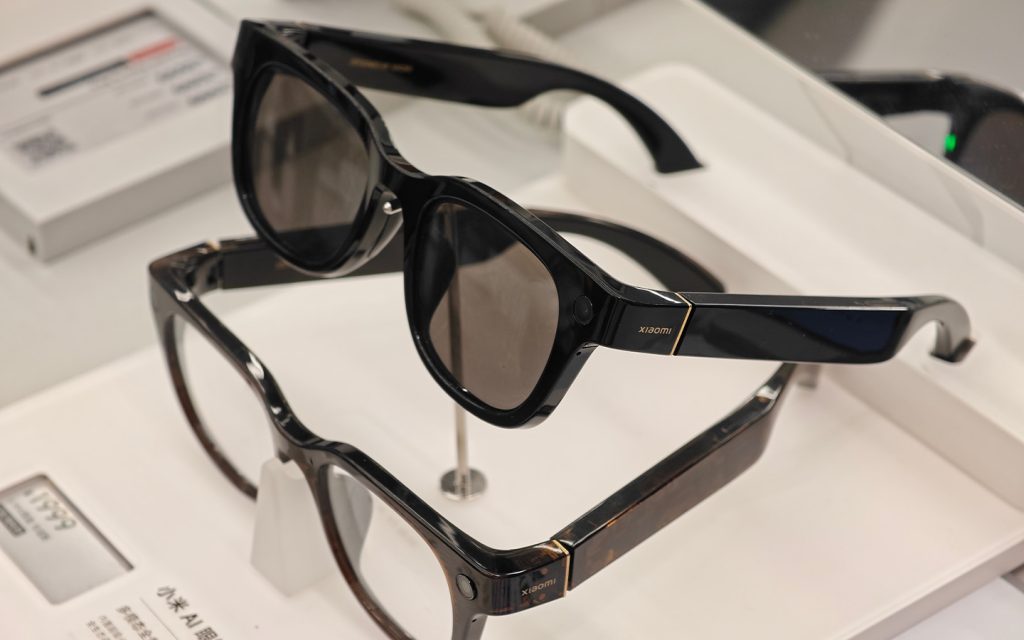
When Xiaomi entered the AI glasses category in 2025, it did so with a product designed to feel familiar rather than experimental.
Xiaomi’s AI glasses include a 12-megapixel ultra-wide camera capable of capturing 2K video and support real-time translation and voice interaction powered by Xiaomi’s XiaoAI assistant, according to the brand’s official product page. The device runs on a Qualcomm-based AR platform and supports Wi-Fi and Bluetooth connectivity, with battery life designed for several hours of typical daily use.
[See more: Staff at Accenture have been told that ‘regular adoption’ of AI tools is key to promotion]
At launch in China, pricing began at around 1,999 yuan (approximately $275). Versions featuring electrochromic lenses – which darken on demand – reached roughly 2,999 yuan (about $410), depending on configuration.
By placing AI glasses in a pricing bracket closer to a premium wearable than a luxury gadget, Xiaomi signalled that this category is meant for everyday consumers, not just early adopters.
Rokid AI Glasses
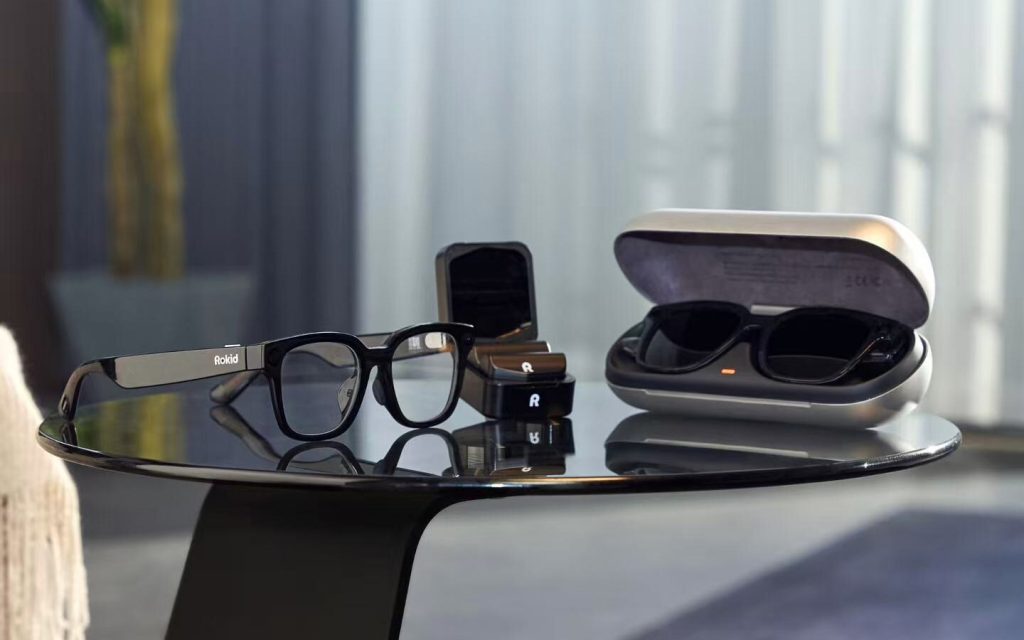
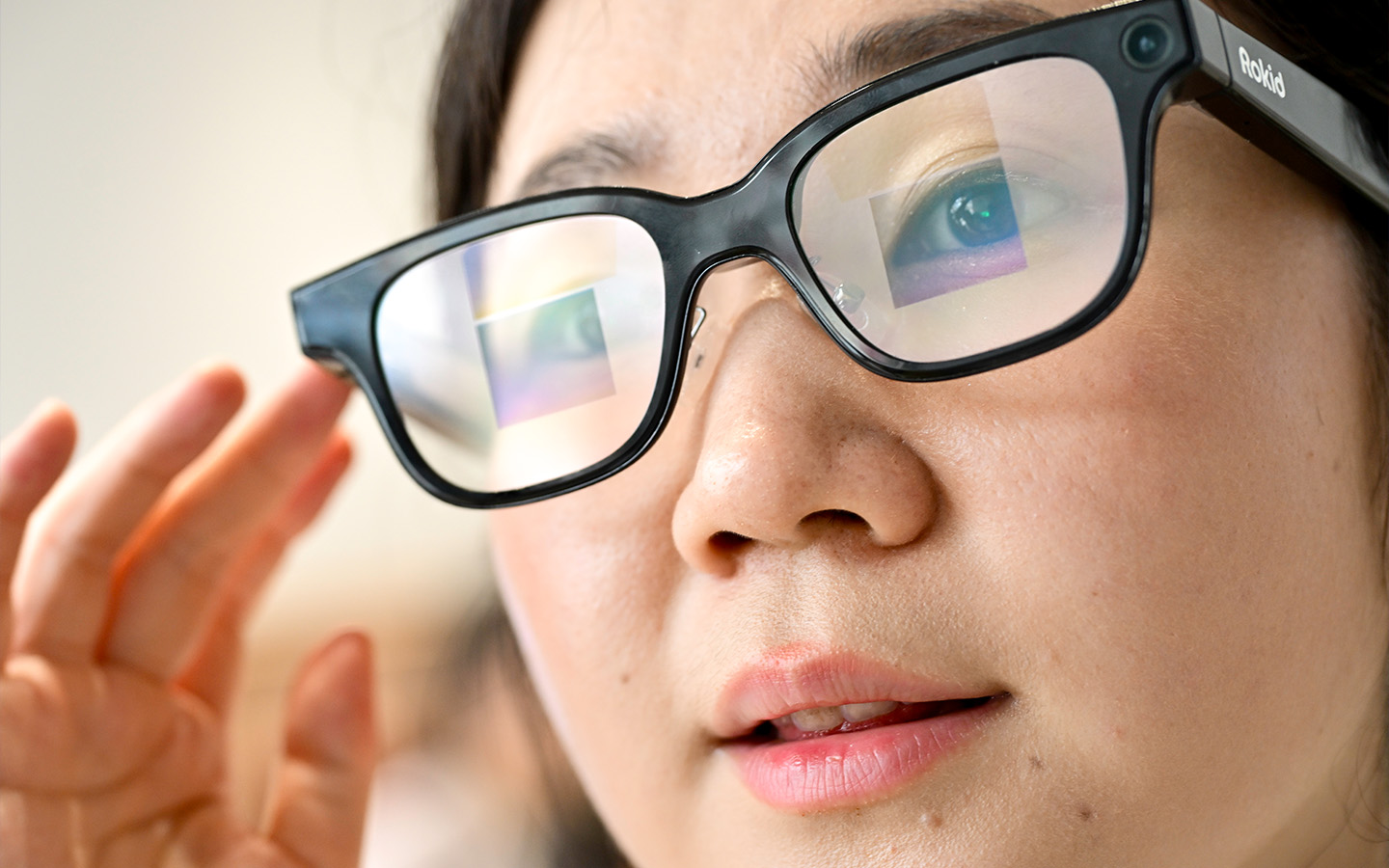
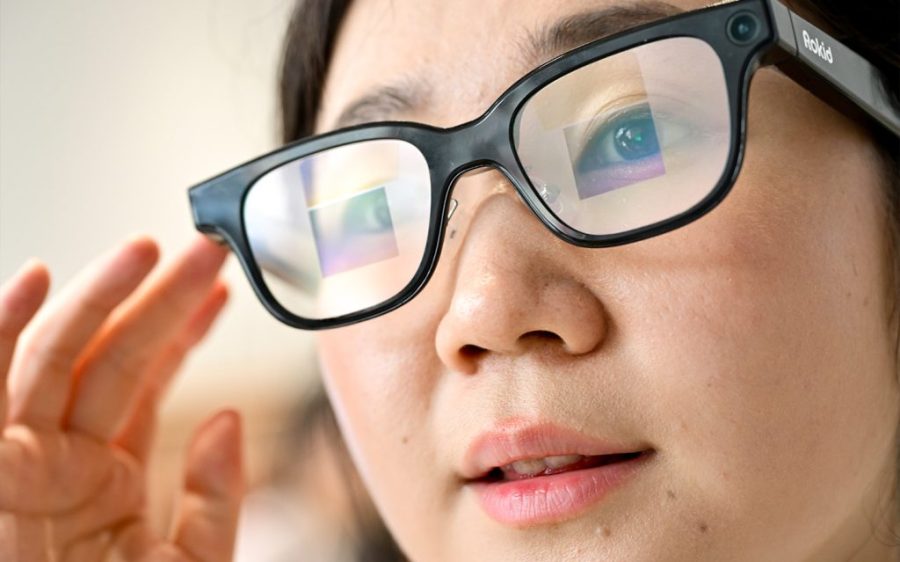
Rokid has taken a technically ambitious approach to AI eyewear, introducing ultra-light frames that blend AI assistance with everyday use.
On its official product page, Rokid describes the Rokid AI Glasses Style as weighing just 38.5 grams, making them comfortable for extended wear. They include a built-in 12 MP camera for hands-free photos and videos, and the integrated AI can respond to voice commands for tasks like translation, navigation and contextual information while you’re on the move.
[See more: ‘Amazing.’ IOC president tries Shenzhen-made AI glasses at Milano 2026 Winter Olympics]
The Style model supports voice interaction in multiple languages and offers up to about 12 hours of mixed AI, camera and audio use on a single charge, indicating practical battery life for typical daily scenarios.
Reported pricing for these glasses starts around $299 for the Style variant, with prescription lens options and custom colours available in some regions. Rokid’s focus appears to be on combining AI utility with comfort and form factor, positioning its glasses as tools for hands-free assistance as well as casual capture.
Huawei Eyewear 2
Huawei’s approach with its Eyewear 2 series is more understated than some other entrants.
The glasses focus on open-ear audio that lets you listen while staying aware of your surroundings, powered by an acoustic design that balances clarity and ambient awareness. They use smart gesture and touch controls – double-tap to play or answer calls, hold to wake the voice assistant, and swipe to adjust volume – all without needing to reach for your phone.
Official figures show around 11 hours of audio playback and up to 9 hours of call time on a full charge, with fast charging available and splash resistance rated at IP54.
[See more: There’s now a social networking platform for AI bots, but experts aren’t impressed]
Some editions, including premium variations, add features like voice-activated translation and contextual alerts, but the overall emphasis remains on discreet intelligence embedded in frames that look and feel familiar. This suggests that for many users, subtle smart functionality may be more appealing than overt hardware or visible cameras.
Prices in China typically sit around 2,299 yuan (approximately $320), depending on edition and materials.
Alibaba Quark AI Glasses
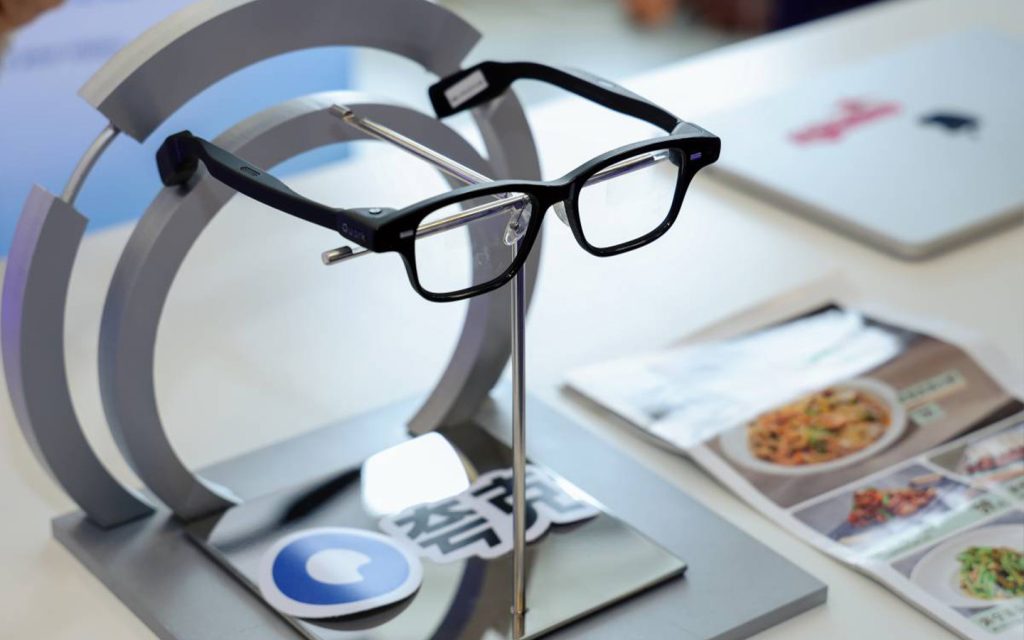
Alibaba’s late-2025 launch of its Quark AI Glasses marked a strategic escalation.
Powered by the company’s Qwen large language model, Quark integrates translation, navigation and contextual assistance directly into Alibaba’s ecosystem. The entry-level G1 model starts at approximately 1,899 yuan (around $268), while higher-end S1 versions reach roughly 3,799 yuan (about $537), depending on configuration.
[See more: Disagreements emerge over South Korea’s ‘world-first’ AI law]
With distribution through major e-commerce platforms and integration into payment and retail services, Quark signals that AI glasses are being treated as infrastructure – not experiment.
RayNeo AR and AI Glasses
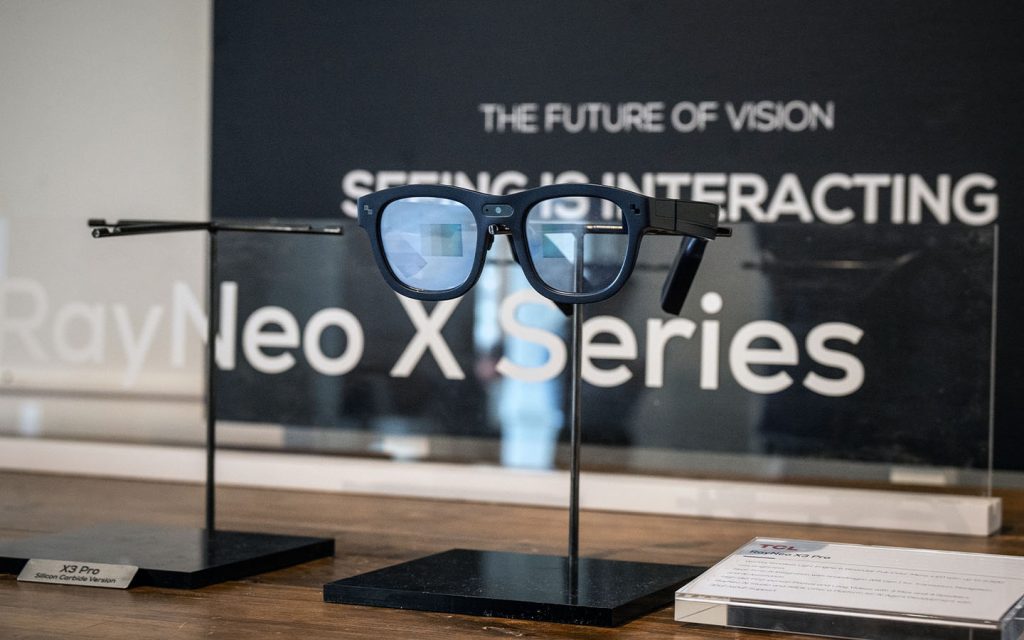
RayNeo represents the more immersive end of China’s AI eyewear spectrum.
Its X2 AR glasses feature dual micro-OLED waveguide displays that project digital information directly into the wearer’s field of view, combining real-time translation, navigation overlays and voice interaction in a hands-free format. The higher-end X3 Pro, launched globally in late 2025 and recognised by Time as one of the year’s notable inventions, pushes further into visual computing with advanced display capabilities and onboard AI processing.
[See more: Scaling up AI investment outweighs environmental concerns, survey finds]
RayNeo’s Air series takes a more accessible approach, offering wearable display glasses with large virtual screens, with some variants priced from the mid-$200 range, depending on configuration.
Unlike brands focused primarily on audio or assistant features, RayNeo is positioning glasses as immersive AR devices – blending AI with visual computing rather than treating the two separately.
INMO Air series
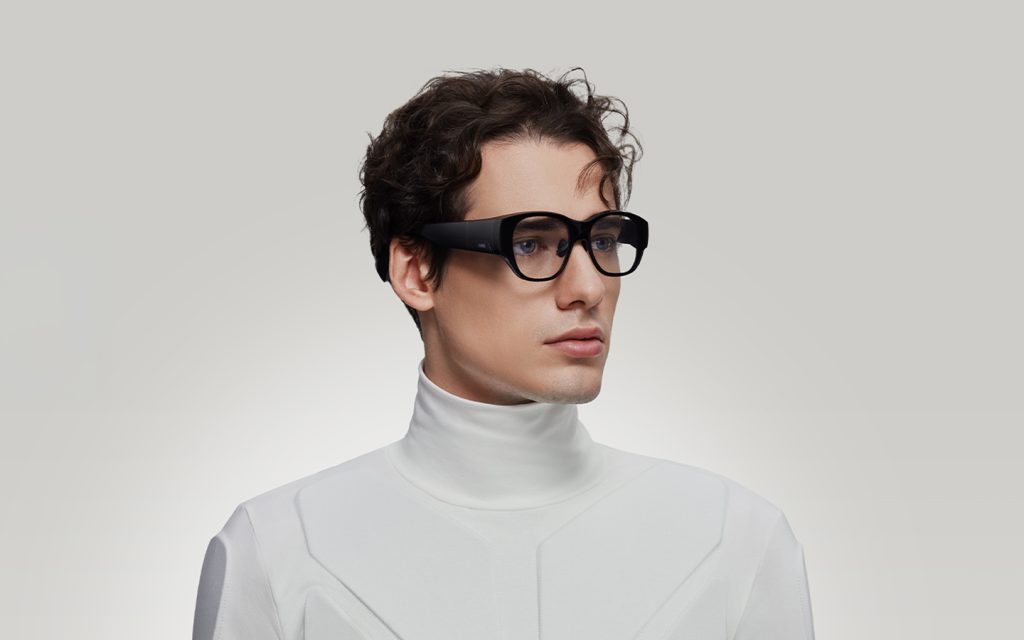
INMO represents the premium, display-driven edge of China’s AI glasses ecosystem.
Its Air series emphasises full-colour 1080p optical waveguide AR displays that overlay digital information into the user’s field of view, delivering clarity and brightness not commonly available in lightweight form factors. According to the brand’s official page, the INMO Air3 is marketed as an all-in-one AR glasses system with standalone visuals and integrated vision hardware designed for immersive augmented reality experiences.
[See more: Hong Kong, Shenzhen to deepen finance and AI cooperation]
These capabilities place the device closer to a portable AR system than eyewear tied solely to phones or simple notification overlays. The official price for the Air3 is $1,099, reflecting its position as a premium AR product with advanced display technology and a comprehensive feature set.
Though still a niche segment today, INMO highlights how quickly the broader category is expanding beyond translation and notifications into full augmented reality experiences supported by integrated display hardware.