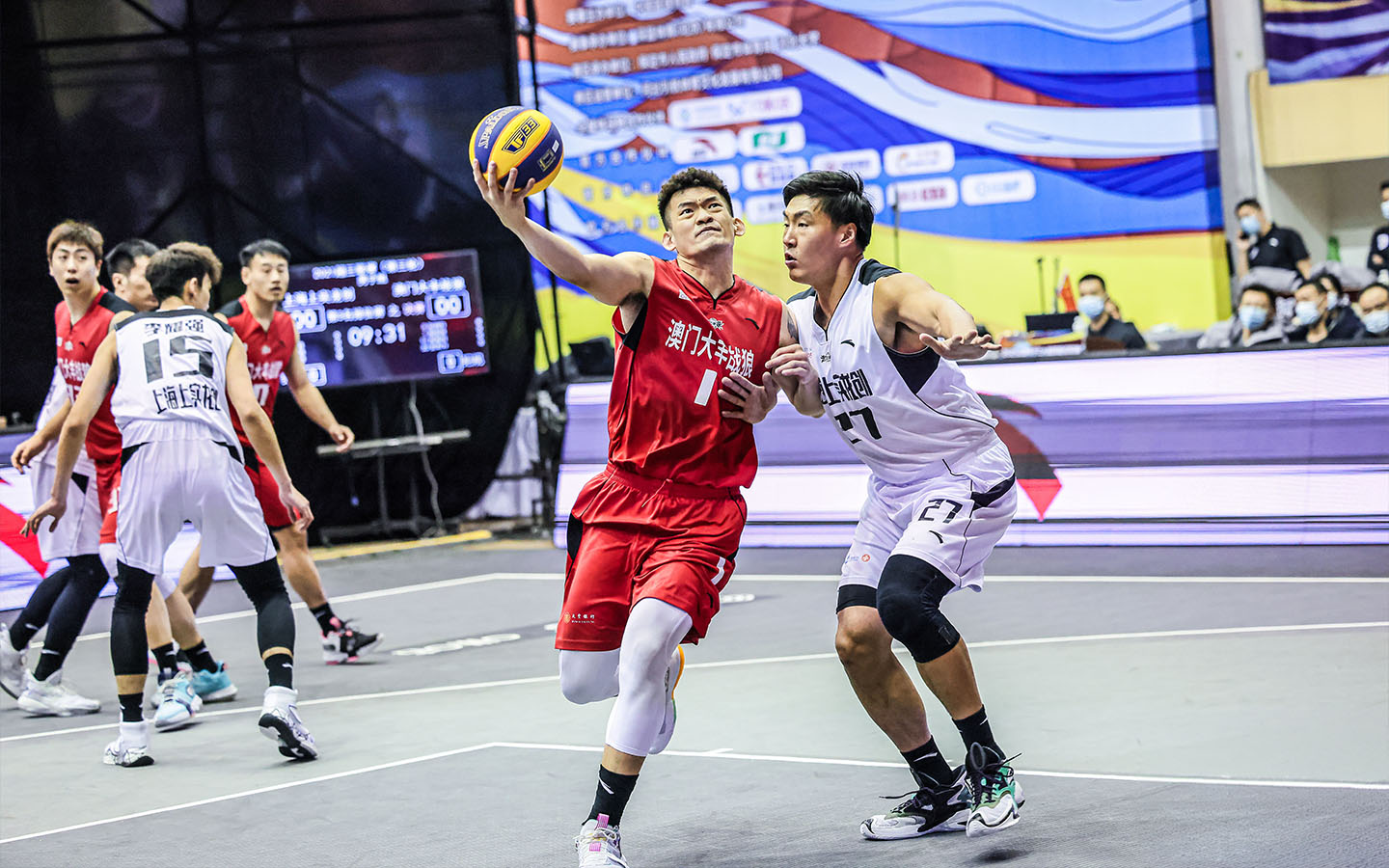
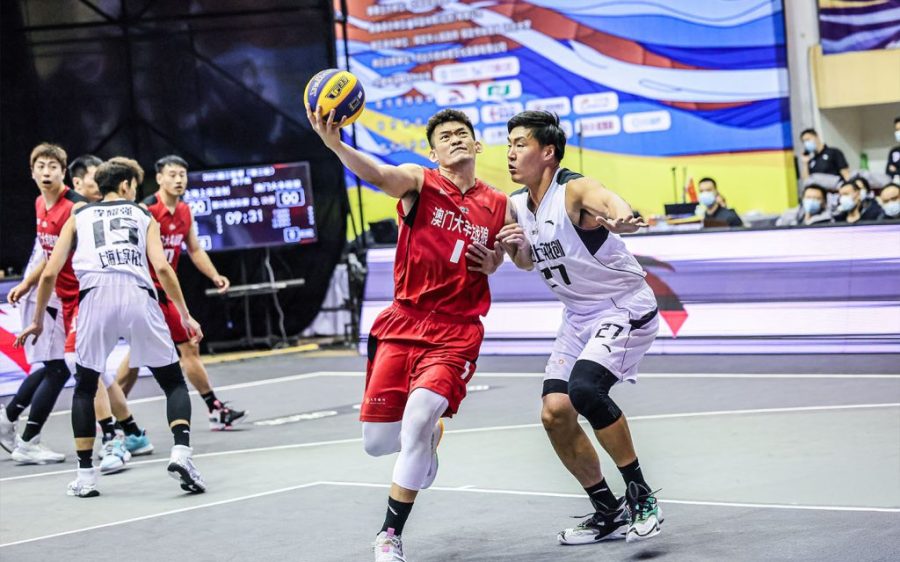
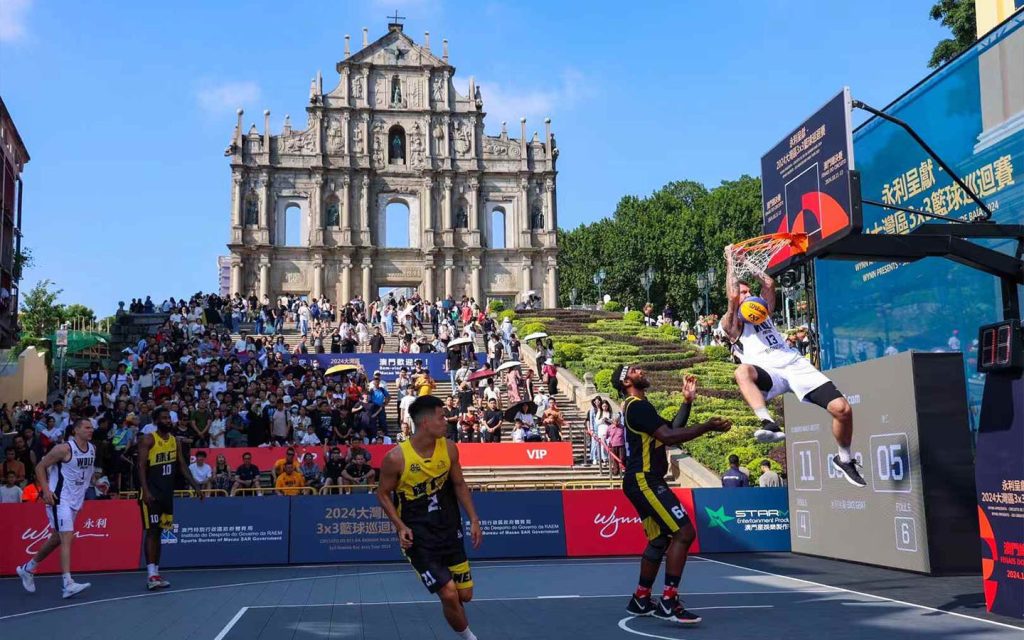
For four days in late October, a temporary half-court stood beneath the Ruins of St Paul’s in Macao. Players from across Guangdong, Hong Kong and Macao took turns under the same stone façade, competing in the finals of the 3×3 Greater Bay Area Tour 2025 after weeks of qualifying rounds across the region.
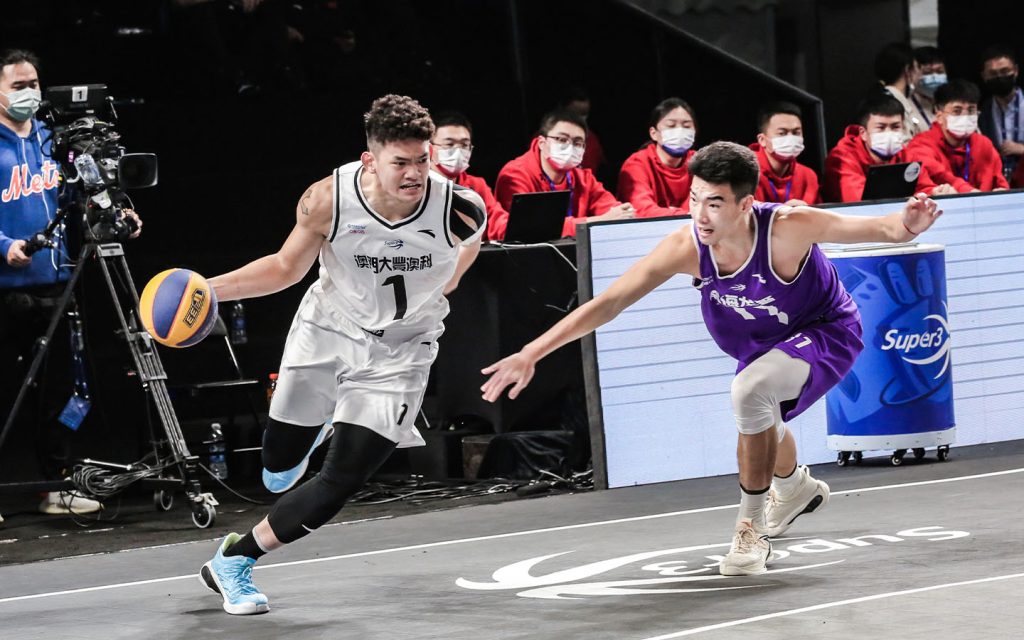
Unlike traditional five-on-five basketball, 3×3 is played on a half-court with three players per side. Games last ten minutes or end when a team reaches 21 points. Possessions are short, the pace is constant, and there is little room for error. A turnover can decide a match. So can a gust of wind.
[See more: Dallas Mavericks to play Houston Rockets at NBA China Games 2026 in Macao]
Staging the finals at prominent landmarks, including the Ruins of St Paul’s and the Wynn Palace lawn, reflects what organisers say the tour is trying to achieve. Rather than confining games to indoor arenas, the circuit moves between cities and different urban spaces, bringing together club teams from across the Greater Bay Area for repeated competition.
The broader question behind the tour is simple but ambitious: can 3×3 become to the Greater Bay Area what futsal is to Brazil, a shared playground where young players across different cities grow up playing the same game?
Learning the rhythm of 3×3
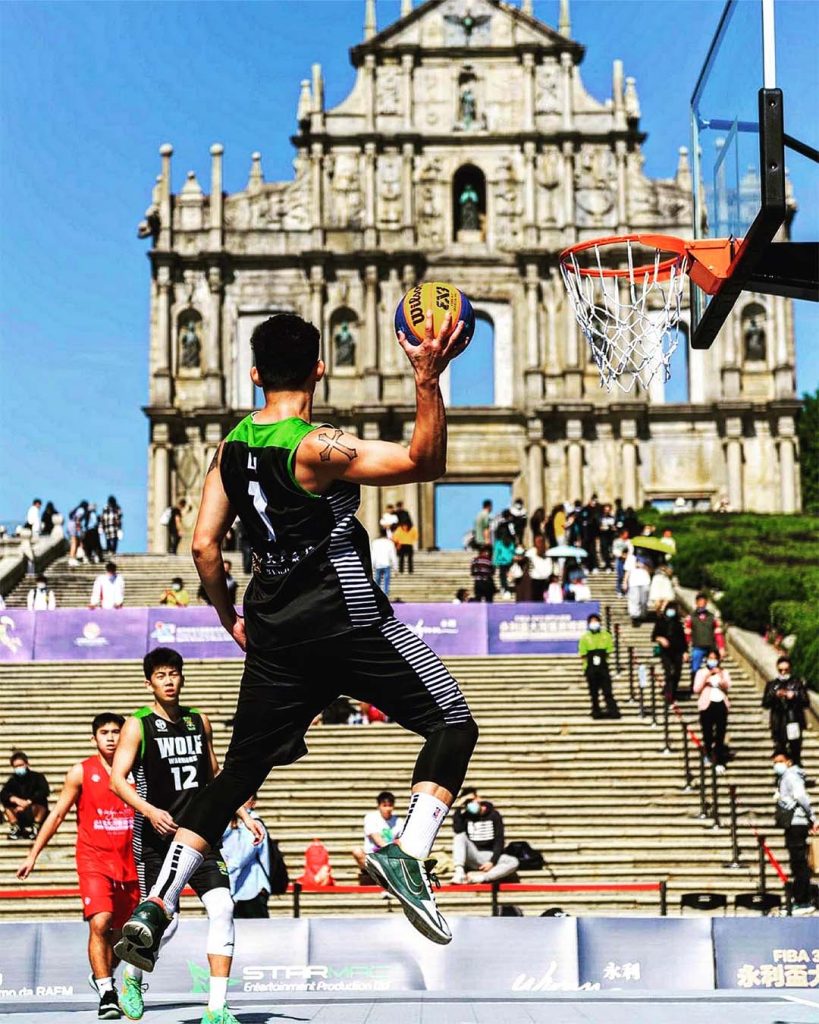
For Macao-born Lai Ka Tong, the appeal of 3×3 lies in its intensity. “It’s fast and intense,” the 30-year-old says. “You have to attack when you receive the ball. The fault tolerance is very low.”
Between 2021 and 2023, Lai played 3×3 with MUST Elite Sport Club in Macao, competing in tournaments held at the same historic site where the 2025 finals were staged. Those games were part of the earlier wave of organised 3×3 events in the city. The club no longer runs, but the experience shaped his development in the format.
While much of his training in Macao takes place indoors, many GBA tournaments are played outdoors. That shift brings different challenges. “The wind will affect the shots,” Lai says. “So we have to adjust more.”
[See more: Inside the Asian University Basketball League’s rise with Jay Li]
He also notices differences in playing style when facing teams from other cities. Guangdong sides, he says, are often stronger and taller. Hong Kong teams tend to play quicker and more creatively in tight spaces. Macao teams adapt by relying on speed and awareness.
“The opponents are stronger,” he says. “So we have to play fast and smart.”
During the finals in Macao, the home crowd added another layer. Competing beneath the familiar skyline, Lai and his teammates felt the noise around them.
“The crowd encouraged us very much,” Lai says. “They cheered for us, and we felt great playing in front of them.”
These are club teams rather than national sides, and the rivalries are competitive. Still, the repeated cross-city matchups are gradually creating familiarity. Players who might once have remained local competitors are now encountering each other regularly through a shared circuit.
A regional platform
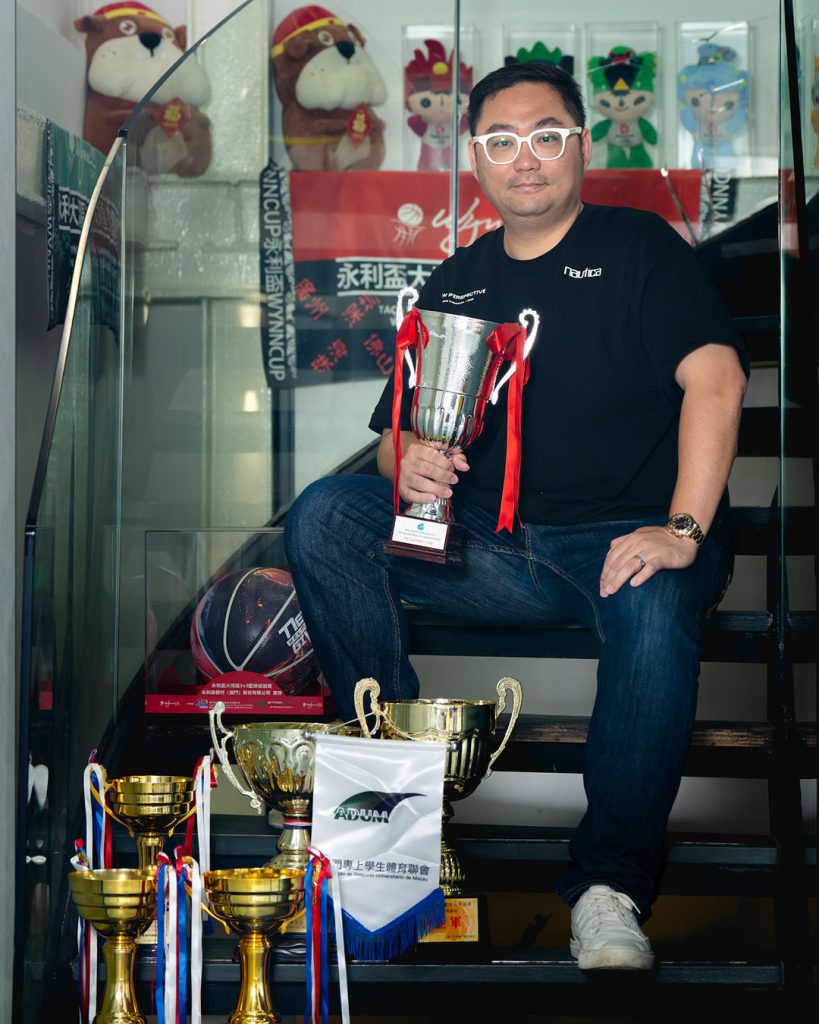
The tour was conceived with that repetition in mind. Organiser Ryo Lou describes it as both a response to personal passion and to the moment. In the years following the pandemic, as Macao sought to expand its sports industry and diversify its economy, 3×3 offered a format that was flexible, recognisable and easier to stage across different urban settings.
Qualifying rounds were held in multiple Greater Bay Area cities, with top teams advancing to the Macao finals. The 2025 edition included men’s and women’s competitions, as well as a youth “Stars of Tomorrow” category that brought together more than 30 youth teams.
Lou sees the structure as a way to encourage sustained exchange rather than one-off events. Players travel between cities. Fans follow the circuit. Styles meet repeatedly on the same half-court.
[See more: University of Macau coach Lam Teng Long on winning a national basketball title]
“When teams from different cities meet on the same court, it’s not just a game,” Lou says. “It becomes a dialogue about the character of the Greater Bay Area.”
When asked about those styles, Lou also outlines clear distinctions. Guangdong teams, he says, are disciplined and tactically structured. Hong Kong sides often rely on speed and individual technique. Macao teams reflect a mix of influences. He views these contrasts as part of the region’s character rather than obstacles to cohesion.
From tournaments to schools and parks
If 3×3 is to become a shared sporting language across the Greater Bay Area, it will likely depend on how deeply it embeds itself beyond organised tournaments.
Lou says schools in Macao and Hengqin have moved quickly to incorporate 3×3 into physical education classes and extracurricular competitions. “Schools have been quick to include 3×3 basketball in PE lessons and student competitions,” he says.
The Education and Youth Development Bureau in Macao, together with the basketball association, has supported student 3×3 leagues. At the same time, Greater Bay Area events have reinforced efforts to bring basketball further into campuses.
[See more: ‘I want to show that a kid from Macao can work,’ says Macau Black Bears’ youngest star Leo Lei]
Infrastructure is also expanding. Schools and public parks are increasingly building dedicated half-courts designed specifically for 3×3, many aligned with FIBA standards. Facilities are becoming more standardised and visible within communities.
For players, the format’s accessibility remains central. A half-court is enough. Games are short, allowing tournaments to be completed over a weekend and multiple matches to be played in a single day. “You just need a half basketball court,” Lai says. “The tournament can end in two or three days.”
A shared space, still evolving
The Greater Bay Area is often discussed through infrastructure and economic integration. The 3×3 tour operates on a smaller scale, but it offers its own form of connection. Through recurring tournaments, visible public venues, school programmes and youth participation, it creates repeated encounters between players from Guangdong, Hong Kong and Macao.
Those encounters do not erase differences. Styles remain distinct. Conditions vary. Players continue to adjust.
[See more: EASL finals 2026 Macao: Dates, teams, tickets and US$2.6M prize pool]
What the tour has created, however, is continuity. Season after season, the same cities return to the same format. Young players are seeing 3×3 not as an occasional novelty, but as part of the basketball landscape available to them.
Whether it will fully become the default playground for a generation across the Greater Bay Area remains uncertain. What is clearer is that the half-court is becoming a meeting point, one where players from different cities return again and again, learning each other’s styles under the same open sky.