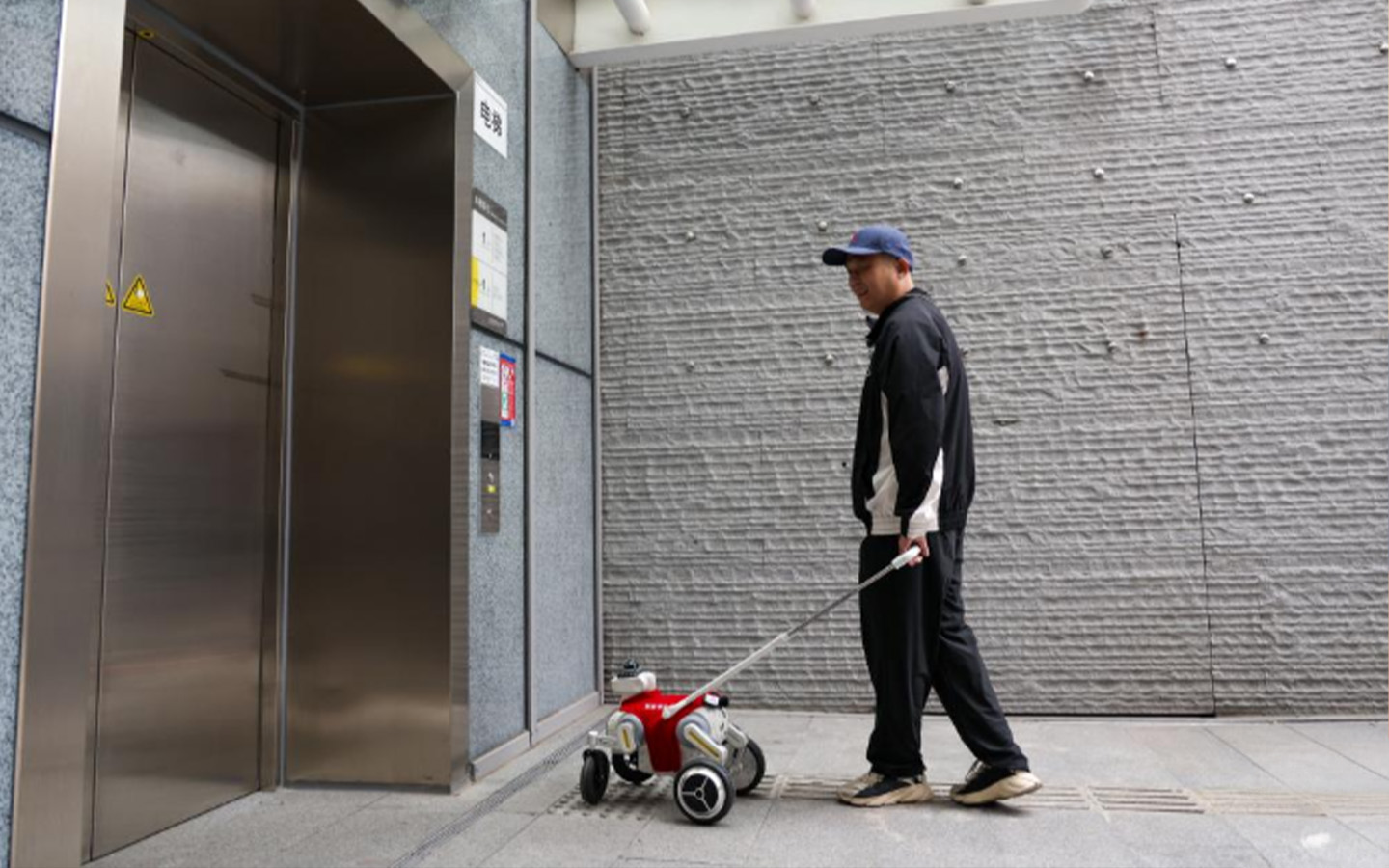

The Shenzhen Metro is trialling an artificial intelligence (AI)-powered robotic “guide dog” designed to assist visually impaired passengers navigate complex metro station environments, regional media reports. Operators have described the offering as a first for the global rail transit industry.
The robo-dog, named Xiaosuan, began experimental operations on December 13 at Huangmugang station in Futian district.
According to the operator, Xiaosuan integrates multiple AI technologies, including advanced sensing systems, indoor and outdoor navigation planning, and large visual language models. These enable autonomous route planning, precise navigation, obstacle avoidance, tactile paving tracking, voice interaction and visual recognition.
[See more: Robots are now riding the Shenzhen Metro to make deliveries]
Visually impaired passengers can issue voice commands to the device, which then guides them to designated service points within the station. After completing a trip, Xiaosuan will return to its docking area in response to a voice command, Shenzhen Metro said.
The trial unit was deployed near the accessible elevator area close to exits 13 and 14 at Huangmugang station on Saturday. During the month-long pilot phase, staff will accompany users to ensure their safety.
Shenzhen Metro said the project reflected broader efforts to enhance barrier-free public transport. The operator added that all 485 metro stations in the city now offered barrier-free services, and that its robotic guide dog would be expanded to more stations if deemed successful.