
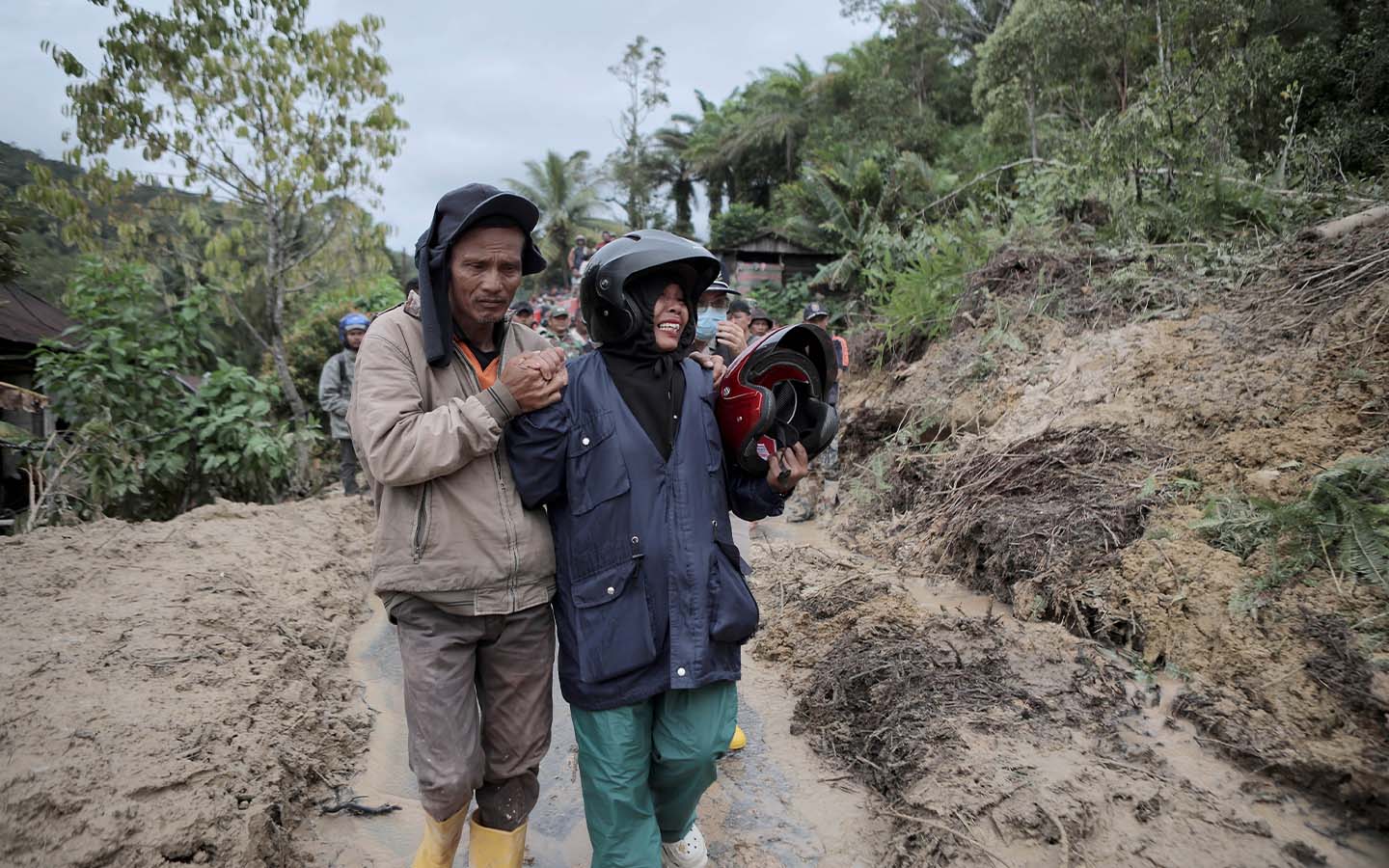
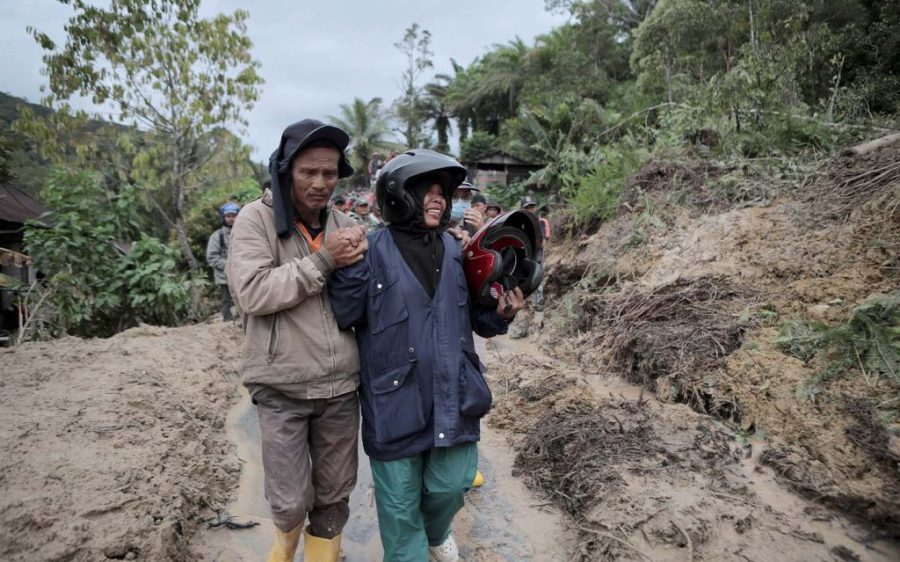
The death toll in the floods and landslides that swept across Southeast Asia over the weekend has exceeded 900, as authorities in Thailand, Sri Lanka and Indonesia struggle to cope with the aftermath of heavy monsoon rains and a tropical cyclone.
Researchers say the extreme weather has been intensified by climate change, extending the duration of monsoon seasons, creating both heavier precipitation and stronger winds.
“Climate scientists have already warned that extreme weather events … will continue to worsen as temperatures increase,” Renard Siew, a climate change advisor to the Centre for Governance and Political Studies in Malaysia, told France 24. “That is exactly what we have been seeing.”
Thousands in the region are without food, shelter or basic necessities according to multiple media reports. Hundreds of people remain unaccounted for.
[See more: Global climate change is behind the rise in severe typhoons]
In Sri Lanka, landslides and deluges triggered by Cyclone Ditwah have caused 334 deaths and many parts of the capital remain inundated. President Anura Kumara Dissanayake has declared a state of emergency.
On the Indonesia island of Sumatra, 442 people have been killed, while many areas remain unreachable. Ongoing bad weather and a lack of heavy equipment is hampering efforts, reports say.
In southern Thailand, which has recorded some of the heaviest rain in its history, at least 162 lives have been lost.
Meanwhile, tropical storm Koto has killed at least three people as it approaches Vietnam. The country is already reeling from storms last week that left 91 people dead. Two deaths from flooding were also recorded in Malaysia.