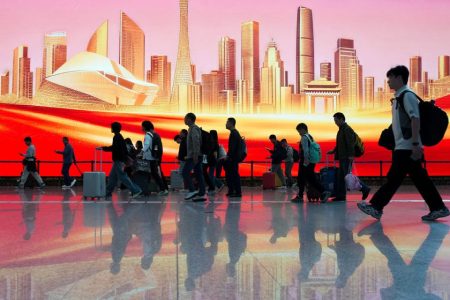


The French capital of Paris has a lot going for it, with stunning monuments such as the Eiffel Tower and a reputation for romance and high culture. In 2024, the city reaffirmed its status as one of the premier tourist destinations in the world by attracting some 48.7 million visitors.
While Paris can be incredibly beautiful, it also has a less glamorous side that contrasts sharply with its picturesque and idealised depiction in films such as Midnight in Paris (2011) or the TV series Emily in Paris (2020-present). Like other major world cities, the City of Lights is also plagued by issues such as filth, overcrowding, crime, poverty and social inequality.
For some tourists in Paris, this divide between expectation and reality can prove to be too much to bear. In fact, a term already exists to describe this psychological condition, with Japanese psychologist, Hiroaki Ota, popularising the phrase “Paris Syndrome” in his 1991 book of the same name.
[See more: Gen Z travellers prioritise local food and natural scenery]
Ota observed that this phenomenon of extreme travel disappointment was particularly prevalent among Japanese visitors, whom he said were inclined to view the French capital through rose-tinted glasses prior to their trip. Some were so disappointed that they experienced severe symptoms such as dizziness, nausea and even vomiting.
In the decades since the publication of Ota’s book, Paris Syndrome has continued to afflict tourists, with Reuters reporting in 2007 that roughly ten Japanese tourists require psychological help each year after being hit with the ailment. Similarly, The Atlantic noted in 2011 that at least 20 visitors in Paris had been stricken with the illness that summer.
What are the causes of Paris Syndrome?
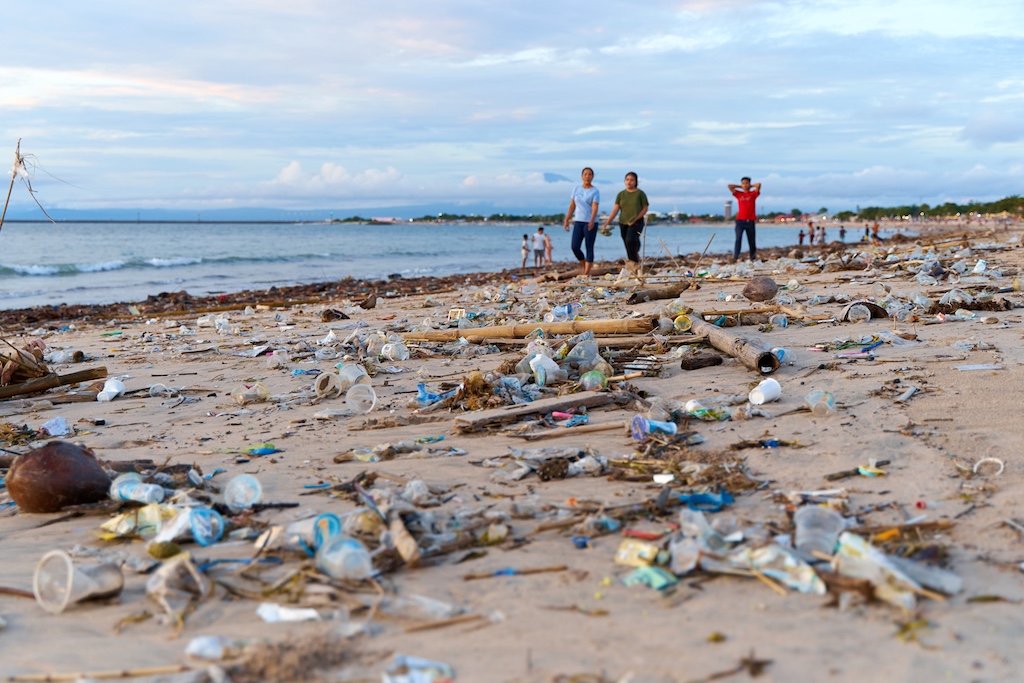
Paris Syndrome is, of course, not confined to Paris, as other major destinations can also elicit feelings of extreme disappointment among tourists of any nationality.
According to Javier Labourt, a clinical psychologist and travel expert, travellers are just as likely to have unrealistic expectations when visiting other well-known and established tourist destinations such as Bali or London, culminating in major travel disappointment.
“These are the destinations [where] the traveller is saying, this trip or this city will be this way, or will be perfect,” Labourt says, adding that “perfection does not exist.”
Take Macao, for example. The city is often represented in promotional videos and TV shows as a glitzy and vibrant casino town brimming with wealth and a unique mix of Portuguese and Chinese culture. While there is certainly some truth to this representation, it also risks oversimplifying the situation on the ground.
[See more: Buckle up. Climate change is making flying more turbulent]
For starters, Macao’s older districts house many ageing, rundown buildings that conflict with the city’s image as a place of rampant wealth. While Macao’s Portuguese legacy lives on through various facets of its culture such as gastronomy, architecture, street signs and people, the Portuguese language itself is not widely spoken, despite being an official language.
According to the latest 2021 Macao census, only 2.3 percent of the population spoke the Portuguese language fluently – a figure that is significantly less than the 22.7 percent of people who reported being proficient English speakers.
Meanwhile, the tourism sector faces various problems, including overcrowding and poor taxi service. “Transportation is not so convenient,” New York tourists, Justin Fitzgerald and Kitty Pichejkulbordee, told Macao News last year. “In Macao, there’s no Uber. You can’t call a taxi. There’s zero information for tourists about the bus system.”
Similarly, Vasily Prokapov and Anna Sidorchyk, a couple from Amsterdam, spoke of the difficulty they faced in figuring out how to leave the Outer Harbour Ferry Terminal, whose exterior they said was “like a zombie wasteland.”
How can I avoid falling victim to Paris Syndrome?
Social media is also contributing to cases of travel disappointment, with Labourt noting that it has resulted in many tourists neglecting the true meaning of travelling.
“A lot of the people that travel are just wanting this Instagram post, this Instagram feature or this Tik Tok video just to show [off],” Labourt says. “The power of travelling is not about showing. It’s about experiencing.”
The psychiatrist notes that earlier generations, such as those who travelled in the 1950s and 1960s when mass tourism was not ubiquitous, embodied the attitude of experiencing, as they saw each trip as an “opportunity for adventure” and “discovering a new world.”
By contrast, Labourt argues that the various expectations that many modern-day tourists carry with them and the relative ease with which they can travel have made them forget about embracing the actual experience of travelling.
The expert points out that travellers dissatisfied with a trip need to understand that the “experience is not perfect,” but is rather about combining the “good and bad” aspects, which can be integrated into one’s personal growth.
As an example, Labourt cites his two-month long stay in New York during the Covid-19 pandemic in 2020. While the psychiatrist notes that the US city has cultivated a “great reputation” as “the Big Apple, the artistic centre of the world and the capital of the world,” he also recognises the “trashy side of New York,” which includes rats, dangerous subways and poverty.
[See more: Trip.com unveils the latest trends in Macao and Hong Kong tourism]
Rather than “put the spotlight” on these negative components of his trip, Labourt says he integrated them as part of his experience, which also included other positive elements such as Broadway shows and the Empire State Building.
“The whole thing with human experience is to integrate both the positive and negative aspects,” Labourt argues. “Travel is the perfect opportunity to do this integration [and] cities like New York are an amazing [illustration] for this.”
The expert notes that by doing this people can unleash “the potential of travelling” and become “more complex and richer human beings.”
At the same time, he points out that figuring out what one’s travel goals are prior to embarking on a journey can also go a long way to making one’s trip fulfilling.
He explains that setting up a clear objective for a trip – be it visiting geographic wonders, meeting people or trying new food – will give the traveller a structure on the types of experiences that they expect to have.
Above all, the psychiatrist implores people to see travel as “an opportunity for growth and change.” “I think that if we do this, the travel industry will be affected positively, and the world, in the end, will be affected positively,” he says.