
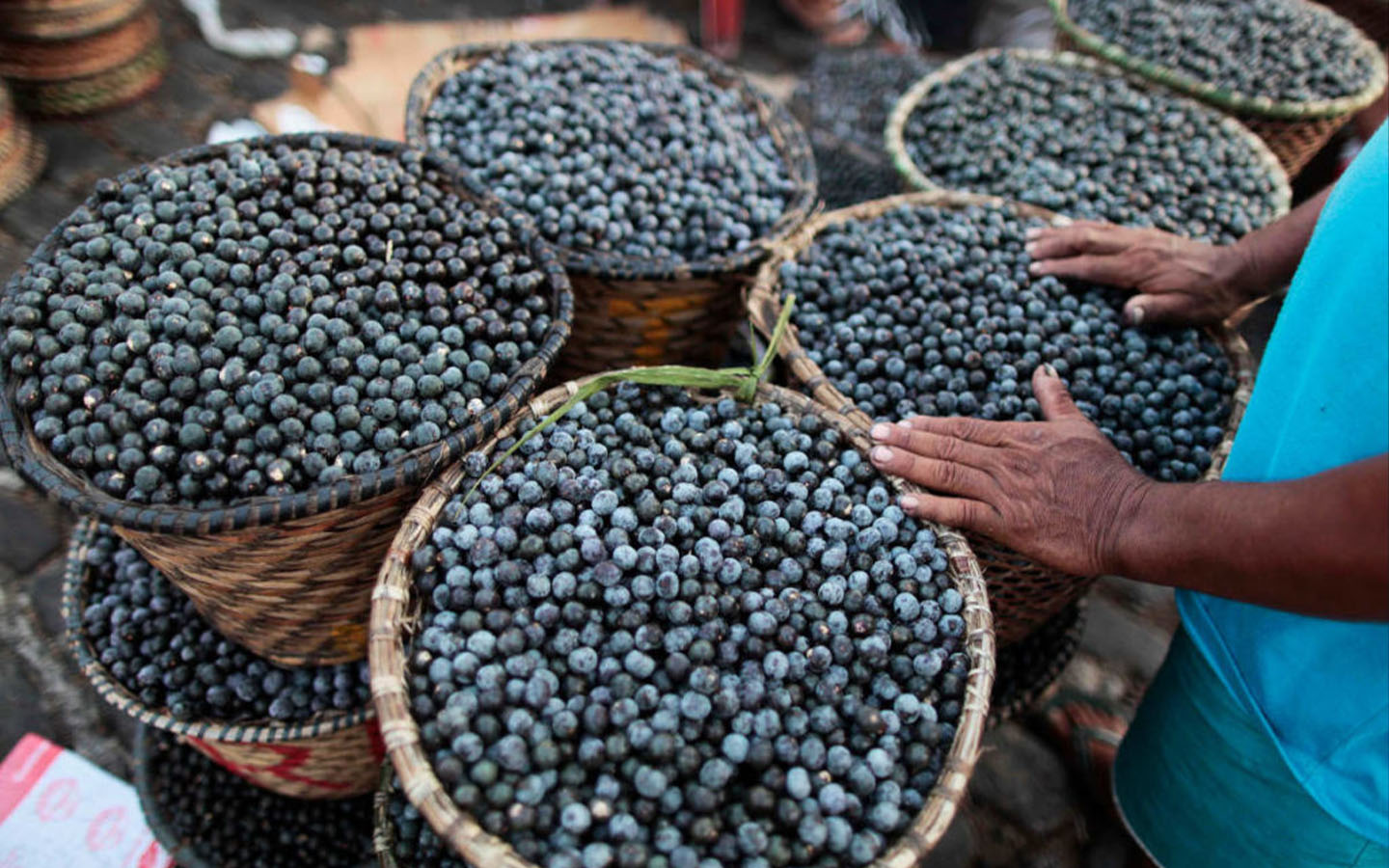
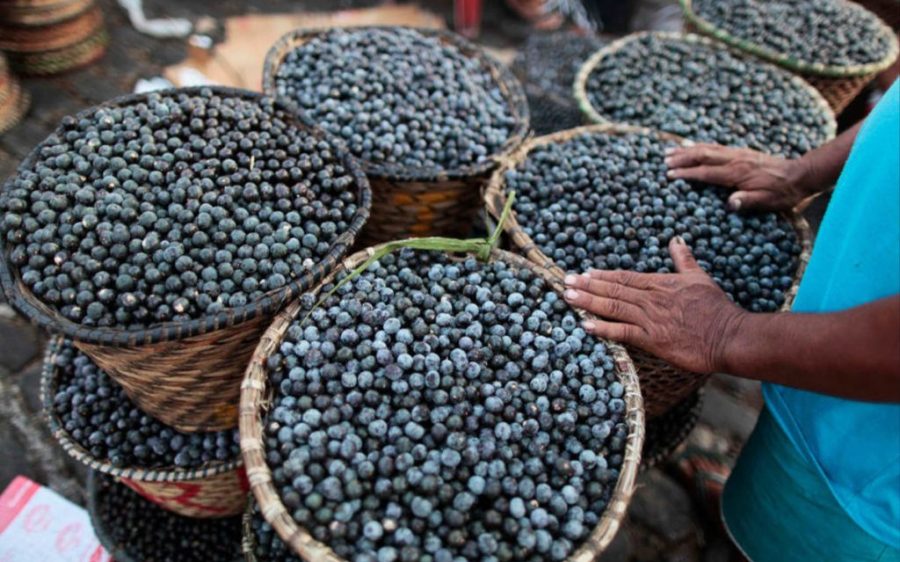
Brazil has recognised açaí as its national fruit amid growing concerns of biopiracy, and the exploitation of Amazonian plants and indigenous knowledge without authorisation or credit, reports environmental news outlet Mongabay.
Açaí, a berry endemic to the Amazon rainforest, has been a staple among local communities for centuries, often eaten as a thick paste alongside fish and manioc flour. The dark purple berry only became popular in urban areas in the 1990s before exploding onto the global stage in the 2000s as an energy-dense “superfood.”
Under the new law, both the açaí palm (Euterpe oleracea) and its berries are recognised as part of Brazil’s biodiversity heritage. While experts frame the recognition as largely symbolic, it does work to “reinforce the identity of açaí as a Brazilian product,” Sheila de Souza Corrêa de Melo, an intellectual property analyst at Embrapa Oriental, the Amazon branch of Brazil’s Agricultural Research Corporation, told Mongabay.
According to the Intellectual Property Division of Brazil’s Ministry of Foreign Affairs, strengthening that distinction will make it more difficult for foreign companies to claim exclusive rights over açaí-derived products.
[See more: São Tomé and Príncipe achieves full Biosphere Reserve status]
Brazil is among the most biodiverse countries in the world, de Melo told the Japan Times, and its rich array of fruits with unique properties are at “enormous” risk of being used in new products developed and patented abroad.
Cupuaçu, another fruit endemic to the Amazon, was trademarked by a Japanese company in the late 1990s. It took Brazil two decades to overturn the trademark, during which time, a different Japanese firm registered açaí as its intellectual property. To prevent future improper registration of such raw materials, the Brazil government formulated a list of thousands of names – both scientific and common – and distributed it to trademark offices around the world.
The new law recognising açaí, first introduced in 2011, is actually an amendment to a 2008 law granting similar recognition to cupuaçu. Brazil has also sought to protect itself against biopiracy with a landmark 2015 law, which includes mandated profit-sharing with indigenous or traditional communities if their knowledge is used in the development of products, and ratification of the Nagoya Protocol in 2021.
Nagoya offers no protection against digitised genetic data, though, and Brazil has struggled with analog biopiracy as well. De Melo argued that Brazil should focus on investing in local research and development to keep benefits in the country.