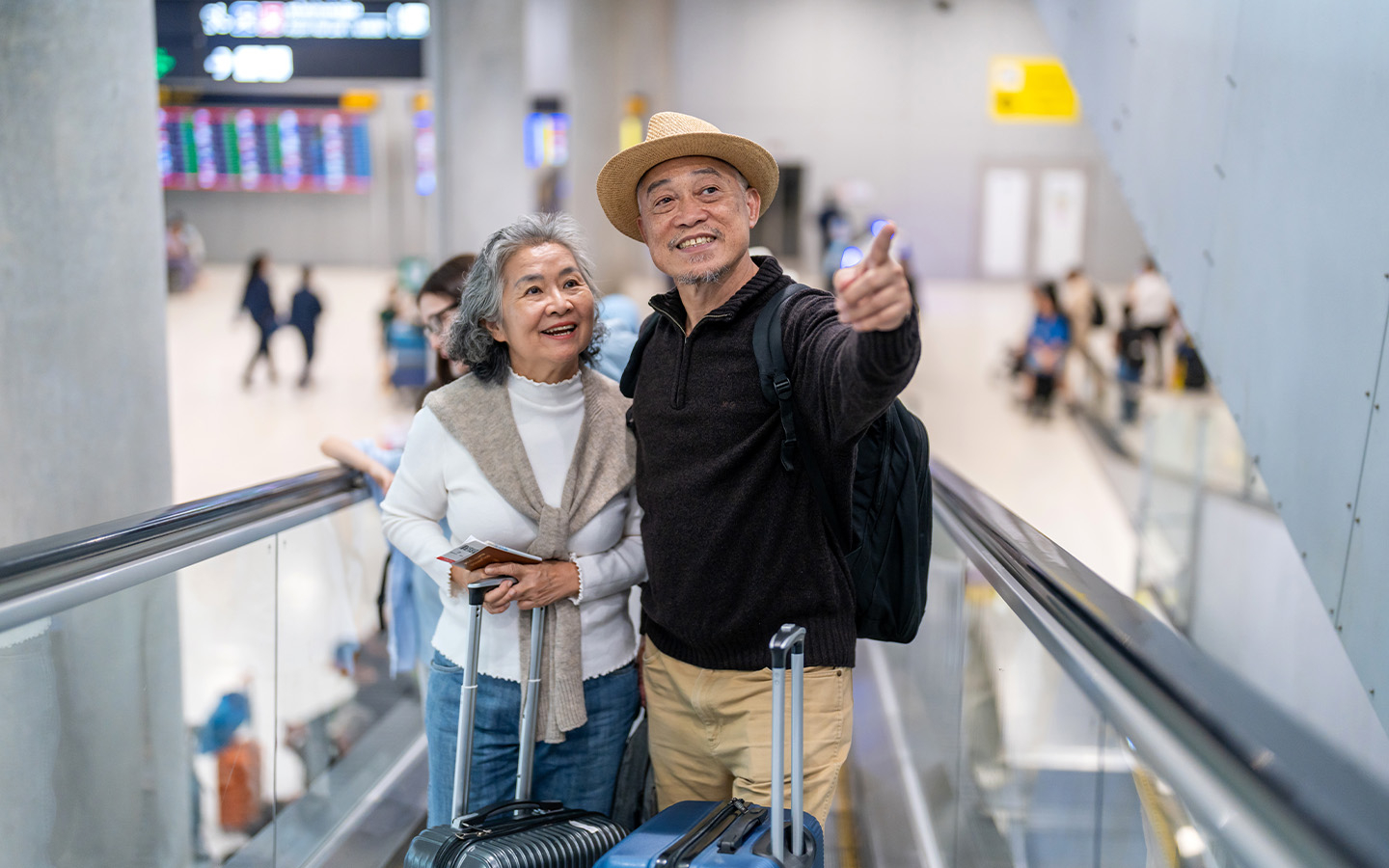
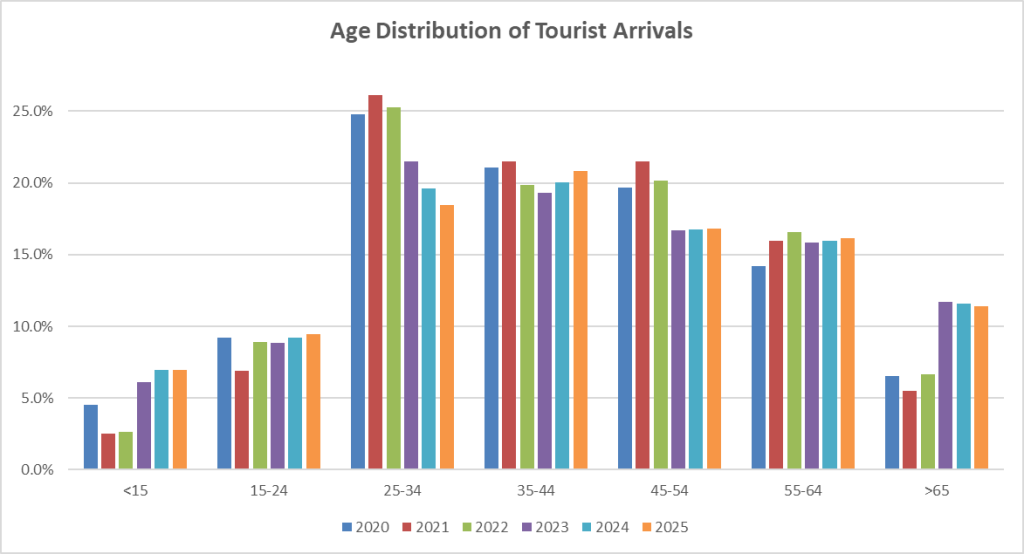
The proportion of Macao’s visitors over the age of 65 has nearly doubled since the start of the decade. In 2025, 11 percent of Macao’s 40 million tourists were born before 1960. And when combined with those born before 1970, the aggregate figure represents a third of the total, according to MGTO data analysed by The Bay.
Colourfully described as ‘silver hair’ consumers, the 65-plus crowd was among Macao’s first age cohorts to fully recover its 2019 levels back in 2023. Since then, senior arrivals have risen at a compound annual growth rate of 11 percent, with the 4.6 million elderly tourists entering Macao last year representing a 13 percent increase from 2024.
[See more: Macao will become a ‘super-aged society’ by 2029, says senior official]
The age bracket is dominated by visitors from mainland China and Hong Kong, who together account for over 90 percent. Yet, despite mainland Chinese travellers outnumbering their Hong Kong counterparts by almost four to one overall, the absolute headcount of silver visitors is evenly split among them, providing unique insights into how Macao might shape the city’s future appeal within a Greater Bay Area (GBA) framework.
Silver and ready to spend
China currently houses more than 250 million adults over the age 60 as the silver hair category is expected to pass 400 million by 2040 and 500 million a decade later. Longer life expectancies are fuelling demand for age-appropriate activities like group excursions, with China’s Tourism Academy projecting the number of elderly travellers to surpass 100 million this year, while senior tourism revenues exceed a trillion yuan ($145 billion).
[See more: China’s tourism revenue to reach $1.7 trillion by 2030. Here’s how the SARs fit in]
“The demographic shifts are happening as seniors are shedding their traditional image of frugality,” shares Ming Yii Lai, strategy manager at Daxue Consulting, in comments sent to The Bay. She adds that the current silver generation is among the wealthiest in the country’s history and has so far demonstrated a greater willingness to purchase goods and services that uphold a better quality of life.
The Shanghai-based consultant estimates the size of China’s silver economy, the market catering to those near or past retirement, to be worth 17 trillion yuan ($2.5 trillion) in 2025, more than double its value from 2020. This figure places per capita output beyond 46,000 yuan ($6,700), an assessment that some say understates the age group’s full spending potential given higher saving norms among the Chinese elderly.
Analysts at Morgan Stanley have identified 30 trillion yuan ($4.4 trillion) in cyclical savings that could be spent over the next six to eight years if targeted welfare reforms reduce the propensity to keep money stashed away, helping boost the share of elderly travellers, who currently make up just 9 percent of China’s domestic tourism market.
Macao’s traditional Chinese medicine and wellness tourism ambitions
Tourists from a greying Greater China region are keeping pace with overall visitation numbers to Macao, steering a flow of silver hair consumers into the GBA and creating new opportunities to develop a local wellness offering, comments Dr. Gabriel Li of the Faculty of Chinese Medicine at Macau University of Science and Technology, speaking to The Bay.
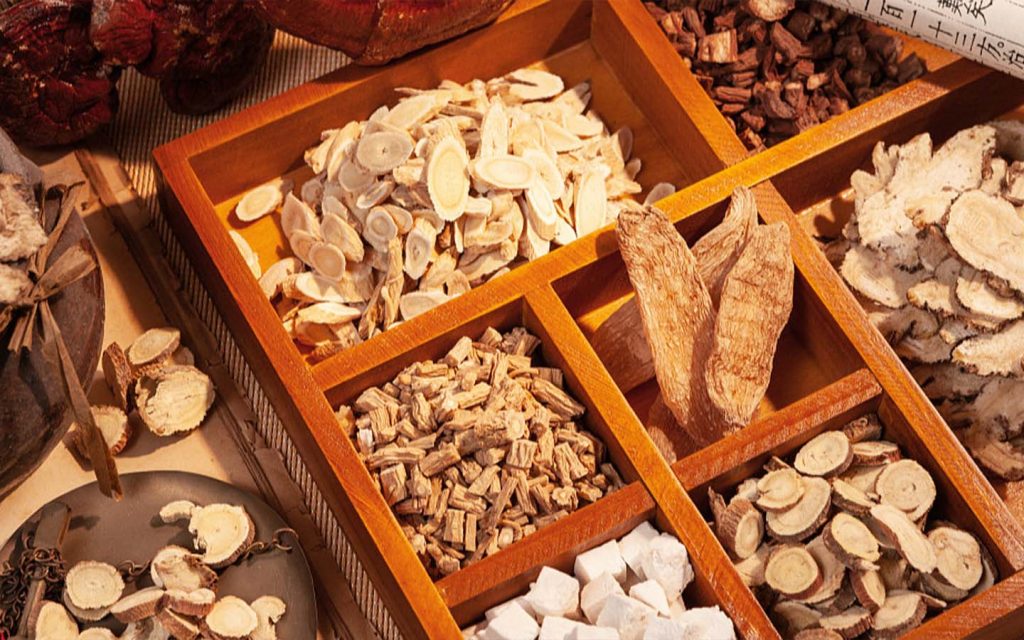
As many older travellers become increasingly focused on preventive care, traditional Chinese medicine (TCM) offers a distinctive value proposition that extends beyond medical services and into Eastern philosophies of health and longevity, Li says, adding that he sees this as a way to leverage Macao’s unique cultural heritage alongside practices such as acupuncture, herbal consultation, and tuina therapy.
Such services contribute to a broader identity pivot. Integrating TCM with Macao’s silver tourism provides the GBA with distinct advantages when other countries are simultaneously expanding their medical industries, explains Dr. Carolina Ung, assistant professor at the Institute of Chinese Medical Sciences at the University of Macau (UM), who references new legislation establishing day hospitals as bridging Macao’s medical professionals not only to GBA patients but also to the region’s aging customer base within a viable commercial structure.
[See more: Integrating TCM into Macao’s medical tourism requires a public-private led task force]
With Macao taking steps to follow regional neighbours like Thailand, which has already invested heavily in its bid to become a leading medical tourism hub, competition is expected to intensify for a market projected to be worth $36 billion by 2032, according to a research paper by Professor Glenn McCartney.
“There’s a snowball effect built into Macao’s 1+4 tourism framework,” the associate professor in integrated resort and tourism management at University of Macao says, adding that unlike established medical hubs, Macao can also lure with an entertainment offering.
“As people are living healthier lives and remaining active longer, it’s short-sighted to think that senior visitors only want to see doctors. Let’s not forget, they’re also looking for world-class entertainment, which remains a key reason why Macao’s tourism numbers continue to reach new highs,” he remarks.