
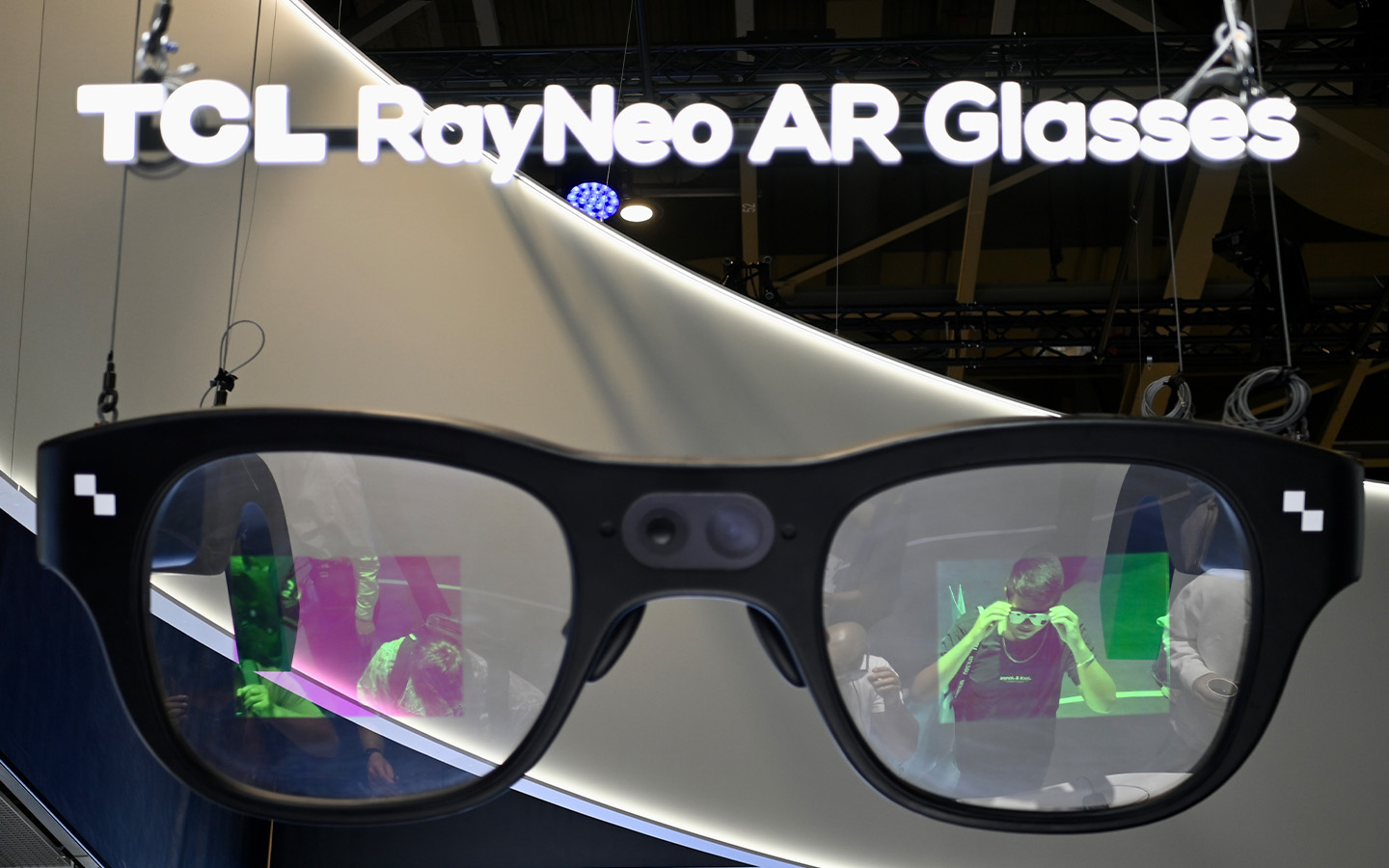
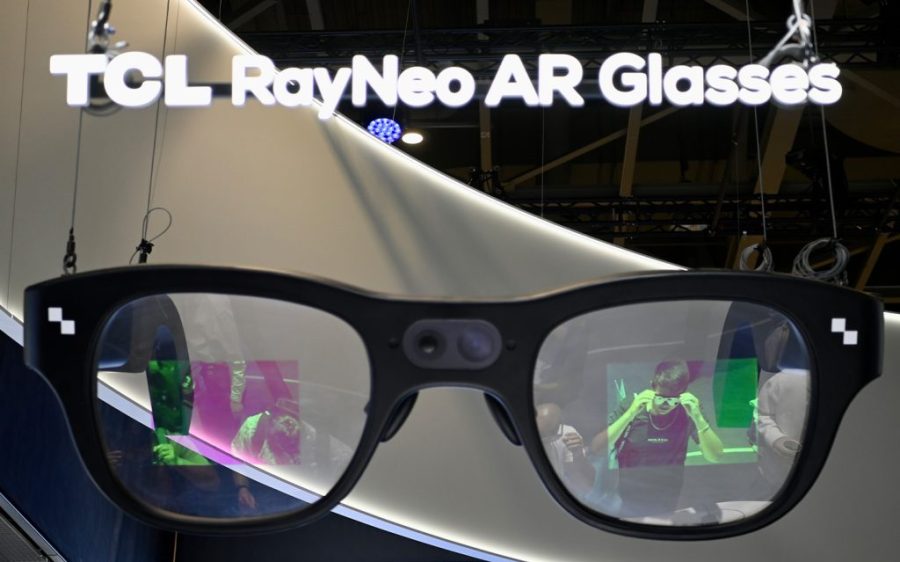
AI-powered smart glasses, made in China’s Greater Bay Area, have caused a sensation at the Winter Games, with even the president of the International Olympic Committee (IOC) stopping to try them.
Kirsty Coventry was seen testing augmented reality glasses developed by Shenzhen-based tech firm RayNeo during a visit to the technology exhibition at the Milano Cortina 2026 Winter Olympics.
[See more: Ning Zhongyan clinches bronze in men’s 1,000m skating at 2026 Winter Olympics]
Social media posts from the exhibition floor show Coventry wearing the device and interacting with its display, reportedly pronouncing them “amazing” and “perfect.”
A tech moment at the Olympic exhibition
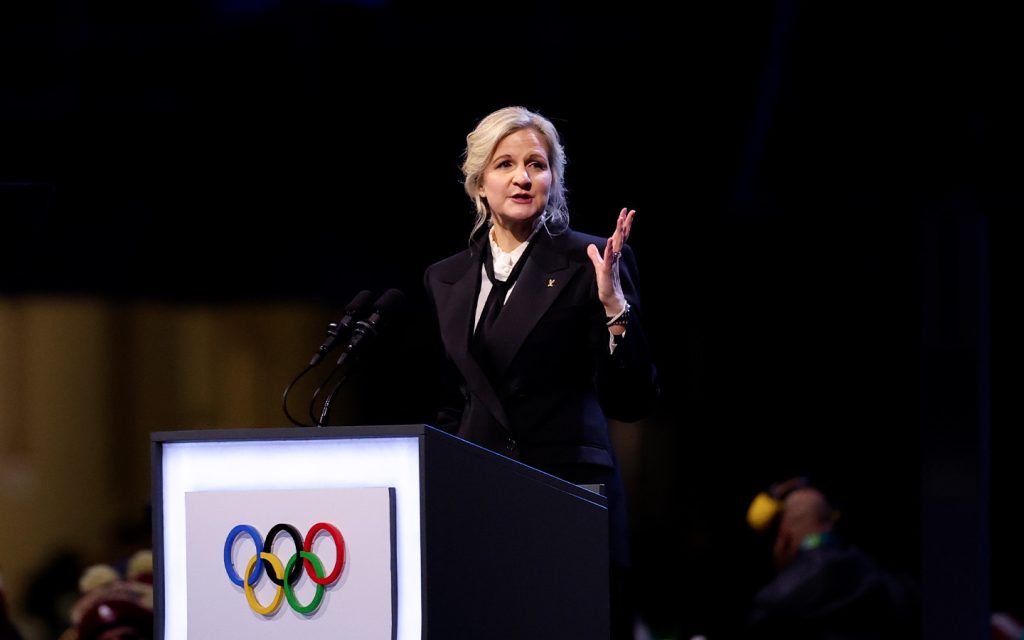
RayNeo presented multiple AI + AR products at the Games-themed innovation pavilion. According to Chinese media reports, Coventry also tried the RayNeo Air 4 Pro AR glasses, which were used to replay moments from her Olympic career as a seven-time Olympic swimming medallist.
The showcase formed part of a broader display of emerging technologies rather than official competition equipment, and there has been no indication that the glasses are being used in sanctioned Olympic events.
The RayNeo X3 Pro
The company’s flagship model, the RayNeo X3 Pro, has drawn particular interest. The device was named among TIME magazine’s “Best Inventions of 2025” list and is marketed as the world’s smallest mass-producible binocular full-colour MicroLED optical waveguide AR glasses.
According to RayNeo’s published specifications, the X3 Pro can project what it describes as a 43-inch transparent virtual display and is designed to remain visible even in strong outdoor light such as snow venues.
[See more: Eileen Gu repeats Olympic slopestyle silver at Milano-Cortina 2026]
The glasses run on a Qualcomm Snapdragon AR platform and integrate AI-powered voice interaction, real-time multilingual translation, first-person recording, navigation overlays and spatial mapping supported by dual cameras. The frame weighs roughly 70 to 80 grams.
Independent large-scale performance reviews at the Games have not been widely reported.
A fast-growing market
The appearance of AI glasses at the Olympics comes as the global smart eyewear sector accelerates.
According to forecasts cited in Chinese industry reports, China’s smart glasses market is expected to ship about 4.5 million units in 2026, representing nearly 77 percent growth from the previous year. Broader projections suggest global smart eyewear shipments – including AR and related wearable devices – could exceed 20 million units by 2026 and continue expanding rapidly toward the end of the decade.
[See more: Su Yiming claims China’s first medal in Olympic big air]
Analysts see 2026 as a potential scaling point for the category, as improved hardware performance and falling production costs drive wider consumer adoption.
With shipments projected to rise sharply in the coming years, appearances at events like Milano-Cortina suggest smart glasses are moving into the mainstream.