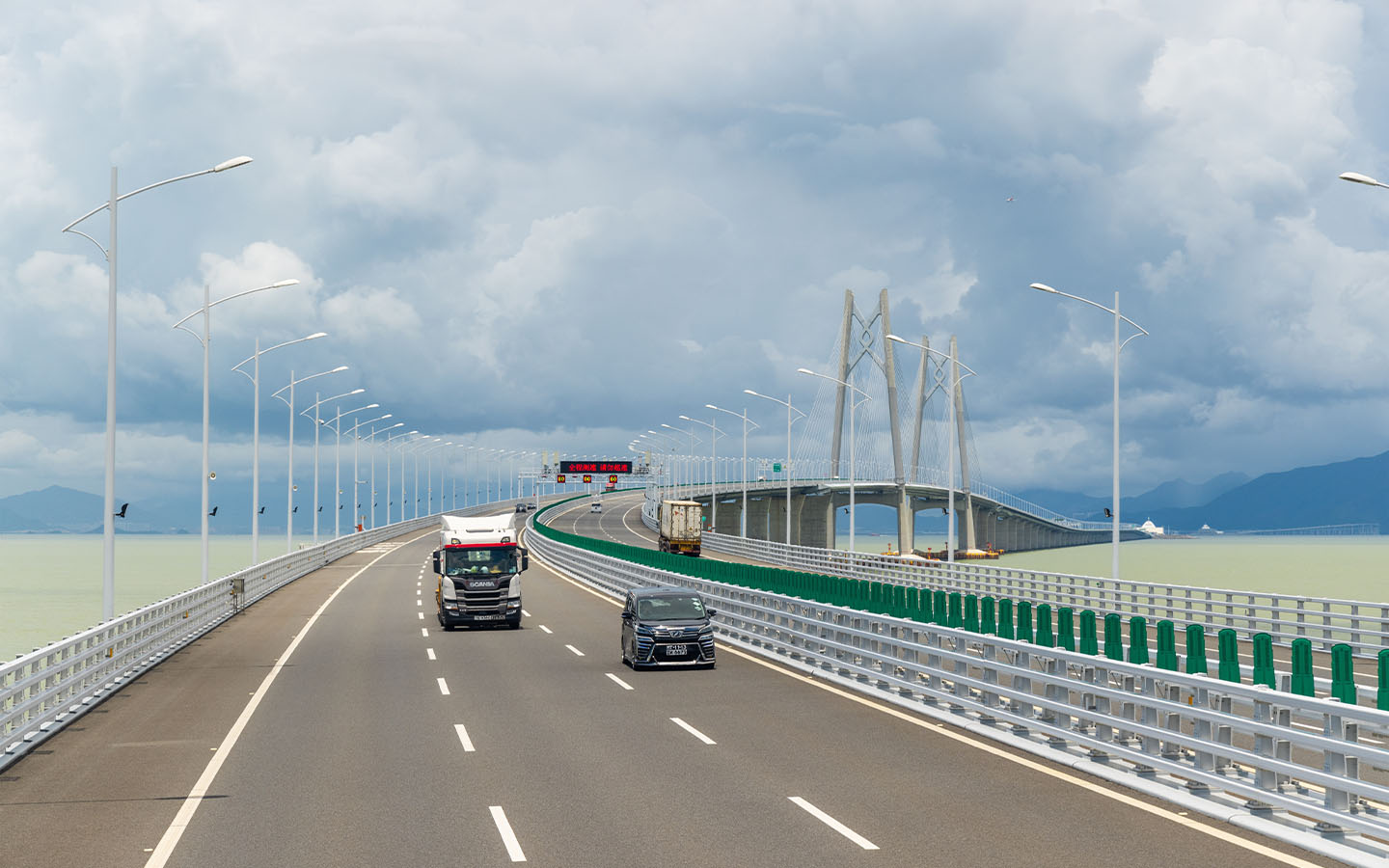
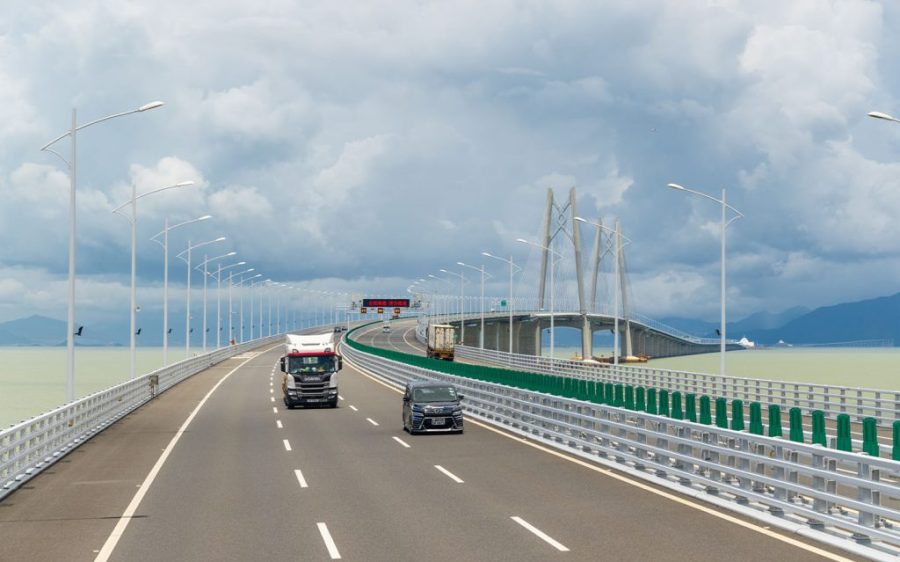
Passenger traffic through the Hong Kong-Zhuhai-Macao Bridge’s (HZMB) Zhuhai Port topped the 100 million mark for the first time on Tuesday, China Daily reports. Authorities say the milestone reflects strengthening connectivity across the Greater Bay Area (GBA).
It took the 55-kilometre bridge-and-tunnel sea crossing, which opened to traffic in October 2018, more than five years to reach its 50-millionth passenger crossing. Its second 50 million came in just one year and eight months.
Macao and Hong Kong residents have made more than 58.7 million trips via the Zhuhai land port since 2018, representing nearly 59 percent of total passenger flows. In 2025 alone, crossings by residents of the two Special Administrative Regions reached 18 million – almost three times the level recorded in 2019.
[See more: Here’s a guide to the ‘other’ Greater Bay Area cities]
Users say the HZMB has reshaped lifestyles within the GBA. Chen Zhaochang, a Guangdong resident who runs a vehicle parts trade business covering Guangdong and Hong Kong, told the Daily that the bridge made it easier to run his business as he could drive directly to Hong Kong clients’ offices. Hong Kong resident Ho Chi-hong said the bridge had expanded his “living radius” so much he’d decided to buy a home in the Guangdong city of Zhongshan.
International travel through the bridge is also rising. Benefiting from China’s 240-hour visa-free transit policy and the bridge’s direct link to Hong Kong International Airport, foreign passenger trips through the Zhuhai land port reached 569,000 in 2025, up 28.7 percent year-on-year.
The HZMB plays a key role in regional integration. Last month, Guangdong officials released a blueprint that highlighted infrastructure connectivity’s importance in transforming the 11-city Greater Bay Area into an innovation and industrial hub, alongside closer alignment of rules and mechanisms across the three jurisdictions and deeper people-to-people exchanges.