
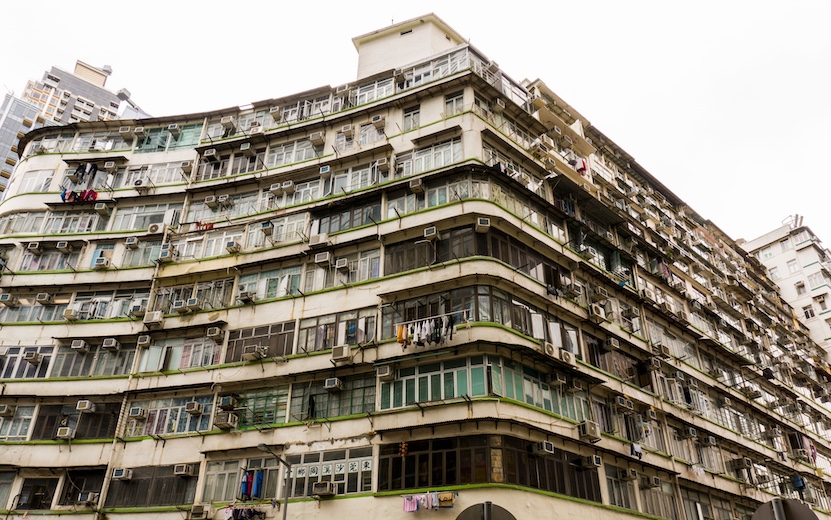
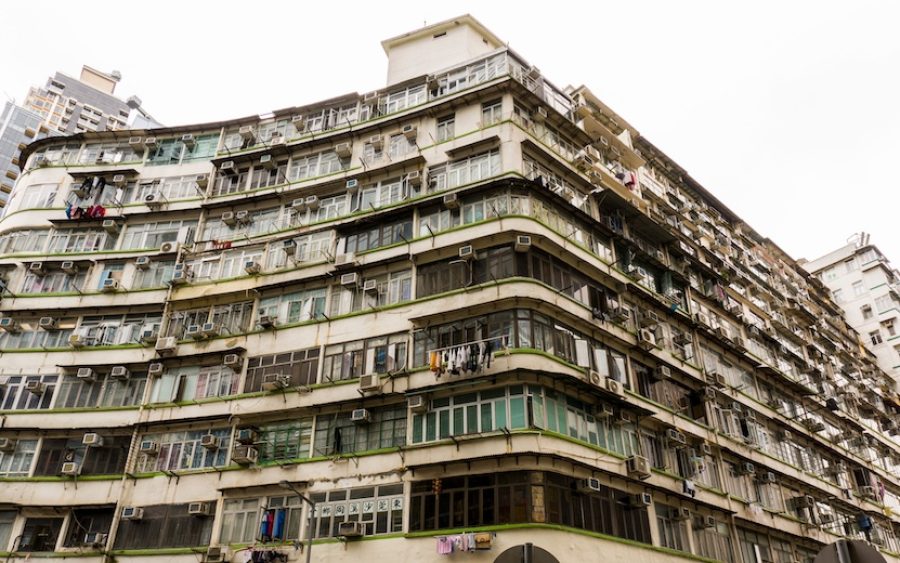
A new housing ordinance went into effect in Hong Kong on Sunday, kicking off a years-long process aimed at eliminating substandard subdivided flats in the city.
The Basic Housing Units (BHU) ordinance requires all landlords to register their subdivided flats and meet relevant standards, reports China Daily. The law allows for a 12-month registration period and a 36-month grace period to arrange tenancies and make any necessary renovations.
Letting units that are not registered and recognised will become a crime starting 1 March 2027, although the Housing Bureau pledged a pragmatic, people-oriented approach to ensure that tenants are not displaced by enforcement.
Some 220,000 people in Hong Kong live in subdivided units, created by carving up regular apartments into tiny cubicles, most of them smaller than a parking space. While the majority of Hong Kong’s roughly 110,000 subdivided flats are close to the standards, an estimated 28,600 units will require major renovations to comply with the new ordinance.
Landlords have also expressed concerns. Hayson Chan, chair of the Hong Kong Basic Housing Units Operators Association and business development director of Rent to Rent innovation, told public broadcaster RTHK that he spent HK$60,000 (US$7,671) to refit smoke-sealed doors for units in a single flat. He expects hiring the necessary professional to inspect the units and install required water and electricity metres for the flat will cost HK$100,000 (US$12,785).
[See more: Hong Kong has the world’s most unaffordable housing for the 14th year running]
Other landlords who spoke to the South China Morning Post reported spending millions already. Some, like Matthew Lau Chi-kwong, who operates over 500 units across more than 50 whole flats, are hoping to recoup their losses through higher rents. But Chan recognises there is a limit on what Hong Kong’s poorest can pay.
“If rent [for a subdivided unit] goes above HK$10,000, nobody will want to rent it,” he told Hong Kong Free Press.
Angela Lui, a community organiser with the Society for Community Organisation, agreed, telling the Post that rent increases could drive some of the city’s poorest out of the city centre. She sees improving the speed of traditional public housing approvals, pushing the Light Public Housing Project and maintaining steady supply of transitional housing as essential for providing quality options to the poor.
Secretary for Housing Winnie Ho Wing-yin, speaking in a TV interview last month, assured that there were enough transitional housing units available to accommodate low-income tenants affected by the new regulations.