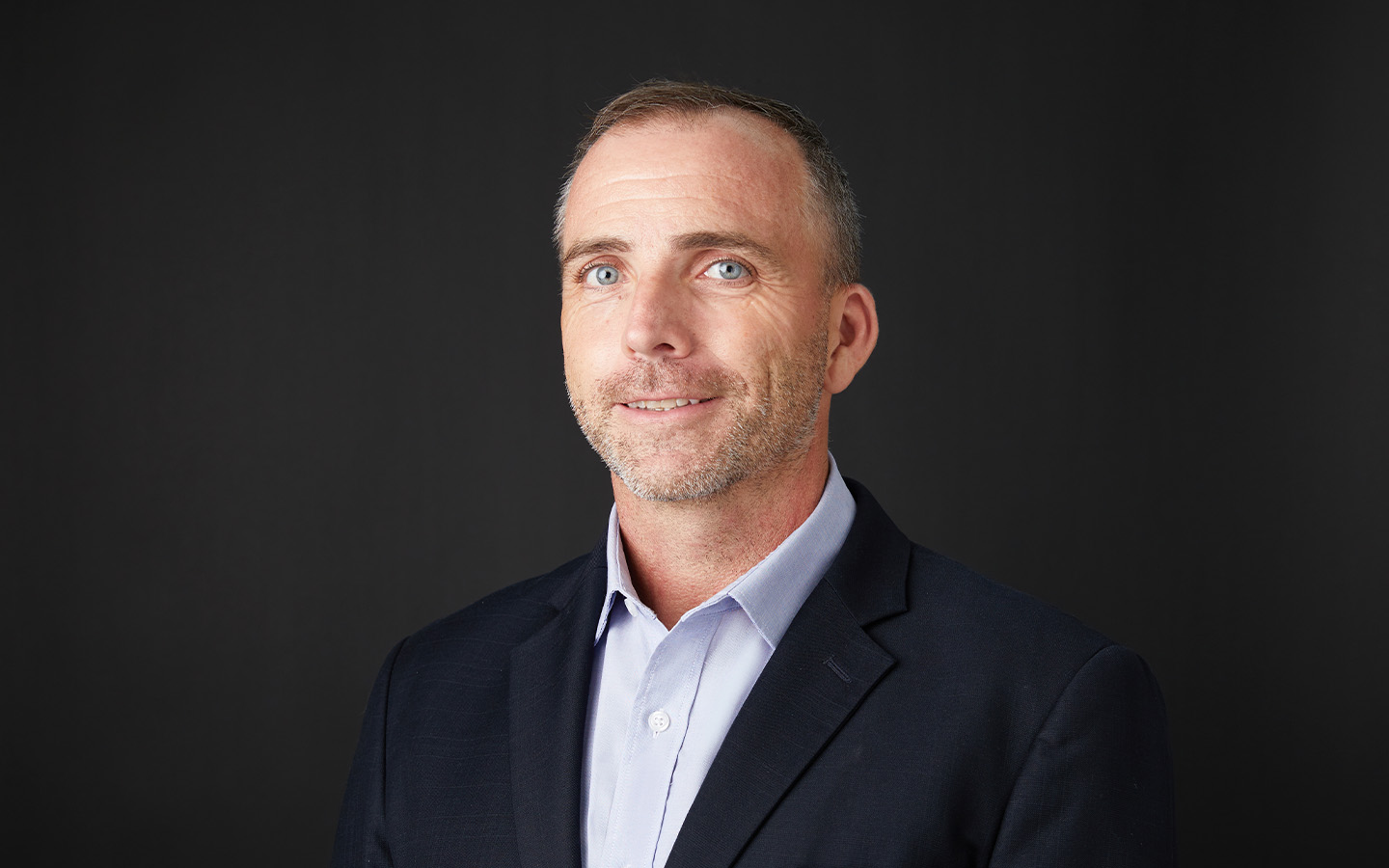
Internationally oriented would be one way to describe Hong Kong-based entrepreneur David McCann’s career of 30-plus years. Originally from Ireland, the 53-year old started out as a tennis coach and French teacher in Quebec, Canada. However, he ultimately found his true calling in the world of business.
As an entrepreneur, McCann cut his teeth in the US fast food industry in the 1990s before moving to Australia where he founded an IT and payment business. He later sold it in order to redirect his attention to corporate finance and merchant banking in 2006.
“I got involved in the ropes of mergers, acquisitions, company takeovers – both public and private – and then slowly started doing some acquisitions in China,” McCann says.
In 2009, the entrepreneur and his family moved to Hong Kong, where he established the office of Orient Pacific Capital – a firm specialising in mergers, acquisitions and direct investments, with a focus on moving products in and out of China.
[See more: GBA Voices: How Ashley Dudarenok learned to decode China]
A merger with a hedge fund in 2017 resulted in the company evolving into Arc Orient Pacific (AOP) Capital, a Hong Kong-regulated asset management and advisory firm that offers services to two types of clients – entrepreneurs and families.
As the CEO of AOP Capital, McCann notes that his firm assists entrepreneurs either as an advisor or through channels that include direct investment, co-investment and the locating of investors.
Meanwhile, AOP Capital’s private family office seeks to protect the wealth of families via services such as strategic investments and asset allocations. To this end, McCann notes that his company has a Dubai-based offshore chief investment officer (CIO) office, as well as a soon-to-be opened regulated branch in Abu Dhabi.
The Irish native took some time off to speak to Macao News about his business, its link to the Greater Bay Area (GBA) and the region’s ongoing development.
This interview has been edited for brevity and clarity
Can you give us a picture of what the finance sector in the GBA is currently like?
It’s challenging at the moment because it’s difficult for global firms to directly invest into China. They have to come in via Hong Kong. On top of that, there’s a little bit of a stigma in relation to China.
I’ll give you a classic example. A group that we deal with has about US$4 billion under management. They’re an amazing business that were based in Shenzhen. They needed to invest in early stage hardware, hard tech businesses, but due to Covid and geopolitics, they’ve had to move to the US.
[See more: Guangdong sets out plan to drive Greater Bay Area integration]
The biggest thing, I think for the international investment company, is the lack of awareness of what the GBA is. There’s a lack of awareness of the ability to do business in the GBA and there’s a lack of appreciation of Hong Kong as a platform to do that. For an international investor, Hong Kong is a fantastic platform to do business in the GBA.
What kind of GBA projects has AOP Capital been engaged in?
A lot of our clients have a short hold in the GBA. Because of the tariffs and Covid, most of them don’t do a lot of sales per se in the GBA, but more take the product out of the GBA.
[See more: The Greater Bay Area rolls out a policy package to boost ‘low-altitude economy’]
To be very honest, in the last two years, the level of activity within the GBA is not what it was [compared to] pre-Covid. We’ve got one client. They’re a family. They’re probably one of the biggest producers of plastic [packaging] filling and they’ve expanded into the GBA. We have another client in education who’s got some resources in the GBA.
How has AOP Capital leveraged the talents and resources in the GBA?
I would say only through the universities, predominantly the Hong Kong universities. The Hong Kong universities are doing some really good internships and we have leveraged that. We’ve been able to get a couple of GBA students, particularly through the Hong Kong Chinese University as interns.
[See more: Here’s a guide to the ‘other’ Greater Bay Area cities]
We’re not a manufacturer, so we haven’t yet needed to go into technology or hardware yet. We [do] outsource our accounting and some of our other stuff to the GBA, but the real talent, we found, is captured through the students coming through the universities.
Are there any GBA policy measures that are especially beneficial to finance companies hoping to establish a presence in the region?
I don’t want to say yes or no to any one in particular, but there’s a few that come to mind that are starting to show there’s a progressiveness in relation to the movement of capital. It’s one of the connect [policies] for insurance companies [Insurance Connect] to allow GBA-based people [from Hong Kong] to subscribe for insurance.
Is it difficult to navigate the different laws and guidelines that exist in the GBA?
It can be if you don’t go informed. We do deal with lawyers who have done the exam that allows them to conduct law and understand law in the GBA. I don’t think it’s any more difficult than doing business in the rest of mainland China, which is what we’ve done.
What are some of the biggest changes that you’ve seen in the GBA over the last couple of years?
Obviously, ease of access. The immediate impact of that is it’s easy to go to meetings. It’s easy for GBA participants to come to meetings [with] us, and, without a shadow of doubt, it’s the expertise in manufacturing. I see it in our clients overseas – deep tech companies, software companies. They think they’re leading the way and they come over here and we take them across the border and they’re just dumbfounded.
Speaking of technology, how has AOP Capital made use of AI?
We see AI as a way of life. For me, AI is just the new internet. What we decided to do at the start of the year [in 2025] was rather than just take the tools off the shelf, we decided to go along and build our own [AI] brain.
We’ve put that into the business with a view to improving efficiencies. But what we uncovered is that it’s actually allowed us to be more forensic. It’s allowed us to get more data and it’s allowed us to have more scale with less people, which is more efficient.
[See more: Greater Bay Area GDP exceeds 7.2 trillion yuan in first half of 2025]
A real example is I thought we would need more investment analysts, but now what I’m realising is we need more data scientists and data managers. You just keep feeding the machine, you keep feeding the brain [and] it keeps learning. It’s been a fantastic investment.
What’s one piece of advice you would give to an overseas firm looking to invest in the GBA?
I think you should come in via a Hong Kong entity. I think it’s just easier to set up business in Hong Kong. It’s easier to do, and I mean that not from the point of view that it’s hard to do business in the [mainland] GBA. I think it’s easier to transact back with your mother country if you’re Hong Kong-based than [mainland] GBA-based because for the mother country, [the mainland cities in the] GBA is still just [mainland] China.
What are the advantages of being based in Hong Kong?
I think the biggest advantage professionally is the tax regime. It’s pro-business, no capital gains tax, low income tax. There’s the soft employment laws, so you can hire for skills, as opposed to competency.
I think the other advantage is breadth. What I mean by breadth is you can step into the GBA, the mainland, Southeast Asia, Europe and the Middle East to do business. It does give you a proper international flair.
[See more: The Greater Bay Area’s first international business talent centre opens in Shenzhen]
I think the other advantage is the calibre of students coming out of the universities is fantastic. I don’t think many people have understood that, but there’s an amazing calibre. I see lots of Vietnamese kids [and] Indonesian kids, through the Hong Kong universities, who are just superb.
I love the diversity of the community from a professional point of view. That diversity of people, diversity and culture, creates creativity and thinking, and I think that’s important for business.
How do you think the GBA will develop in the next decade?
It might achieve what Germany has in relation to global gross domestic product (GDP). I think the Chinese government and the Hong Kong government have done a very clever job in the way they positioned Hong Kong, both from a family office and a capital markets point of view, where Greater Bay Area companies have the privilege of being able to operate on both sides of the firewall in relation to tech and have two distribution models in China and the rest of the world.
Then you go to the capital market in Hong Kong, which is robust and very well-regulated. I think it is going to become the second largest stock exchange in the world, and the governments in both Hong Kong and China want that.
[See more: Greater Bay Area attracts European business investment]
From a family office point of view, we are talking daily to European families with businesses in China, who are looking to domicile to Hong Kong to take advantage of two things – one is access to the GBA, and the second is the efficiency of tax in Hong Kong and in relation specifically to the business of the GBA.
I think what you’ll find is the GBA is going to get busier and busier, and I wouldn’t be surprised if there’s an influx of more Hong Kong residents – gated communities or areas like that – back in the GBA. It’ll take time, but that’s what happened in other jurisdictions.