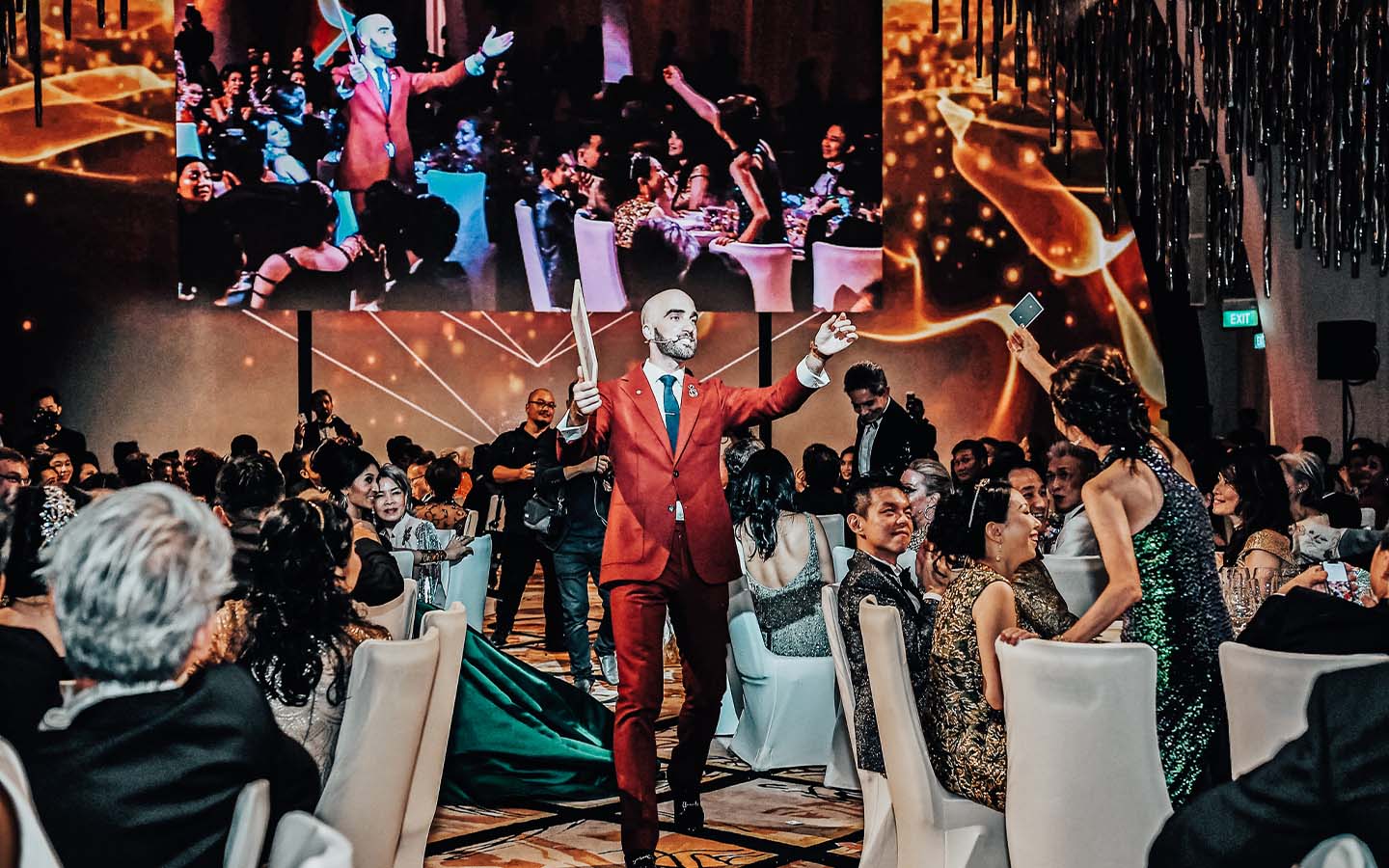
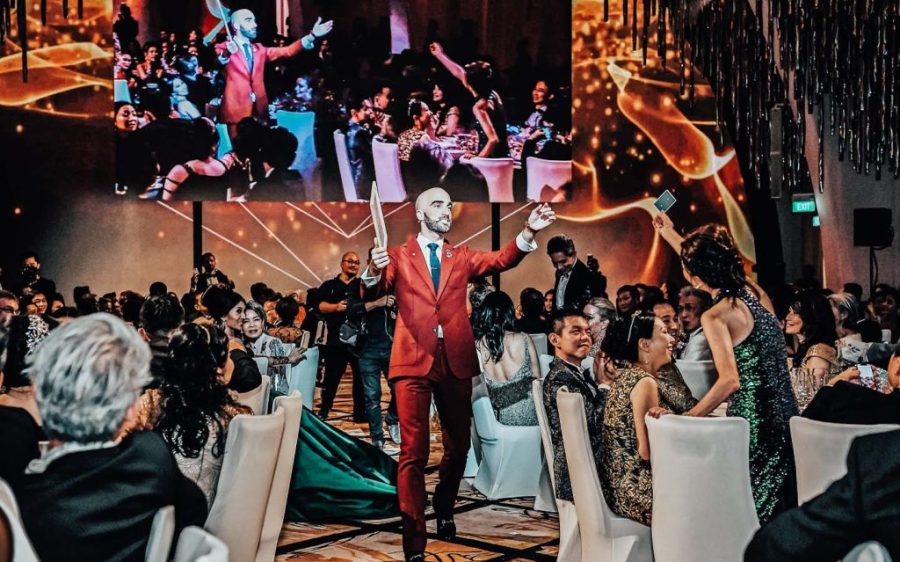
For someone who has been set on fire, buried alive, and tasked himself with recreating some of the most dangerous stunts in magic history, Drummond Money-Coutts is surprisingly drawn to stillness.
Away from the stage, DMC – as he’s nicknamed – prefers long walks without a plan, quiet mornings with tea, and simple routines that keep him grounded. It’s a contrast that defines his work, a magic that isn’t about spectacle alone, but about attention, emotion, and the fragile moment just before something extraordinary happens.
[See more: Alex Honnold free-solos Taipei 101 in historic skyscraper ascent]
From 19 to 24 February, DMC will bring that philosophy to Macao for the first time, with a series of performances at Grand Lisboa Palace and Grand Lisboa, including intimate dining experiences that place audiences just inches from the illusion.
Ahead of his debut, he spoke to The Bay about his ritual, risk, travel, and why magic, at its core, remains a deeply human art.
You perform miracles for a living, but what’s the most ordinary thing you genuinely enjoy when you’re off stage?
I love very simple routines, like a delicious tea in the morning, walking without headphones, and reading something completely unrelated to magic. Those ordinary moments are grounding. I also skip rope every single morning for twenty minutes – it’s an important meditation for me.
When you arrive in a new city like Macao, what’s the first thing you like to do before you start performing?
I walk. No map, no plan, no destination. Cities reveal themselves in small details – how people queue, how they cross streets, and how they greet each other. You can learn more in an hour of wandering than in days of research. Before performing anywhere, I want to feel the rhythm of the place and let it settle into me.
You come from a conventional background, yet you chose a highly unconventional career. Was that a rebellion, or did it feel inevitable?
It never felt like rebellion. I didn’t choose magic to reject anything; I chose it because it felt natural. Long before I understood tradition or expectation, I was already absorbed in mystery and storytelling. I recently heard the phrase “follow the compass of your heart,” and that’s what I’ve done since the very beginning.
After recreating dangerous moments in magic history for your Netflix series, how did that experience change the way you think about risk, both on and off stage?
It gave me enormous respect for preparation and restraint. Risk has always been romanticised in magic, but the truth is that the most dangerous moments are the ones that haven’t been properly thought through. Real mastery lies in understanding limits – knowing when to push, and when not to. That said, being set on fire doesn’t leave much to be fearful of.
Is there a difference between fooling someone and moving them emotionally? Which matters more to you now?
They’re completely different things. Fooling someone is not of much interest to me, any child with a deck of cards can do that. Using magic to stir genuine emotion and create lifelong memories is what matters. That’s what it’s all about.
How does performing magic in an intimate dining setting change the way audiences experience illusion?
It changes everything. There’s no physical or psychological distance. You’re sharing a moment rather than presenting one. The performance becomes conversational, two-directional. While I love larger performances, the personal energy in intimate settings is far more powerful and intoxicating.
[See more: The best indoor activities in Macao: where to go when the city moves indoors]
If magic had a flavour, what would yours taste like?
Dark chocolate. Not immediately sweet – slightly bitter, layered, and lingering. The kind of flavour that unfolds slowly and stays with you long after it’s gone.
Macao is a city shaped by superstition, symbolism, and chance. Does performing in places like this change how audiences respond to illusion?
Very much so. Every culture, country, and moment in time has its own interpretation of magic. That’s what I love about travelling, seeing how different places respond and how those responses subtly shape the experience.
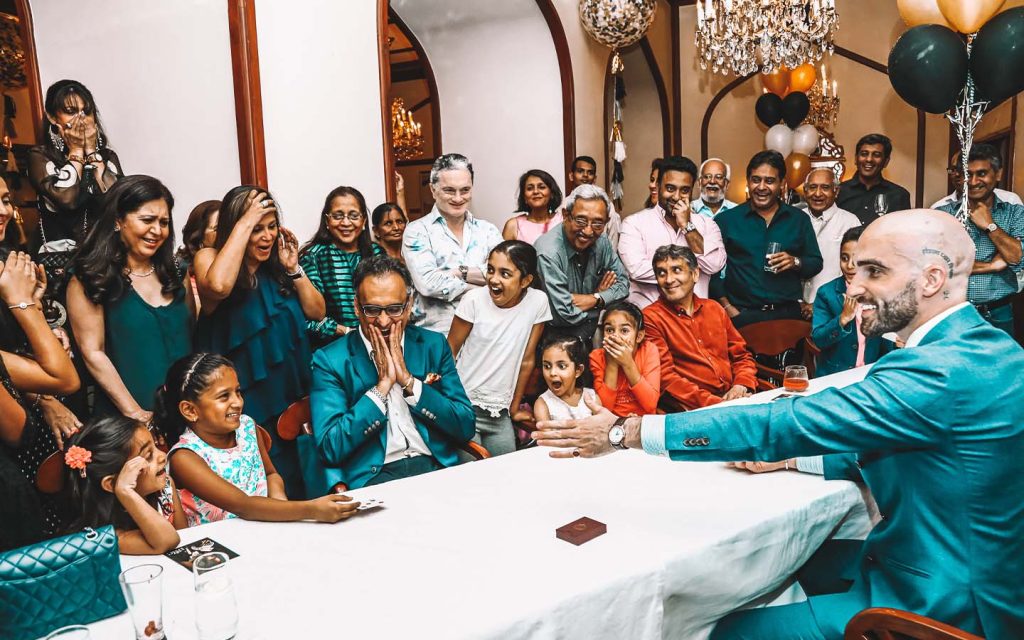
When you perform in different cultures, do you find people react differently, or are human instincts surprisingly universal?
Both. Cultural expression varies, some audiences are louder, some more reserved, but the instincts beneath are universal. Curiosity, doubt, delight, disbelief. Those reactions appear everywhere I’ve travelled.
After all the danger, travel, and spectacle, what still excites you about walking into a room full of strangers and saying, “Let me show you something”?
My performances exist in service of the audience, to create for them the emotions that magic has always given me. The most beautiful moment is the split second before something magical happens, when everyone knows a memory is about to be made. Every new show creates thousands of those moments, shared across generations. That feeling has never faded, and it never will.