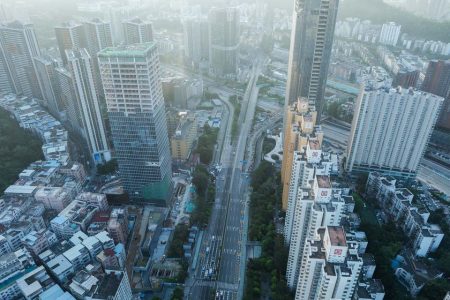
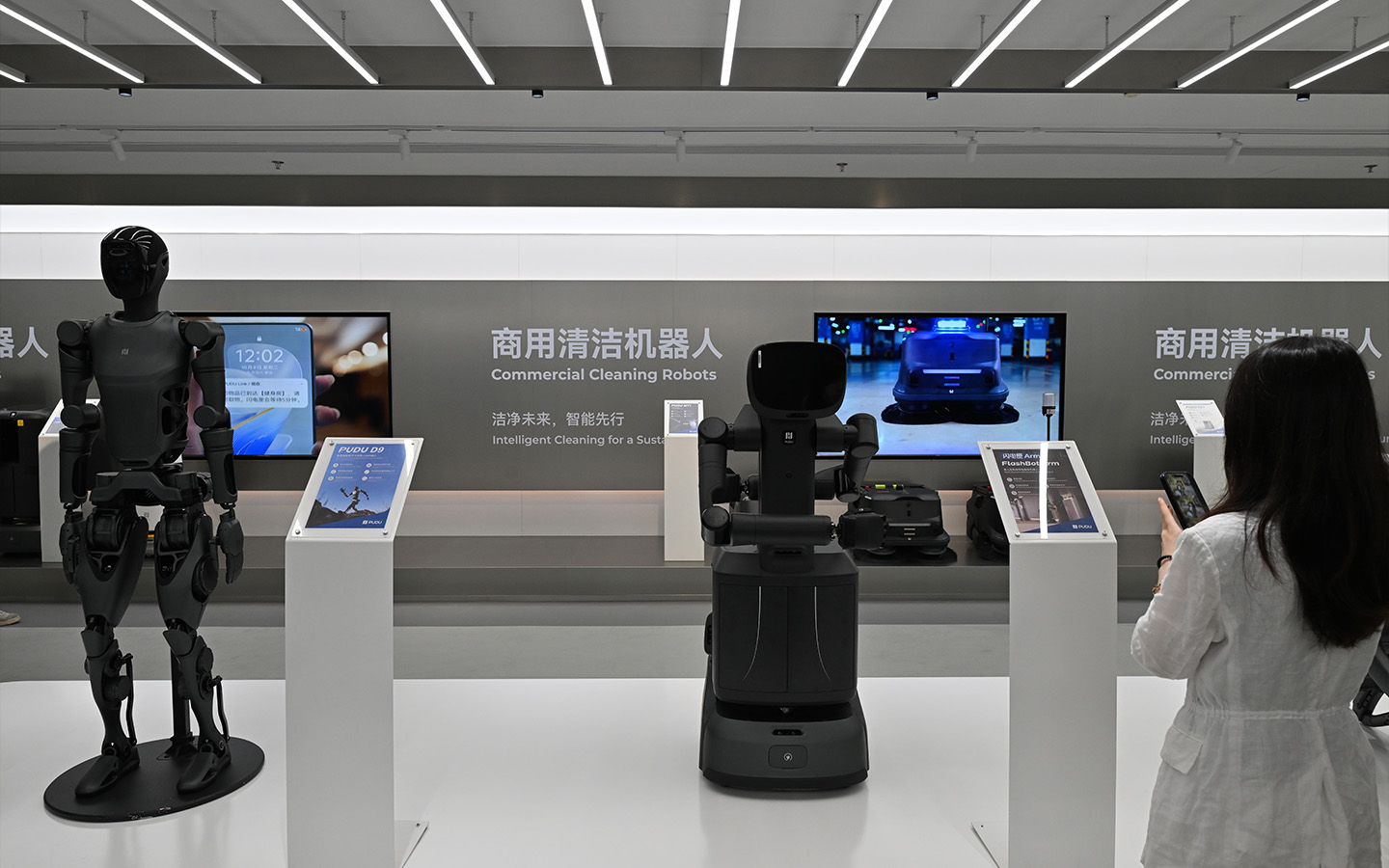
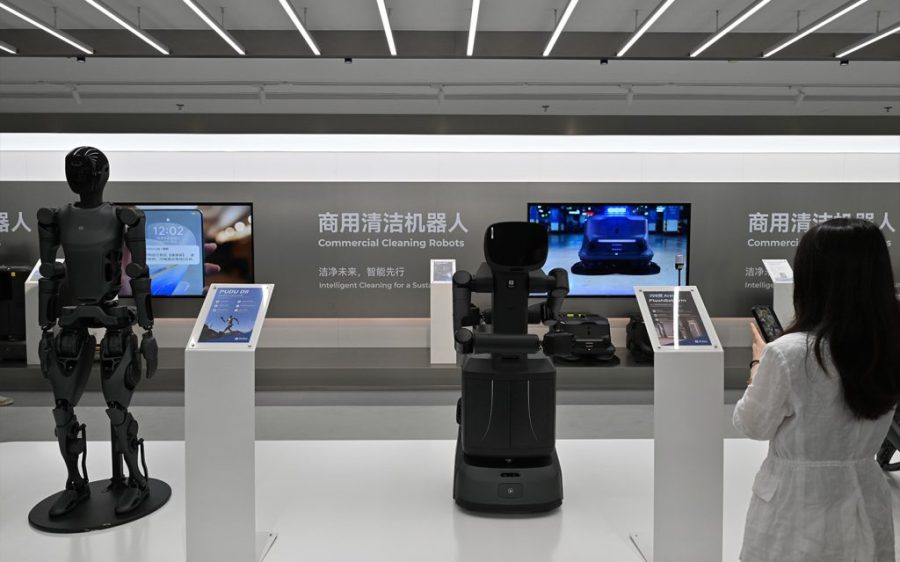
Shenzhen’s robotics sector reached a record-breaking output value of 242.6 billion yuan (US$35.54 billion) in 2025, up by 20.56 percent year-on-year. That’s according to the Shenzhen Robot Industry Development White Paper (2025), which was released yesterday during the FAIR of AI and Robotics and FAIR plus – international robotics and tech events that are being held in Shenzhen between until 24 April.
The paper, which was reported by local media, noted that the tech hub’s robotics industry had reached a new developmental stage defined by strong growth, supply chains and innovation. Shenzhen’s robotics industry cluster, it said, reached a revenue of 37.9 billion yuan (US$5.55 billion) in 2025, a 34.3 percent growth in comparison to the previous year.
Meanwhile, during the 14th Five-Year Plan (between 2021 and 2025), Shenzhen’s production of industrial robots grew by an average of 22 percent each year. In 2025, the city’s manufacturing of these robots accounted for 25.2 percent of the national share, with the total reaching roughly 194,900 units, up 43.1 percent year-on-year.
Shenzhen’s service robot production also grew significantly during the period, achieving an average yearly growth rate of 12 percent. Last year, the tech hub’s production of such robots made up 42.9 percent of the national market, with 7.96 million units manufactured, a jump of 9 percent year-on-year. This segment of the robotics industry reported a growth in value to 7.36 billion yuan (US$1.07 billion), an increase of 25 percent year-on-year.
According to the paper, which was a collaborative effort between the Shenzhen Robotics Association and the China Development Institute, a total of 4,676 Shenzhen companies with robot patents were recorded in 2025, a surge of 19.44 percent year-on-year.
[See more: Shenzhen’s Honor robot smashes the human world record at the Beijing half-marathon]
Aside from the release of the paper, the first day of FAIR plus also featured a forum where various robotics experts shared their views.
Scott Choi, the vice president of International Business Development at Samsung SDS, highlighted China’s groundbreaking work in physical AI and excellent national standards system. The speakers also highlighted ways in which China and their countries could collaborate in the field of robotics. The head of the Robotics Society in Finland, Jyrki Latokartano, stated that Finnish robots have been designed with extreme environments in mind, making their components suitable for the production of Chinese robots that can tolerate tough conditions.
Positioned as a “World-Class Conference on AI and Robotics Technology,” this year’s FAIR plus features over 50,000 professional visitors and over 500 robotics exhibitors that are spread out across an area of 15,000 square metres.
China is now one of the leaders in robotics, with the International Federation of Robotics (IFR) reporting that the country had over 2 million robots in 2024 and deployed 54 percent of the world’s robots. Shenzhen is meanwhile among the leading Chinese cities for robotics. According to data cited by Shenzhen Special Zone Daily, over 90 percent of robotics components can be sourced from Huaqiangbei, an area in the city known for its large tech markets.