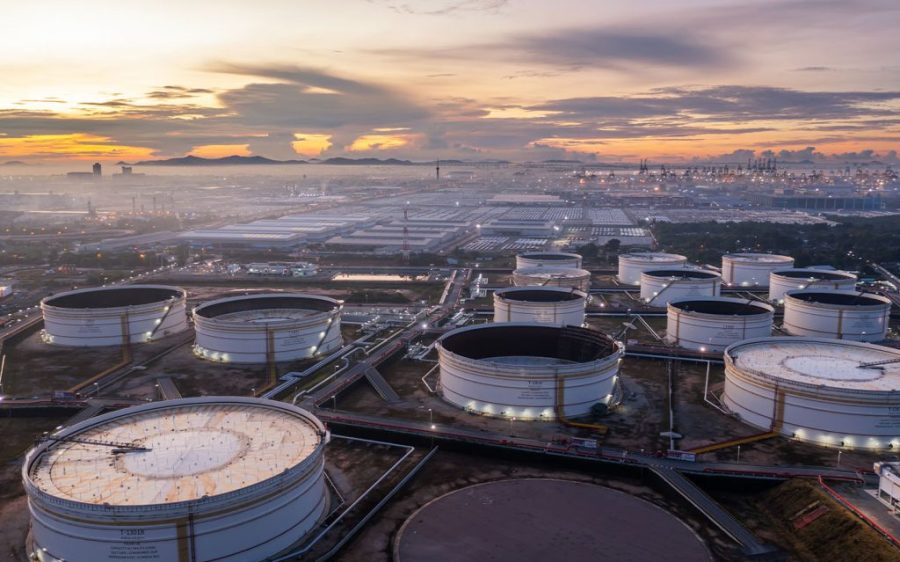
The current Iran war has upended the global economy in ways previously unimaginable. Since the US and Israel launched preemptive air strikes against Iran on 28 February, war has engulfed large swathes of the region and rendered the Strait of Hormuz – one of the world’s key arteries for the shipment of oil – effectively impassable.
Measuring just 39 kilometres at its narrowest point, the shipping channel is currently under a de facto blockade imposed by the Iranians who are leveraging its strategic importance in retaliation against the US, Israel and their allies.
Iranian forces periodically use missiles, drones, sea mines and projectiles to attack ships of various countries attempting to cross the waterway. According to the UN, as of 24 March, there had been 18 confirmed cases of ships being attacked along the strait, with some of these incidents resulting in deaths and injuries.
[See more: With the Iran war raging, petrol prices in the Greater Bay Area are set to increase]
The result has been a massive disruption to around a quarter of the world’s supply of oil, as well as large quantities of liquefied natural gas and fertilisers. The impact is especially profound in Asia, which received 84 percent of the oil travelling through the Strait of Hormuz last year, according to one estimate by the US Energy Information Administration (EIA).
The Philippines declared a state of national energy emergency on 24 March in response to skyrocketing fuel prices and a dwindling national oil stockpile. In India, the shortage of fuel has led to panic buying of domestic gas cylinders. Meanwhile, in countries from Sri Lanka to Australia, long queues have formed at petrol stations.
Despite China’s extensive strategic oil reserves and extensive use of renewable energy sources the Greater Bay Area (GBA) is not immune to the impact of the current Middle Eastern crisis.
What has the crisis done to petrol prices in the GBA?
According to Henry Chun Kwok Lei, the deputy head of the Macau Economic Association and a business academic at the University of Macao (UM), “the military conflict in the Gulf region has already brought about a direct impact to the Macao economy and also the Greater Bay Area in the form of an increase in the energy price.”
On 9 March, China issued its first fuel adjustment since the war’s outbreak, raising the price of petrol and diesel per tonne by 695 yuan and 670 yuan respectively – their highest levels in four years.
The move resulted in petrol prices in Guangdong province growing by 7.8 percent, according to The Economist. Meanwhile, Hong Kong broadcaster TVB noted that after the price hike, the cost of 92, 95 and 98 octane petrol at Shenzhen and Zhuhai service stations rose to between 7.66 yuan and 9.5 yuan per litre.
Gas prices were further boosted nationwide on 23 March, although the Chinese authorities made adjustments to “reduce the burden” on motorists. Rather than follow the price adjustment mechanism and increase the price of petrol by 2,205 yuan per tonne, Beijing opted for a hike of just 1,160 yuan. Meanwhile, the price of diesel per tonne rose by only 1,115 yuan, instead of the anticipated 2,120 yuan.
Despite these lower than intended price jumps, mainland Chinese motorists still need to pay an extra 0.87 yuan for a litre of petrol and 0.95 yuan for diesel. To fill a 50 litre tank with 92 octane petrol, drivers now need to fork out an additional 43.5 yuan.
[See more: Trump-Xi Beijing summit pushed to May amid Iran war]
According to Nanfang Daily, after the price adjustment on 23 March, the cost of petrol in Guangdong province reached as high as 9.3 yuan per litre, up by 1.01 yuan per litre.
Ahead of these fuel increases, drivers in GBA cities such as Shenzhen and Guangzhou queued for cheaper gas, with one petrol station manager telling Guangzhou Daily that the number of vehicles entering the station jumped by around 50 percent in comparison to regular days.
Even with the price increases, fuel in the mainland still remains cheaper in comparison to the SARs of Hong Kong and Macao, which operate a fuel pricing system different from the rest of the country.
As Ringo Lee Yiu-pui, the governor and honorary life president of the Hong Kong, China Automobile Association, noted in a local media interview after the first mainland fuel hike, “even after a slight price increase on the mainland, fuel there remains roughly one-third the cost in Hong Kong.”
As a result, some SAR motorists have taken advantage of the northbound travel scheme, travelling to the mainland to fill up their tanks with cheaper petrol.
How is the conflict impacting flights?
The growing cost of crude oil has resulted in various GBA-based airlines raising their fuel surcharges. On 9 March, Hong Kong Express announced it would increase its fuel surcharge by as much as 35.2 percent starting from 12 March. Flights to destinations such as Japan, South Korea and Thailand saw their surcharges jump from HK$162 to HK$212.
Hong Kong Express’s parent company Cathay Pacific followed suit, doubling its levy for most major flights on 18 March. As a result, long-haul service to destinations such as North America and Europe experienced a fuel levy rise of around 104 percent, from HK$569 to HK$1,164.
Both airlines have since made further adjustments to their fuel levies, announcing on 26 March that they would charge an extra 34 percent on most flights from 1 April.
[See more: China to provide emergency humanitarian aid to Iran, Jordan, Lebanon and Iraq]
Other Hong Kong-based carriers such as Hong Kong Airlines and Greater Bay Airlines have also raised their fuel surcharges. The former recently carried out its third round of fuel surcharge increase, raising the levy for most flights by 34 percent on 1 April. Greater Bay Airlines made a similar move, boosting its surcharge by around 34 percent on 1 April.
Meanwhile, Air Macau announced on 19 March that it would increase its fuel levy by 37 to 53 percent from 1 April. Long-haul flights raised their levies from 258 patacas to 353 patacas, while medium-haul flights lifted theirs from 161 patacas to 241 patacas. As well, short-term flights increased their surcharges from 113 patacas to 173 patacas.
Several mainland airlines have also followed suit.
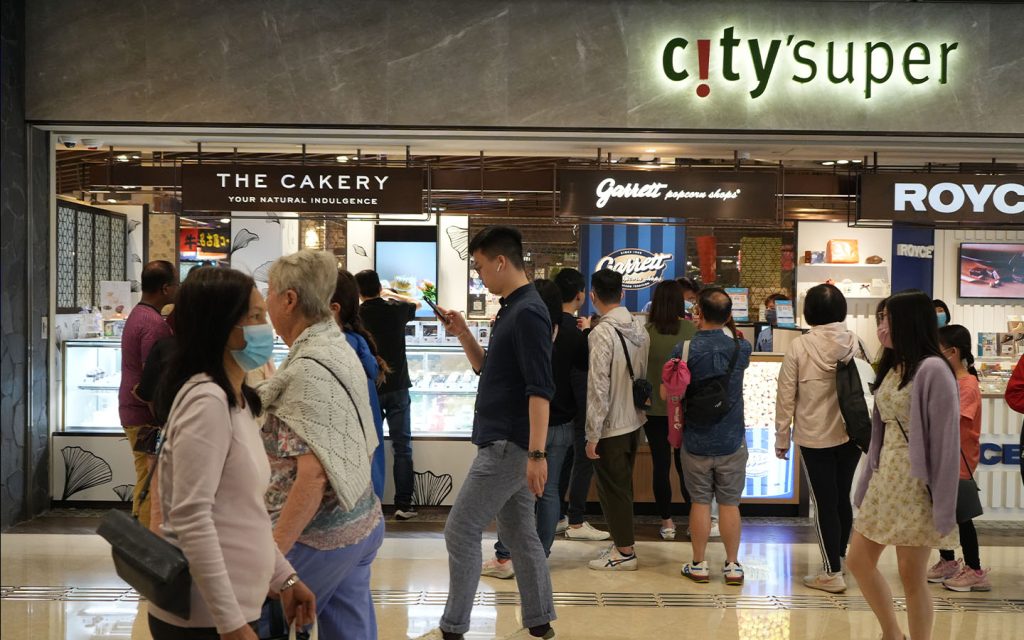
Will the price of everyday goods go up?
Lei says that consumers can expect to pay more for goods that pass through the “problematic region” affected by the Iran war, as the extra cost of transporting such shipments will be transferred to them.
“It is still too early to make an accurate estimation [on the indirect impact], but people are starting to feel it,” he says. “We [in Macao] are already paying more than 10 percent on so-called direct energy expenses [in comparison to February], and the indirect impact is still coming.”
[See more: Around 3,000 Chinese nationals have been evacuated from Iran, says Beijing]
The business academic notes that if energy prices continue to surge, it will push up the consumer price index (CPI), an important measure of inflation. The cost will be particularly noticeable to Macao consumers, as housing and fuels, as well as transport, have weightings of 34.47 and 8.33 respectively.
Public transport users in Macao are, however, unlikely to be directly impacted, as Lei points out the system “is heavily subsidised by the government.” The same holds true for the mainland Chinese cities in the GBA and Hong Kong, where transport chief Mable Chan highlighted several mechanisms in place to ensure that public transport remains affordable for passengers, even if operators have to raise their fares due to higher expenses.
How will major GBA tourism cities like Macao be affected?
Macao’s tourism industry is expected to be negatively impacted by the ongoing Middle Eastern crisis. Domestically, Lei says Chinese tourists from non-GBA cities, who number in the millions each year, may think twice about travelling to Macao, as travel expenses surge.
Rising aviation fuel surcharges could also be detrimental to Macao’s international tourism market. In recent years, the city has been attempting to expand its Middle Eastern market base, although with the conflict raging, Lei points out that high quality visitors from this region will be more “risk-adverse” and refrain from travelling.
[See more: Airspace risk and demand slump prompt Cathay to extend Middle East flight suspension]
For other non-Middle Eastern travellers, the UM academic notes that “due to the increase in the oil charge, they may have their new arrangement, postponing their travel plan,” which would in turn negatively affect the SAR’s international tourism sector.
The current disruptions will put similar pressures on other major GBA tourism cities such as Hong Kong, which has already seen flight cancellations and increased airfare that could adversely impact the demand for travel.
Will electricity prices surge in the GBA?
The price of electricity in the mainland fluctuates alongside the price of coal, according to Lin Boqiang, a professor at Xiamen University’s School of Management, who spoke to the Voice of China following the outbreak of the Middle East conflict.
Much of China’s electricity is still produced using coal, with the International Energy Agency pointing out that the non-renewable resource was responsible for 61 percent of the country’s power generation in 2023. By contrast, oil only accounted for 0.1 percent.
Lin stressed that the price of coal is not directly tied to the price of oil, however “It can’t be ruled out that as the price of coal rises in some areas, the price of electricity will also rise in tandem.”
In Macao, which sources most of its electricity from the mainland, no announcements have been made yet regarding electricity price adjustments. Responding to a TDM query, the city’s electricity service provider, CEM, indicated it had not observed any noticeable upward shifts in the price of electricity. The firm also pointed out its adjustments to the electricity price was done on a quarterly-basis, reflecting the fluctuations in the cost to produce electricity.
[See more: A major part of China’s economic growth in 2025 was powered by clean energy: analysis]
Meanwhile, Hong Kong is at greater risk of electricity price increases, as an estimated 64 percent of its energy production comes from natural gas, a significant quantity of which passes through the Strait of Hormuz.
CLP, one of Hong Kong’s two power companies, already raised its fuel surcharge to 39.8 cents per kilowatt-hour on 1 April, an increase of 0.6 cents (1.5 percent) month-on-month. Its competitor, HK Electric, has also brought up the prospect of a price hike in the middle of the year if the current oil market volatility continues or worsens.
Simon Wong Kit-lung, a member of Hong Kong’s Energy Advisory Committee, acknowledged in an interview with Now News that if the crisis were to continue, Hong Kong’s electricity prices would begin to see a rise in June, although he was of the view that it would be a steady growth rather than a sudden one.
How can the governments in the GBA respond to the rise in oil prices?
Lei says local and regional governments could implement measures such as subsidies for gas, electricity and the tourism industry, as well as slashing taxes on diesel for the commercial sector.
Speaking to CCTV, Lu Zhichen, the deputy head of the National Development and Reform Commission’s Price, Cost and Certification Centre, noted that if the average global price of oil continued to surge to the extent of hitting China’s price cap of US$130 per barrel, the central government may also implement some financial and taxation support measures in response.
This last happened following the outbreak of the Russia-Ukraine war in 2022, when the price of oil exceeded China’s limit. In response, the central government suspended adjusting the price of domestic oil and offered oil refinery firms phased subsidies.
[See more: Trump’s grip on energy offers dangerous leverage amid Europe-US tensions]
Meanwhile, in Hong Kong, financial secretary Paul Chan, stated the government had “made sufficient contingency plans” to deal with the financial turbulence caused by the Middle Eastern conflict.
The city’s transport head, Mable Chan, also arranged meetings with members of the Hong Kong Logistics Development Council and the local aviation and public transport industry to discuss the impact of the Middle Eastern conflict on their operating costs.
In neighbouring Macao, the authorities have taken similar steps, with an intergovernmental fuel monitoring group meeting with representatives from the oil industry in March to discuss the industry’s situation and supply, and to urge the sector to stabilise prices in the SAR.
How does the GBA stand to benefit from the crisis?
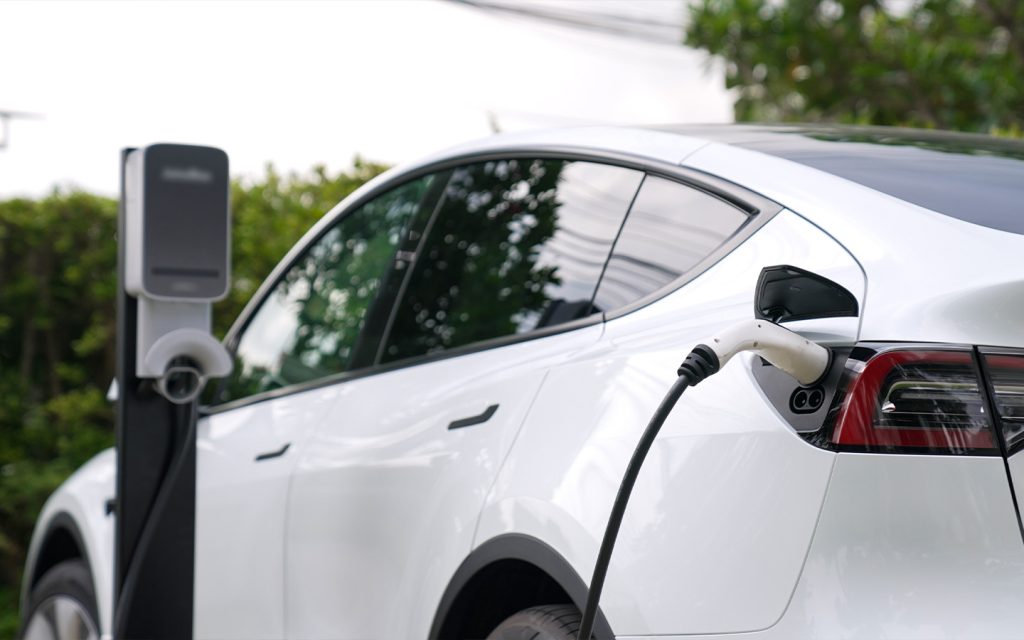
Although the rise in oil prices from the Iran war is having an adverse impact on the GBA in various ways, the region also stands to reap benefits from the fallout. For instance, GBA automakers such as BYD and GAC Aion could start to see a growth in sales, as motorists pivot towards EV ownership to mitigate against the exorbitant cost of refuelling.
“The closure of the Strait of Hormuz could be a game-changer for EVs,” David Brown, the director of energy transition research at Wood Mackenzie, wrote in a report on 20 March. He added that “in those countries with access to low-cost Chinese EVs, the competitive advantage over gasoline-engined cars will come even sooner.”
Indeed, Bloomberg cited one BYD salesperson in Manila who noted his dealership managed to achieve a month’s order during a two week period in March. Similarly, Paul Ellis, a BYD spokesperson in Australia, told ABC Australia that following the outbreak of hostilities in the Middle East, “there has been a significant uplift in inquiry in electric vehicles, not just in pure electric, but also for intelligent hybrid vehicles.”
The surging oil prices have also prompted investors to direct their attention towards Chinese renewable stocks, with battery and energy storage equipment makers such as the Hong Kong-based CATL, Shenzhen-based BYD and the Shenzhen-listed Sungrow collectively increasing their value of US$70 billion since the start of the war, according to the Financial Times.
[See more: Global wealth flows to Hong Kong as family offices surge]
“I believe that in the longer term, the investor may start to diversify their investment and small open economies [such as Hong Kong]…could be one of the destinations that they want to choose to adjust their investment portfolio away from the Middle East,” Lei points out. “Investors may try to diversify their investment continuously away from dollar or dollar-dominated assets, [and this] creates a chance for the GBA, Hong Kong and even Macao to engage [and absorb the new investment].”
As the GBA’s financial hub, Hong Kong is particularly well positioned to benefit from the conflict in various ways, as pointed out by the secretary for financial services and the treasury, Christopher Hui Ching-yu, who said that “within the crisis lies an opportunity.”
In a radio interview on 15 March, Hui emphasised Hong Kong’s safety and stability during periods of tension, noting that the number of inquiries directed at the local legal and banking sector had grown recently.
Family offices is one sector in Hong Kong that could further expand due to the conflict, as affluent individuals seek to move their assets away from the Middle East. This is already an area the Hong Kong authorities are looking to develop, with Hui stating that the government plans to help more than 220 family offices to either settle in the city or expand their business.