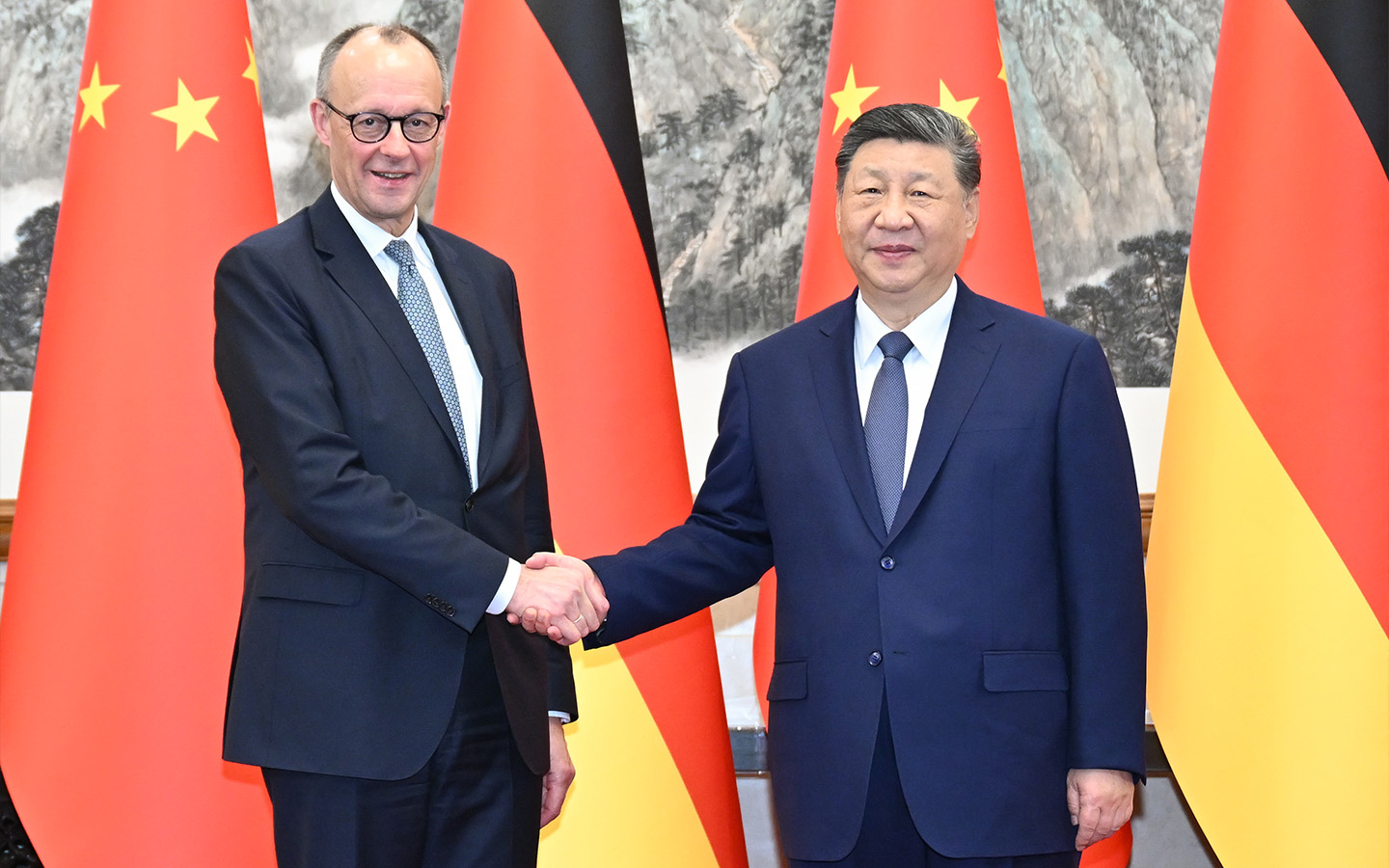
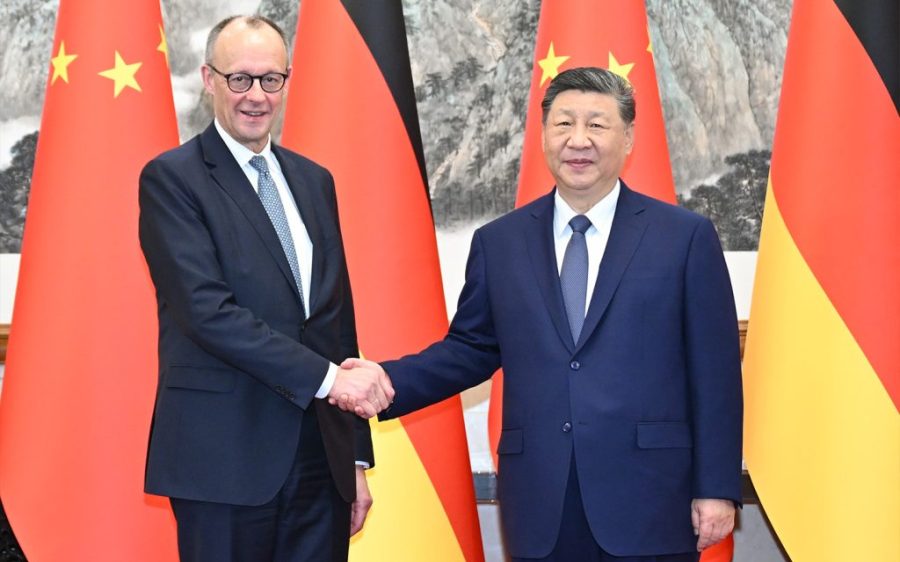
Germany’s chancellor raised concerns over the country’s widening trade imbalance with China during his first official visit to Beijing, multiple media outlets have reported. However, he also emphasised Berlin’s interest in deepening economic cooperation and expanding commercial ties.
Friedrich Merz said Germany wanted to explore ways to reduce a trade deficit that had “quadrupled” over the past five years, describing the current trajectory as “not healthy.”
In 2025, Germany imported €170.6 billion worth of Chinese goods, an 8.8 percent annual increase, and exported €81.3 billion worth of German goods to China, a 9.7 percent decline. China was Germany’s biggest trade partner last year, having overtaken the US.
[See more: Prime Minister Keir Starmer’s China trip yields multiple Sino-UK deals]
The three day trip kicked off on Wednesday, with Merz meeting with President Xi Jinping and Prime Minister Li Qiang – both of whom affirmed their desire for improved bilateral ties. The Chancellor is accompanied by a sizable business delegation, including executives from German automakers BMW and Volkswagen.
New commercial deals have already been announced, including an expected purchase by China of up to 120 Airbus aircraft. Merz has said more agreements were expected, noting that he felt “very optimistic” after speaking with China’s leaders.
The two sides also touched on the war in Ukraine, which entered its fifth year this week. Merz requested Beijing’s help in influencing Moscow, its ally, to end the conflict, while Xi noted the importance of diplomacy that addressed the legitimate concerns of all sides in such matters.
[See more: China urges Trump to drop new tariffs after Supreme Court ruling]
Merz is the latest Western leader to court Beijing, following recent visits by the leaders of UK, Canada, France and other European countries. Fallout from US President Trump’s mercurial tariff policies have prompted many of the US’ long-established trade partners to diversify their export markets, with appealing to the world’s other superpower, China.
Xi alluded to current geopolitical tensions in his comments to Merz. “The more turbulent and intertwined the world becomes, the more China and Germany need to strengthen strategic communication and enhance strategic mutual trust,” he noted.