
With a history of around 4,000 years, Chinese New Year is an event that is deeply rooted in custom. Among the many traditions that take place during the 15-day festival, some of the most notable ones include dining with family, setting off firecrackers, handing out red envelopes (hóng bāo in Mandarin) and decorating one’s doors with auspicious couplets (chūn lián).
Legends and superstitions are also an inseparable part of the celebration – also known as the Spring Festival and Lunar New Year. For instance, red and gold are staple colours of the festive period due to their association with good fortune and wealth.
[See more: ‘How much should I give?’ The 8 red envelope rules of Chinese New Year]
Conversely, the donning of black and white garments is frowned upon during the festivities, as these are considered to be mourning and inauspicious colours in traditional Chinese culture.
There are, of course, many other Chinese New Year taboos that cover all aspects of life, including food, money, language and appearance. Continue reading to find out more about 10 key Lunar New Year prohibitions, as well as the superstitions behind them.
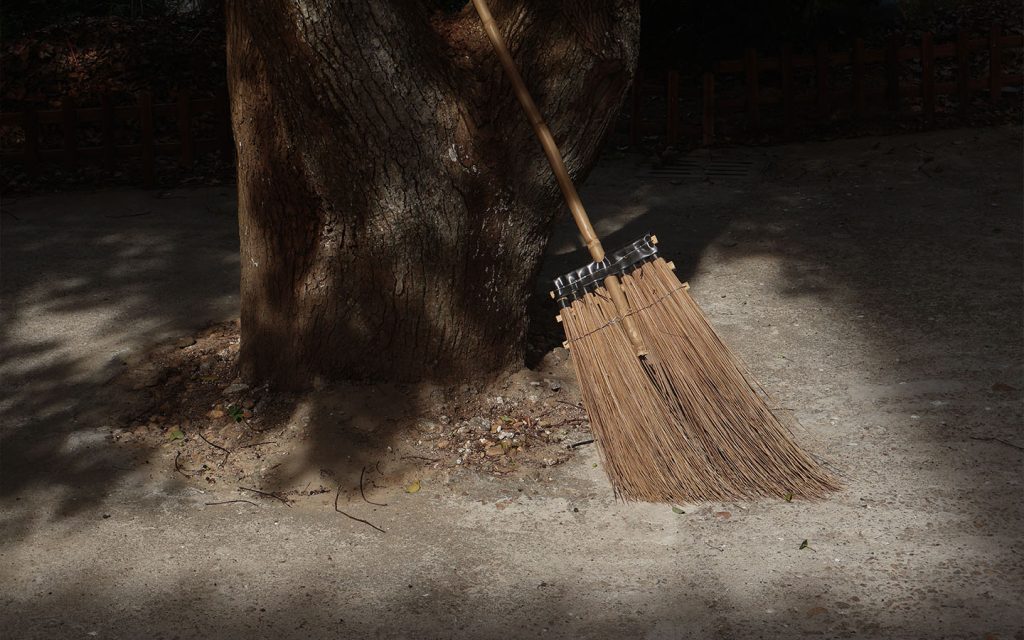
No sweeping or taking out the trash
Sweeping and even taking out the rubbish are not advised during Chinese New Year, as these acts are seen as a symbolic gesture of sweeping away or throwing out your good fortune and luck.
In fact, this belief is so ingrained into Chinese culture that the Chinese word for a jinx or purveyor of bad luck is 掃把星, (sào bǎ xīng) which literally translates into “broom star.”
If you must clean up your house, sweep inward to keep the luck inside. Be sure to leave the rubbish in the house and wait until the fifth day of the Chinese New Year before throwing it out. Think of it as a great time to practice zero waste.
Of course, the best time to clean up your home is always before the Spring Festival, ideally during the traditional house cleaning day (掃塵日, sǎo chén rì) on the 24th day of the twelfth lunar month.
Don’t get a haircut
There are a number of explanations for why you shouldn’t cut your hair during Chinese New Year. One reason is that the Chinese word for hair (髮, fà) is a homonym for the term for fortune or prosperity (發, fā). Hence by cutting your hair, you are somehow cutting away your wealth and luck.
Another reason relates to the symbolism of the haircutting scissors. Traditionally, Chinese people believed that scissors weren’t only able to cut through objects, but could also cut a person’s luck and fortune.
The haircut taboo is also connected with a popular Northern Chinese story that claims that if you get a haircut on the first day of the Spring Festival, it will cause your maternal uncle to die (正月剃頭死舅舅, zhēng yuè tì tóu sǐ jiù jiu).
[See more: Here are the best movies to watch this Lunar New Year]
One version of the story can be traced back to the Qing Dynasty to when the ruling Manchu forced the majority Han Chinese population to adopt their hairstyle, which involved shaving the front half of their hair and keeping a pigtail or queue.
Although the Han population relented, they created the tradition of not cutting one’s hair on Chinese New Years as a way to reminiscence over the old days (sī jiù, 思舊). Over time, the Chinese phrase for thinking of the old days morphed into the same sounding phrase for dead uncle (sǐ jiù 死舅), giving rise to the current taboo.
No killing of animals
Blood is considered a sign of bad fortune during Chinese New Year, which is why the killing of animals is not advised during the first several days of the festival.
According to the Chinese creation myth, the goddess Nuwa populated the earth with animals and humans by creating them over the span of seven days. Based on this legend, people are advised to avoid killing specific animals in accordance with their day of creation. This means chicken on the first day of the Lunar New Year, followed by dogs on the second day, pigs on the third day, sheep on the fourth day and horse on the sixth day. On the seventh day, no punishment is dealt out for the killing of an animal.
Be careful about the gifts you give
When presenting a gift to someone during the Lunar New Year, be wary that certain gifts are considered “unlucky” in Chinese culture. In general, they can be split into two categories – presents whose name evokes an inauspicious concept, and presents associated with an unlucky event or tradition.
Clocks and timepieces are a perfect example of presents that should be avoided, as their Chinese name ”鐘表” (zhōng biǎo) is a homophone for the death-related word “終” (zhōng, to end). Umbrellas shouldn’t be given either, as the Chinese word for this item (傘, sǎn) sounds like the word for separation (散, sàn), which goes against the spirit of the Spring Festival.
Be sure to also avoid presenting shoes as gifts because the Chinese word 鞋 (xié) sounds identical to 邪 (xié), the character for evil. Similarly, do not give out pears either, as the Chinese name (梨, lí) is a homophone for leave (離, lí), a word that relates to death.
Other items are considered taboo gifts by virtue of their association with inauspicious events. For example, candles are typically used to commemorate the deceased, making them a no-go as Lunar New Year Festival presents. Likewise, mirrors are not recommended gifts, as they break easily, an inauspicious sign. What’s more, they are also said to attract ghosts and other bad elements.
Mind your language
Chinese New Year is meant to be an auspicious occasion, which is why unlucky words should be avoided at all cost. These include words such as death (sǐ, 死), kill (shā, 殺), poor (qióng, 窮), nothing (méi, 沒), depleted (guāng, 光), bad (huài, 壞), break (pò, 破), pain (tòng, 痛) and illness (bìng, 病).
If you must bring up these unlucky concepts during the Spring Festival, consider using a euphemism. For instance, instead of directly stating that someone has died, use roundabout phrases such as “passed away” or “gone to heaven,” as well as Chinese equivalents like “歸西” (guī xī) and “仙逝” (xiān shì). Similarly, when feeling sick, use phrases that equate to “under the weather” or “off-colour,” such as 欠安 (qiàn ān) or 欠舒 (qiàn shū).
Swearing is also frowned upon during Chinese New Year, as such words are linked with negative emotions, which is at loggerheads with the positive tone of the festival.
No sleeping early
One of the most important customs of Chinese New Year’s Eve is Shǒu Suì (守歲) or the idea of staying up late with your family to usher in the first day of the Spring Festival. The tradition is rooted in legend, with people staying up late and lighting lanterns on New Year’s Eve in order to protect their children against the mythological monster known as “Suì” (祟).
[See more: 7 Chinese New Year traditions to fill your holiday with joy, luck and prosperity]
Shou Sui practices can vary depending on the region, although some common ones include having a family meal, watching CCTV’s annual Spring Festival Gala program, enjoying mahjong and card games and viewing fireworks.
Of course, adhering to Shou Sui doesn’t mean depriving yourself of sleep. One only needs to stay awake until midnight to have fulfilled the custom.
Settle your debts
The Spring Festival is a time for fresh starts and harmony. In other words, a person should settle all debts and return any borrowed items before the new year arrives. They should also avoid borrowing money from others during the festival, as this is seen as a bad omen for the year ahead.
No breaking of glass and porcelain
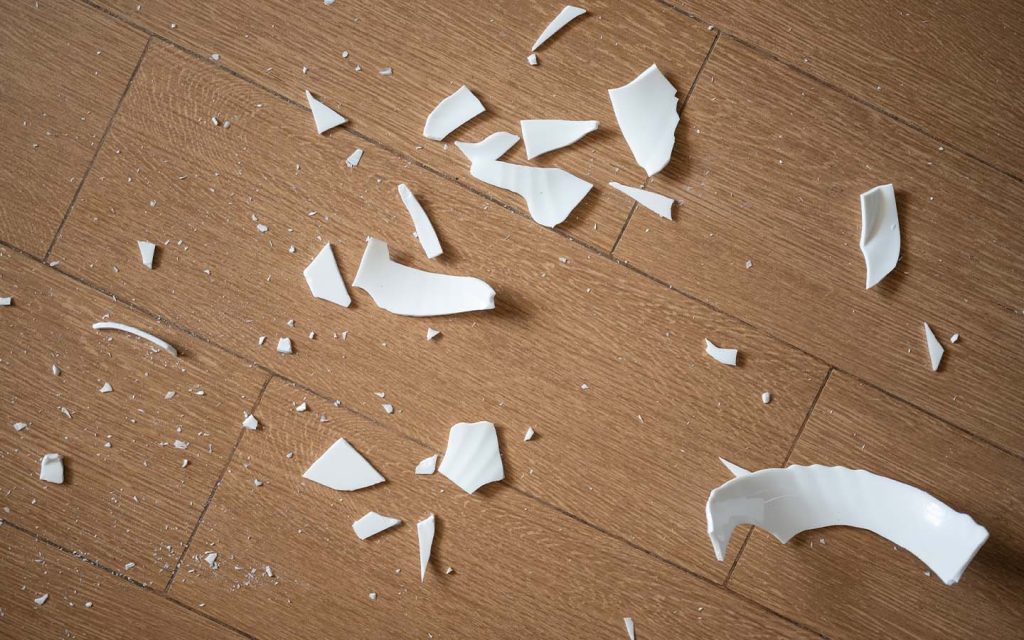
The breaking of items such as glass, porcelain and plates is considered a Chinese New Year taboo, as it is believed to symbolise the breaking of fortune (pò cái, 破財) or the breaking of luck (pò yùn, 破運). In cases where a utensil has been accidentally smashed, you can recite the following auspicious phrase in Chinese to negate the bad omen: 歲歲平安 (suì suì píng ān). It can be translated into “may you have peace year after year,” with the characters for the auspicious idea of “year after year” (歲歲, suì suì) doubling for the characters for the unlucky concept of “breaking” (碎碎, suì suì).
Watch what you eat
According to Lunar New Year tradition, porridge is a food that one should refrain from eating on the first day of the New Year. The rationale behind this is that in the past, porridge was the dish of choice during economically-dire times or when families didn’t have enough provisions. As a result, the consumption of porridge during the Spring Festival is seen by some as symbolic of a dire and impoverished year ahead.
[See more: The story behind lai see: An age-old Lunar New Year tradition that’s rooted in meaning]
For those who intend to eat fish during the New Year, make sure you don’t consume the head or the tail of the fish. The reason is that the Chinese word for fish (魚, yú) sounds like the word for abundance (餘, yú). By leaving the head and tail in place, it represents the presence of abundance, as encapsulated in Chinese sayings such as 年年有餘 (nián nián yǒu yú, to have abundance every year) and 有頭有尾 (yǒu tóu yǒu wěi, to have a beginning and end ).
No going out on the fourth day of the Lunar New Year
Traditionally, people are not supposed to venture outside their homes on the fourth day of the Spring Festival, as this is a day reserved for the welcoming of the Kitchen God (灶神, Zào Shén) and other deities who have returned from heaven after reporting on the happenings of the mortal world to the heavens.
In the past, families would mark the occasion by setting up a ceremonial table with a wide range of food as offerings for the returning god. To appease the Kitchen God and other deities, families are also advised not to argue in the kitchen, as doing so will wake them from their rest in the kitchen, resulting in poor fortune.