
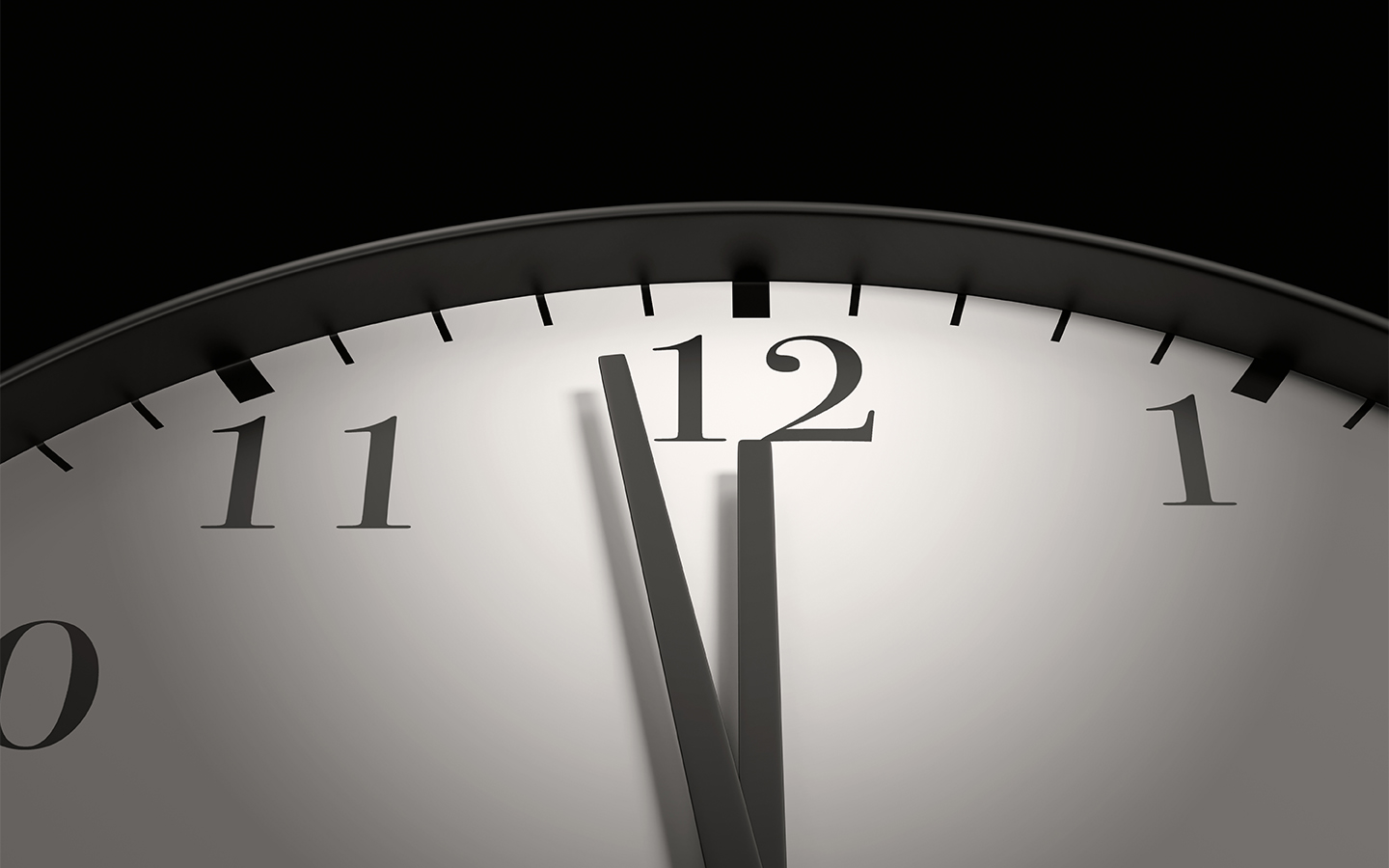
The Bulletin of the Atomic Scientist, a science-oriented advocacy group that runs the “Doomsday Clock,” has set the famous timepiece at just 85 seconds to midnight as the world’s major powers become “increasingly aggressive, adversarial, and nationalistic.”
The clock is a symbolic depiction of humankind’s chances of survival, with midnight representing the annihilation of the species. AP News reports that the clock’s operators point to
the risks of nuclear war, the climate crisis, potential misuse of biotechnology and the increasing use of AI without sufficient control as reasons for their pessimism.
The loss of four seconds since the last annual update, the group said, comes as “hard-won global understandings are collapsing, accelerating a winner-takes-all great power competition and undermining the international cooperation” needed to reduce existential risks.
The resetting of the clock comes as the US continues its mass withdrawal from international organisations, including the UN Framework Convention on Climate Change, the World Health Organisation and the UN Human Rights Council. The expansionist foreign policy of the Trump administration, including its designs on Greenland, has led many to question the future of NATO. Washington’s relentless attempts to contain China’s rise, and Trump’s bellicose threats against Iran, have also sent geopolitical tensions soaring.
The Bulletin of the Atomic Scientist also pointed to the threat of escalating conflicts among nuclear-armed nations, the Russian invasion of Ukraine, May’s conflict between India and Pakistan, and Iran’s capacity for developing nuclear weapons, which suffered only minor setbacks after US and Israeli strikes last summer.
[See more: Trump’s Davos rhetoric intensifies fears for NATO’s future]
International trust and cooperation is essential because, “if the world splinters into an us-versus-them, zero-sum approach, it increases the likelihood that we all lose,” Daniel Holz, chair of the group’s science and security board, told AP News.
The group also highlighted the failure of countries to adopt meaningful agreements to address the global threat posed by climate change. It singled out US President Donald Trump for his efforts to boost fossil fuels with undercutting renewable energy production, gutting the biggest climate spending bill in history passed under his predecessor.
The Doomsday Clock’s countdown started in 1947, a powerful symbol of the potential for world-ending calamity in the nuclear age. Hydrogen bomb testing by the two Cold War powers moved the hands to just two minutes to midnight in 1953, while the end of hostilities pushed it back to 17 minutes to midnight in 1991, marking the furthest point from disaster since its inception.
A decade ago marked the last time the Doomsday Clock measured in minutes, sitting at three minutes to midnight. Since then, leadership failures around the world have pushed humanity ever closer to the brink.
The clock could be turned back, the group said, if leaders and nations worked together to address existential risks.