
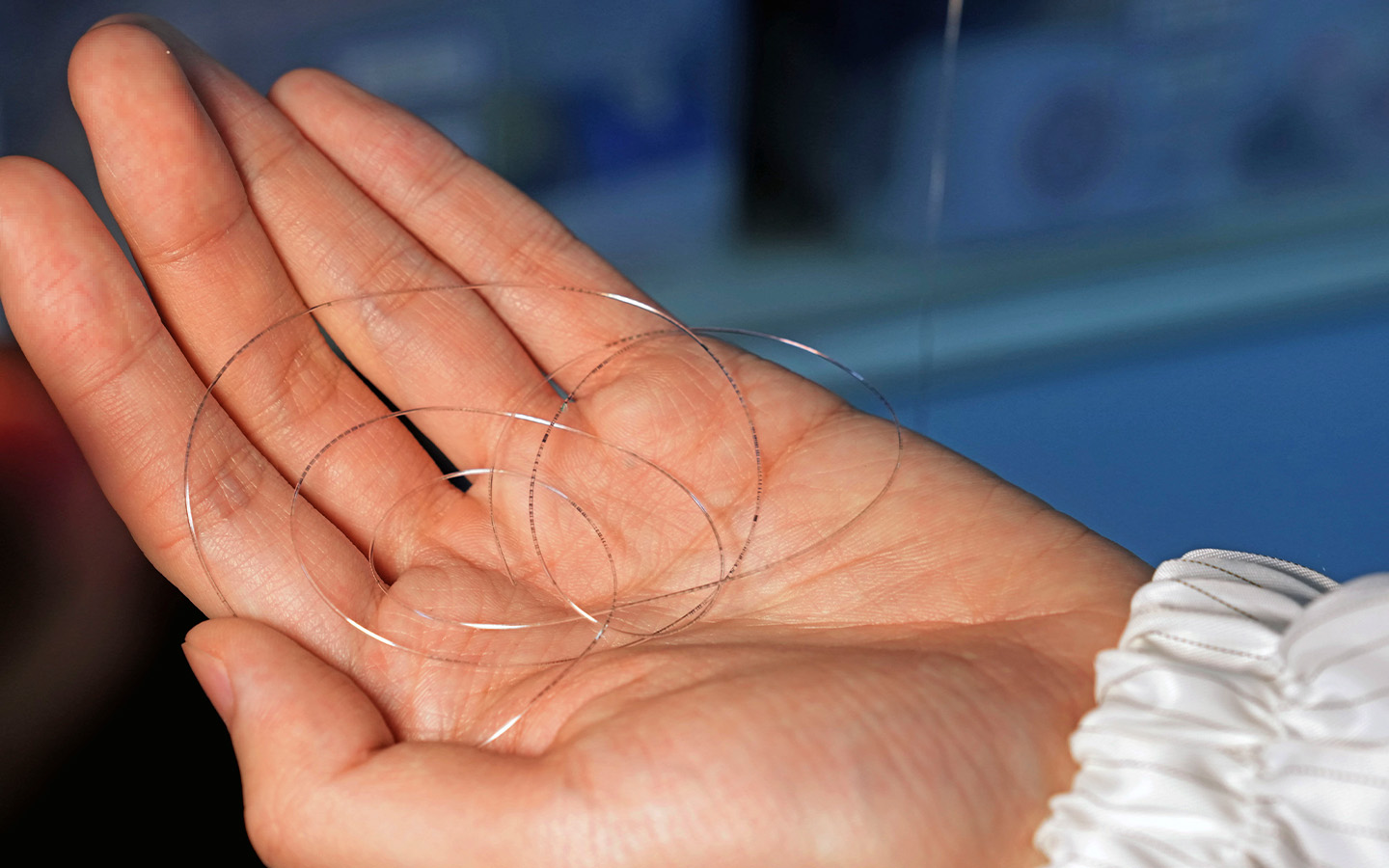
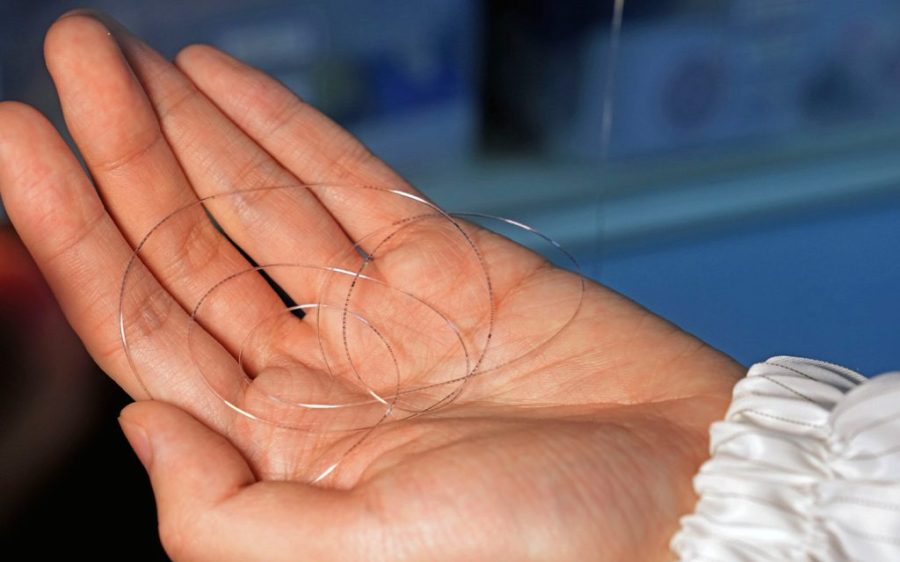
A research team at Shanghai’s Fudan University has embedded high-density integrated circuits inside a fibre thinner than a human hair. This so-called “fibre-chip” challenges conventional chip design, potentially opening new paths for brain-computer interfaces (BCI) and wearable medical technologies, national media reports.
The breakthrough, described in a study published in the journal Nature last week, integrates high-density electronic circuits within flexible fibres that can be stretched, twisted and woven like threads into clothing. The project’s leaders, Peng Huisheng and Chen Peining, told media that emerging fields like BCI “require electronic systems that are compatible with softness.”
The researchers abandoned the traditional flat, silicon-based architecture used in microchips and instead built multilayer, helical circuits inside the fibre itself, maximising its limited internal space. Using micron-level lithography, they were able to fit around 10,000 transistors into a fibre just one millimetre long – giving it the same processing power as a chip used in a heart pacemaker.
A one metre-long fibre-chip, meanwhile, would allow transistor density to approach that of a classic computer’s central processing unit, according to the team. Chen also noted that the fabrication method was compatible with existing chip-manufacturing tools and has already reached a stage suitable for mass production.
[See more: China’s ‘jellyfish robot’ promises to be a breakthrough in deep-sea exploration]
While researchers had previously developed so-called smart fibres capable of sensing touch or storing energy, most still relied on rigid external chips for data processing, limiting comfort and real-world use. By embedding computing capability directly inside a fibre, Fudan University’s new chip removes the need for bulky hardware, allowing fabrics to process information on their own while remaining soft and wearable.
Chen and Peng said the fibre chip could have wide-ranging applications, particularly in healthcare. Current BCI systems rely on rigid electrodes wired to external processors, which can limit safety and performance. Their technology, meanwhile, could enable closed-loop medical devices that interact more naturally with the body.
The same approach could also be applied in virtual reality (VR), with fibre-based electronics woven into lightweight tactile gloves that simulate touch without the bulky hardware used in existing systems.
“They can sense and simulate the feel of different objects, which could be used by surgeons to ‘feel’ the hardness of tissue during a remote robotic surgery,” Chen said.