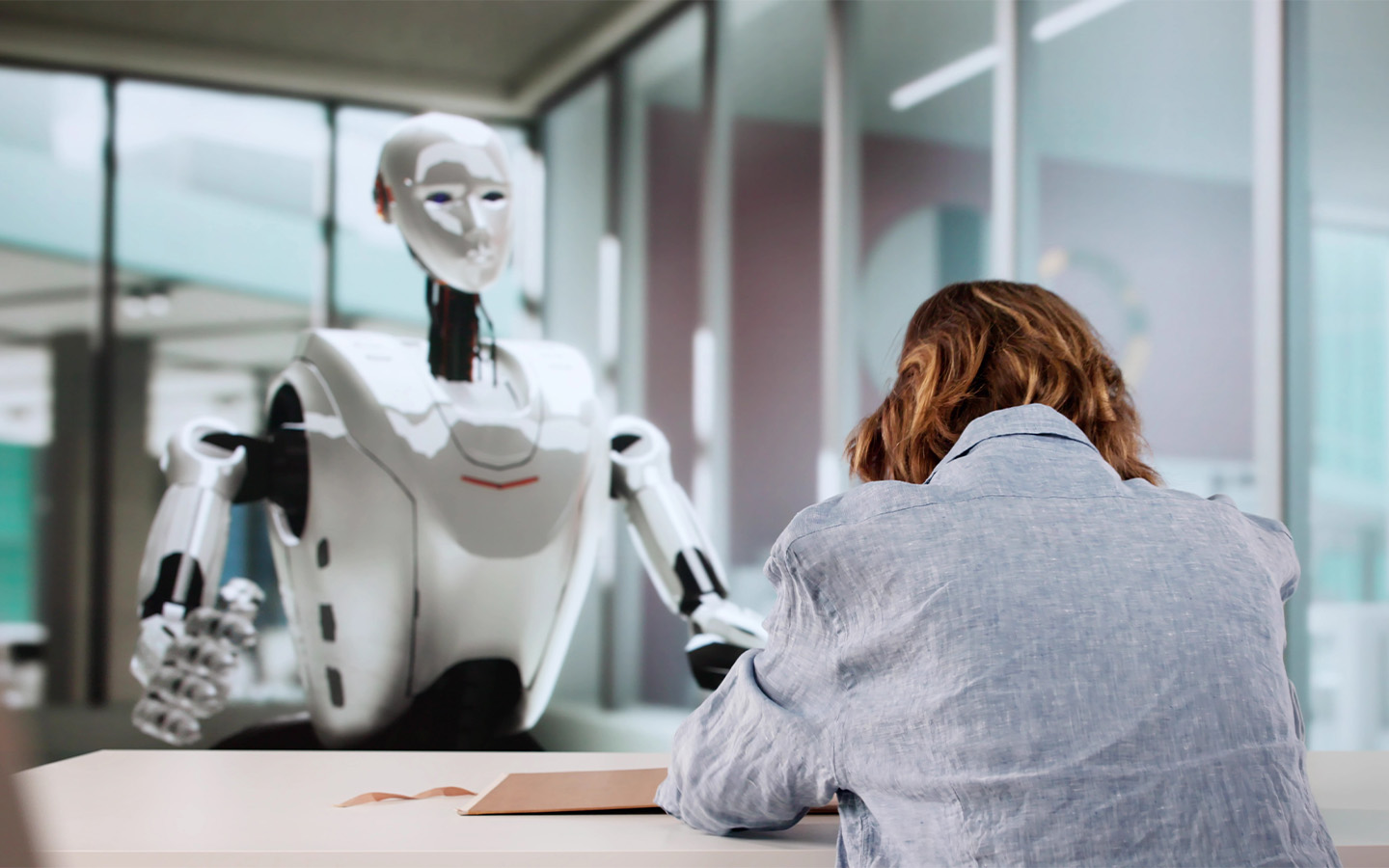
AI could potentially take on managerial roles and make decisions that shape the careers of human workers, according to the Conversation.
In a recent study, researchers decided to test whether AI could handle a managerial task: the entire recruitment for jobs at an electronic manufacturing plant in China. Some 88 percent of companies already use some form of AI for initial candidate screening, but recruitment overall is usually still handled by senior employees or outsourced to specialist firms.
The AI “manager” used online interviews, questionnaires and filters to select over 100 people for the plant. Kirk Chang, lead author and professor at the University of East London, writing for the Conversation, said the experiment showed that “AI is capable of implementing managerial tasks, at least in the field of recruitment.”
“The success of our project suggests to us that AI could carry out managerial tasks on a much larger scale within the next ten years, supervising, leading and managing human employees,” Kirk writes. That shift will likely begin in the tech sector, given it already uses AI extensively in operational roles.
[See more: AI threatens to massively disrupt call centres in India, the ‘world’s back office’]
While the advantages of AI over human workers is well known – it “does not complain and never goes on strike” – Chang does concede that AI is “[not] yet skilled in the kind of relationship building, camaraderie or team spirit which can drive successful organisations.”
Similarly, the ability to have “vision, passion and hopes for the future, which provide momentum for social and economic progress and development” gives humans a leg up over AI, which “does not operate in this manner.”
Another “valuable strength” of human line managers according to Chang is that “for the moment” AI still requires humans to direct its tasks, unable to manage or reason without direct human involvement.
But with some form of AI management likely coming soon, Kirk argues that we need to set aside our fears and criticisms. “The more we understand AI, the better we can learn to live with it, even if it is one day tasked with managing our own working lives,” he writes.