
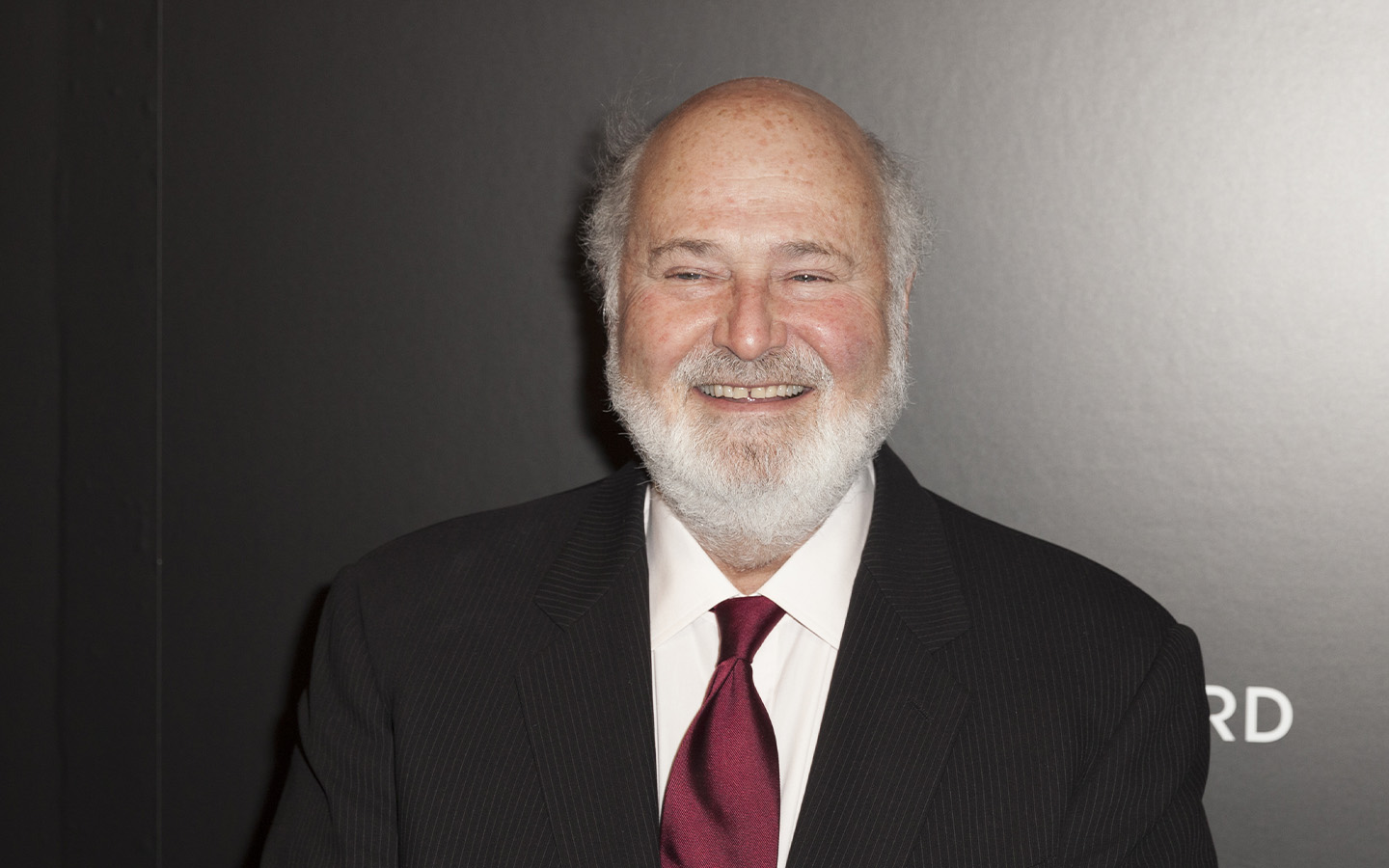
It would not be an exaggeration to call director Rob Reiner one of the finest directors of his generation. In an illustrious career spanning over six decades, the filmmaker, actor, writer and political activist was never afraid to experiment with different film genres both in front and behind the camera.
Prior to becoming a director, Reiner was already an established actor, having gained national recognition as Michael “Meathead” Stivic in the CBS sitcom All in the Family (1971-1979). However, it was with 1984’s music “mockumentary” debut This is Spinal Tap that he made his mark as a director.
The filmmaker followed this cult classic with a string of other notable films spanning genres as diverse as fantasy, coming-of-age, rom-com, legal drama and psychological horror.
[See more: Acclaimed director Rob Reiner has been found dead in his home]
Earlier this year, the director came full circle by releasing Spinal Tap II: The End Continues, a 2025 sequel to the original film that traces the latter stages of the fictional band’s career.
Tragically, the mockumentary would also end up being Reiner’s final film. On Sunday, the 78-year old was found dead in his Los Angeles home, together with his wife, Michelle Singer. Reiner’s son Nick is in custody as a suspect.
To mark Reiner’s remarkable career and his contribution to cinema, here’s a list of five of his films that have to be seen.
This is Spinal Tap (1984)
Reiner’s directorial debut was a critically-acclaimed “mockumentary” that follows the exploits of Spinal Tap, a fictional UK heavy metal band composed of three core members, David St. Hubbins, Nigel Tufnel and Derek Smalls. In the film, Reiner plays Martin DiBergi, a US documentary maker who follows the band as they travel across the US to stage concerts for their new album, Smell the Glove.
Being a comedy, the film doesn’t take itself too seriously, but its lampooning of the conflict, kitsch aesthetics and excesses that plagued rock bands of that period was spot on. Famously, it was filmed without a script, with the dialogue improvised by the main actors Christopher Guest, Harry Shearer and Michael McKean, who also played all the instruments themselves.
Although over four decades would pass before a sequel was produced, Spinal Tap continued to keep itself relevant as a band in the intervening years, with the release of albums and singles, as well as performances and TV appearances.
Stand by Me (1986)
Stephen King’s stories have long been a major source of inspiration for filmmakers, with Reiner directing two adaptations of the US writer’s works – Stand by Me and Misery (1990). While both films are excellent in their own right, Stand by Me is arguably the more emotional and introspective piece.
The movie tells the story of four small town boys in 1950s America who decide to venture out into the wilderness to find the dead body of a missing boy. Along the way, they lose their innocence and learn about the harsh realities of the world.
As a testament to Reiner’s filmmaking prowess, Stand by Me is only one of the two film adaptations that Stephen King has listed as his favourite. The other is Frank Darabont’s The Shawshank Redemption (1994).
The Princess Bride (1987)
When it comes to the best fantasy films, The Princess Bride often ranks highly, alongside other acclaimed works such as The Lord of the Rings trilogy (2001-2003), the Harry Potter series (2001-2011) and Pan’s Labyrinth (2006).
Ostensibly, The Princess Bride appears to be a hackneyed love story about a handsome farmboy, Westley, who is tasked with saving the beautiful princess from evil forces. While the film can certainly be enjoyed at this level, it also has a deeper subtext that parodies fairytale cliches, mixing it with various genres, humour and a framing device of a grandfather telling the story to his grandson.
“The Princess Bride is a totally original movie and a real delight,” film critic Roger Ebert said in his 3.5-out-of-4 stars review. “I laughed a lot during this film, partially because the story is so sweet, and partially because the screenplay is so wicked and takes such liberties with those innocent and heroic characters.”
A Few Good Men (1992)
Not everyone has seen A Few Good Men, but the iconic courtroom scene featuring Tom Cruise and Jack Nicholson has become so embedded in popular culture that most can quote the line “You can’t handle the truth!”
Based on the 1989 play, A Few Good Men is a courtroom drama that sees a young military lawyer played by Cruise work to uncover the truth behind the death of a private, putting him on a collision course with a Colonel played by Nicholson.
The film is often regarded as the final movie in Reiner’s successful seven-film streak, which began with his This is Spinal Tap debut. While some of the filmmaker’s later works continued to be successful, as illustrated by films such as The Bucket List (2008) and Albert Brooks: Defending My Life (2023), they didn’t quite reach the same heights and level of influence as his earlier films.
The American President (1995)
Throughout his career, Reiner has directed various romance films, with his most iconic one arguably being When Harry Met Sally. A lesser-known classic in the director’s oeuvre is The American President, a film that mashes romance with political drama.
Starring Michael Douglas as Andrew Shepherd, a widower who also happens to be the president, the movie depicts the US leader’s burgeoning romance with an environmental lobbyist played by Annttee Benning. To complicate matters, Douglas’ Democratic president is running for reelection and must choose between passing a crime bill and an environmental one.
Upon release, The American President was seen as a return to form for director Rob Reiner, whose preceding film, North (1994), was widely panned. Coincidentally, Aaron Sorkin, the screenwriter of The American President, would go on to create the successful White House-based drama, The West Wing (1999-2006) using leftover ideas from his movie script.