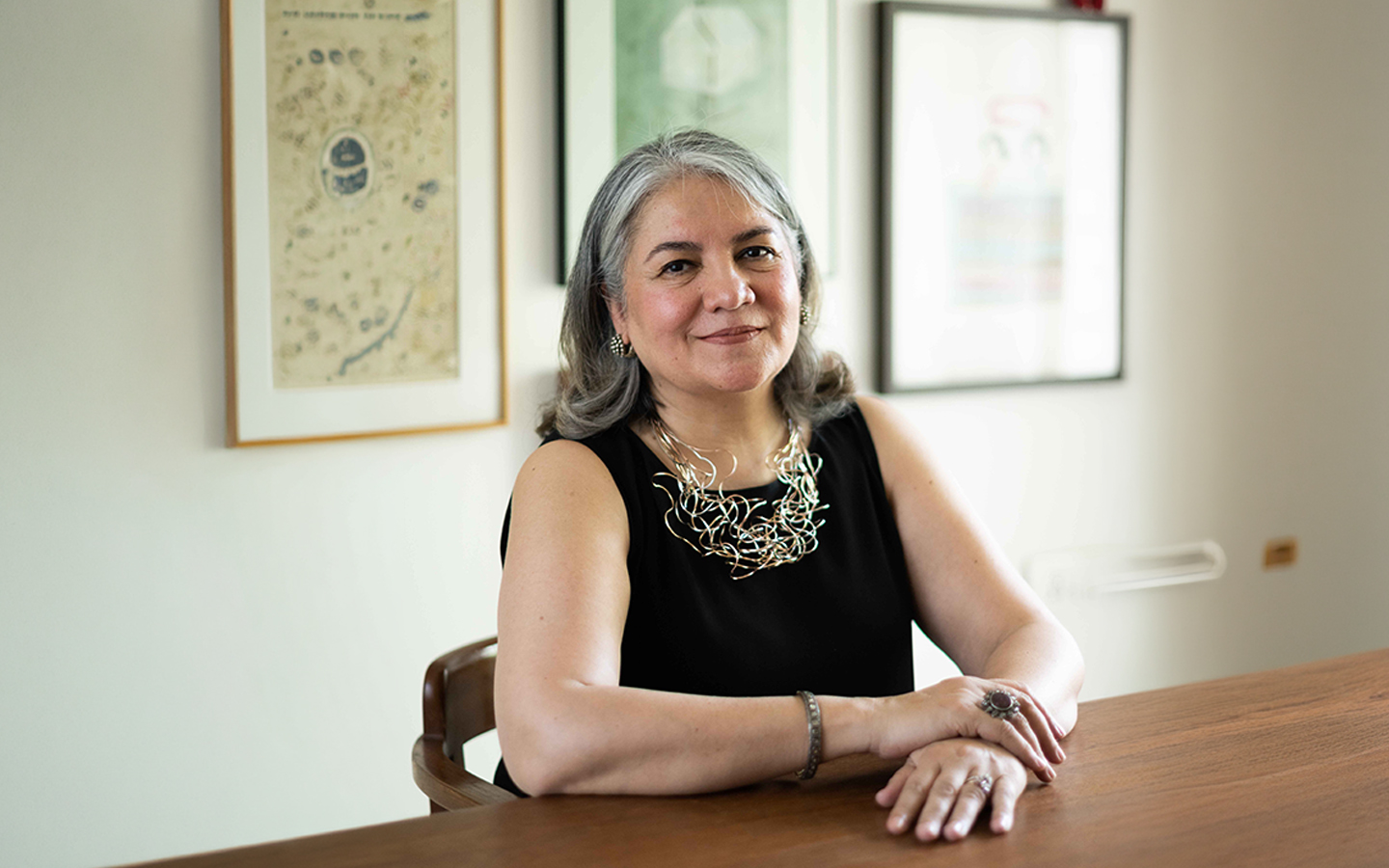
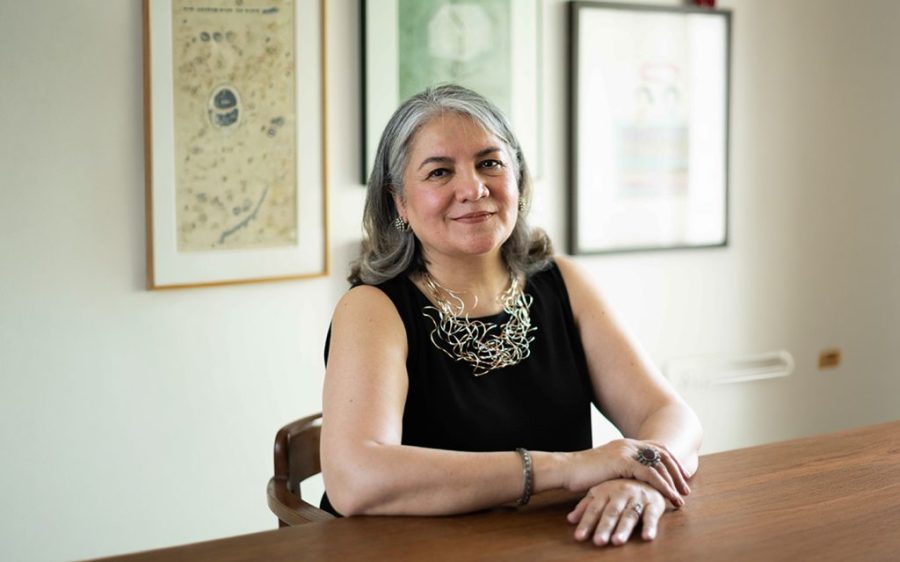
Professional coach and leadership expert Preeti D’mello has spent much of her life contemplating what she calls “the unseen.”
“I’ve always been curious about the non-obvious – things the eye can’t see, but you can feel,” she says. “The only way I could access that was by being curious about people.”
What moves them? What makes them tick? Where do they find meaning?
After nearly three decades of coaching and leadership development work, the US-based D’mello has come to a simple conclusion: to thrive in life and work, people must first cultivate a strong inner foundation.
“For a long time, I thought leadership was about competence and conviction,” she says. “But leadership really is an inside job. The inner climate of a leader becomes the outer climate of the team.”
That realisation led her to focus on fulfilment, which she sees as a missing ingredient in our work and life.
In 2024, she teamed up with Stephen Badger, ex-Chairman of Mars Inc., to establish The Fulfillment Institute. Based in the United States, their coaching and leadership development practice takes a different approach. Rather than focusing only on output or performance, they treat fulfilment as a skill that can be cultivated over time.
“It’s not about fixing people,” she says. “It’s about giving them access to every aspect of themselves. When I choose to be fulfilled, I develop an operating system that gives me the ability to navigate life including the most difficult situations.”
[See more: Why Fiona Nott, CEO of The Women’s Foundation in Hong Kong, is playing the long game]
Roots that travel
D’mello traces her curiosity about people back to her childhood.
She grew up in India, in a family on the move. Her father served in the Armoured Corps of the Indian Army, and every few years they relocated to a new cantonment. Each move brought a new home, school and set of routines, and taught her to adapt alongside her two siblings.
“I realised very early that roots had to be internal, not geographical,” she says. “The most resilient thing about a person is not their circumstances. It is what they carry inside them.”
Her upbringing influenced her in other ways, too. Her father’s military background instilled discipline and strength of spirit, while her mother was gentle and wise, always “moving in the direction of peace,” she says.
[See more: GBA Voices: How Hong Kong entrepreneur Ashley Dudarenok learned to decode China]
She read voraciously about science, spirituality and metaphysics. And though it was not overtly taught, spirituality felt like “an organising principle” in her home. “It was almost like it was in the air.”
Growing up, her parents’ spiritual advisor, Shiva Bala Yogi, also became a guiding presence.
“His presence fortifies in me what no curriculum could have ever taught me,” she says. “He helped me develop an inner compass around who I wanted to be and the courage to stay the path.”
‘A spiritual fast track’
That sense of self helped D’mello steer as life accelerated.
After studying English literature in the 1980s, she became a mother at 22. A couple of years later, after the birth of her second child, she divorced her husband, and she found herself raising two children alone.
D’mello remembers looking at her children’s faces, wondering if she had the maturity to nurture their growth.
“I had to put myself on a spiritual fast track, because I had to be better, smarter and wiser for them,” she recalls.
As she grew up alongside her children, she worked full time to support them while continuing that inner process. “I shared whatever I learned with them, and we developed a different way of being. Our relationship, connection and the trust we cultivated was fulfiling.”
In 2004, she married her now-husband and had a third child, who’s now 19. “My husband played a role in making us normal and bringing us back into the world,” she says, with a laugh. “We were very inward, and he brought with him joy and a sense of adventure, helping us step into a sweet rhythm.”
All the while, D’mello had been moving through a series of roles across business development, education and organisational strategy. The work didn’t directly align with her deeper interest in the unseen, but it offered something else: a front-row seat to how organisations function.
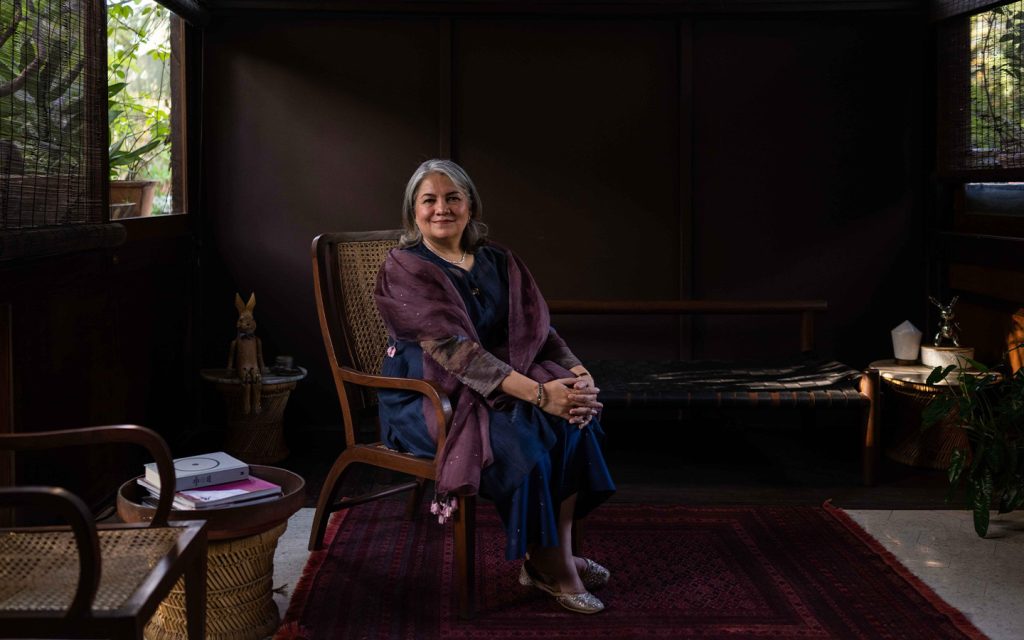
“I saw this great disharmony in organisational systems,” she says. “There was a clear correlation between leadership behaviour, the culture being created, and how people were performing.”
Which raised new questions: What made one leader more effective than another? What enabled people to perform well?
“There were leaders who had power but no presence,” she says. “And then there were a rare few who had both.”
Those rare few fascinated her. Their teams performed better. People challenged each other. Ideas circulated freely. There was a sense of safety in which people felt they could be themselves.
She decided to follow that thread. Over the next few years, D’mello pursued qualifications in leadership, coaching, coaching psychology, adult development and therapeutic work. While earning her professional coaching certification, she felt a real shift in herself.
“Suddenly, I was surrounded by language and methods for something I had understood but not yet fully articulated,” she recalls. “I felt deeply whole.”
Leadership at scale
D’mello moved into leadership development and DE&I, joining Tata Consultancy Services (TCS) in 2013.
For the next decade, she served as the global head of diversity, equity and inclusion, leading large-scale development initiatives, including a leadership accelerator for women, and established the Centre of Excellence for Coaching and Leadership Development, which won the International Coaching Federation’s (ICF) prestigious Prism Award.
Working at that scale, she began to notice commonalities across roles and regions.
[See more: Opinion: On International Women’s Day, here’s why being a transwoman in the GBA is far better than you think]
“It doesn’t matter if you’re a VP of manufacturing or a retail manager. What sustains the human spirit is exactly the same,” she says. “People want meaning. They want belonging. They want to feel safe. They want to know their voice matters.”
Inclusion, she found, was not just about representation metrics, but also about ensuring every voice carried equal weight.
“Inclusion means we can challenge each other, because we’re not scared of being judged or facing consequences for speaking up,” she says.
The pathway to fulfilment
Though she relished the challenge of TCS, D’mello began to feel signs of burnout towards the end of her tenure.
Burnout can take hold under chronic stress – especially when people feel psychologically unsafe, unseen or unheard – leading to deep physical and emotional exhaustion.
It’s a common condition. According to Gallup’s State of the Global Workplace: 2025 Report, 58 percent of employees say they are struggling, while 9 percent report suffering. Meanwhile, only 21 percent say they feel engaged at work.
Depletion is a symptom of a fractured system, she says. People are running on a hamster wheel – productive, but not asking themselves the key question around fulfilment.
“We’ve become very good at extracting performance,” she says. “But we need to sustain the human being before tapping into that.”
So, how does one become fulfilled?
D’mello sees it as a skill that can be practiced, regardless of circumstance. To help people do exactly that, she and Badger set out to build The Fulfillment Institute. At the core of their approach is a four-dimensional framework, that speaks to Self, Relationships, Work and Nature. The resulting wholeness or completeness that emerges from intentional attention to the four dimensions, she says, is similar to the Sanskrit concept of Purna.
“When we nourish and balance every dimension, we potentially tap into fulfilment,” says D’mello. “Depletion happens when we sacrifice one dimension for the sake of performance or neglect one dimension for the sake of another.”
Fulfilment looks and feels different for everyone – it may feel like peace, contentment, alignment, purpose, resilience or self-assurance. But the outcome is often the same: the ability to show up as your best self.
Through a mix of one-on-one coaching, leadership programmes, gatherings, ICF-accredited coach certification programmes and ongoing learning opportunities, the institute helps both people and organisations cultivate fulfilment, then sustain it as a resource they can return to over time.
When working with organisations, D’mello aims to create self-sustaining systems where leadership, culture and coaching capabilities can be continuously developed from within. Rather than a one-off intervention, each programme is designed to be integrated into everyday operations, enabling teams to collaborate more effectively over time. In practice, this means developing leaders who can cultivate other leaders, and teams that don’t rely on a single voice to function well.
[See more: International Women’s Day: Celebrating Macao’s unsung heroes]
Over three decades, D’mello has coached more than 800 leaders and supported the certification of over 440 coaches. She’s also worked with more than 7,500 participants through Women in Leadership programmes, while her broader enterprise work has engaged tens of thousands more, including over 10,000 people through relationship coaching and 20,000 through large-scale programmes.
For D’mello, it’s a culmination of a lifelong inquiry. Coming back to her childhood interest in the unseen, D’mello is currently pursuing a PhD in wisdom studies. She’s also preparing to launch a new programme in 2026, The Science of Spirituality and Fulfilment, which aims to explore the invisible forces that impact our development.
Looking ahead, she hopes to see more people feel more fulfilled, with special attention to women.
“I’d love to see women step into their power,” says D’mello. “We have so much to offer, and we’ve fallen into that trap of societal norms, of being told that we are lesser.”
When women are fulfilled, she believes they are more likely to trust their own worth, see themselves as deserving of opportunities, and ask for what they want rather than putting others first.
“We need individuals and organisations to recognise that people need to be nourished,” says D’mello. “Their journey needs to be honoured, their desire accepted – and only then can they be their best selves.”