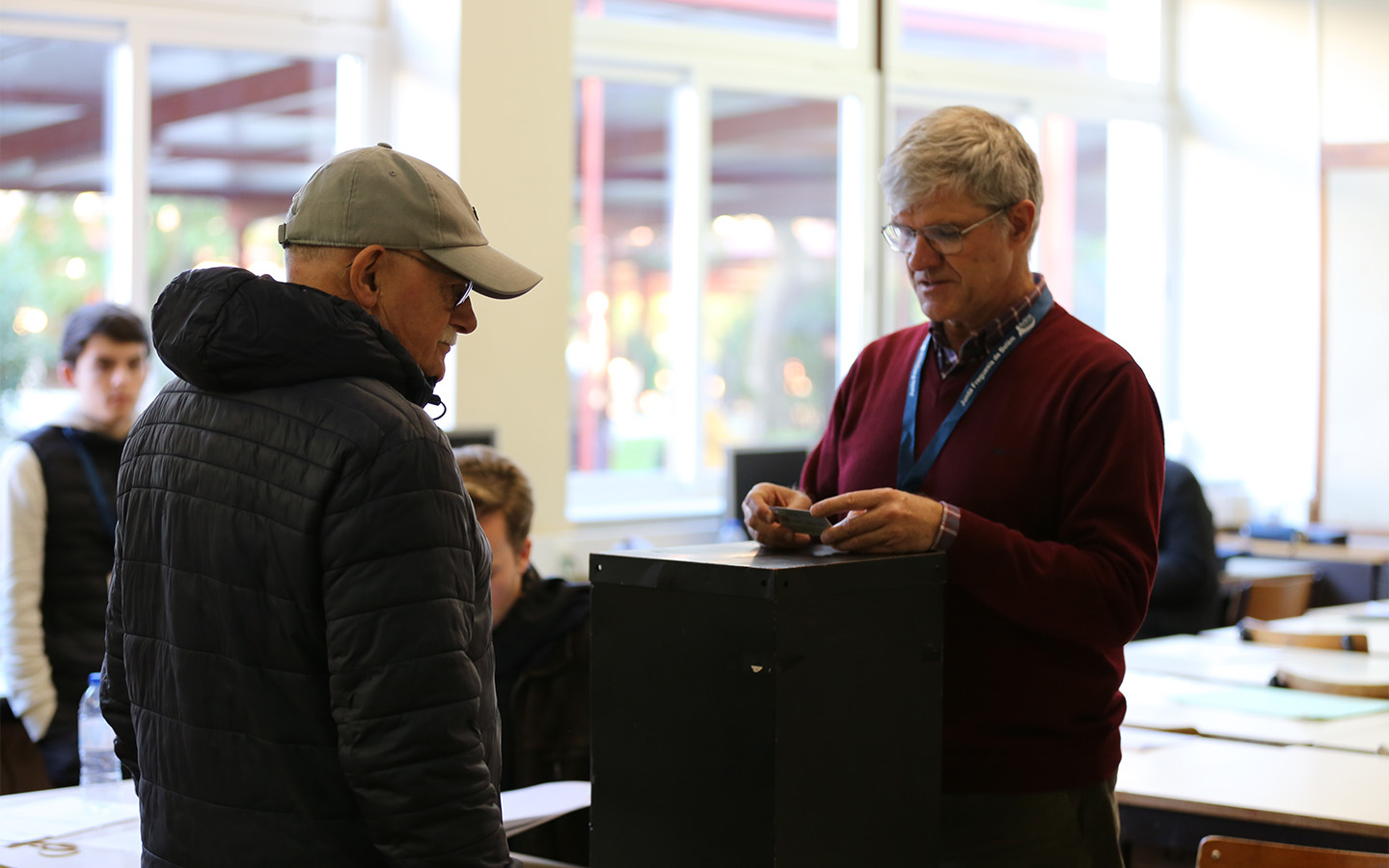
António José Seguro of Portugal’s centre-left Socialist Party has won the country’s presidential runoff in a landslide, defeating far-right challenger André Ventura and dealing a setback to Europe’s nationalist surge.
With most ballots counted on Sunday night, Seguro, 63, was credited with around two-thirds of the vote, securing a five-year term in the largely ceremonial post but with significant moral authority over the country’s turbulent politics. Partial tallies showed him on about 66-70 percent, compared with roughly 30-34 percent for Ventura, who leads the anti-establishment Chega party.
The result caps a tense campaign dominated by concerns over the cost of living, corruption and the rapid rise of the far right in a country long seen as relatively immune to such forces. Ventura’s advance to the runoff, after a strong first-round performance that saw him dominate the overseas vote, underscored how deeply Chega has embedded itself in Portugal’s political landscape.
Seguro, a moderate Socialist and former party leader, campaigned on a message of institutional stability and defence of democratic norms, pledging to act as an “arbiter” above partisan battles. In his victory speech, he vowed to “unite Portugal after a divisive campaign” and to work with all democratic forces, an implicit signal that he would resist efforts by Chega to push the political agenda further to the right.
[See more: Portugal announces a US$2.95 billion support package for victims of Storm Kristin]
The presidential vote comes less than a year after a snap legislative election that produced a fragmented parliament and a minority government led by Luís Montenegro’s centre-right Democratic Alliance (AD). In that contest, AD emerged as the largest force with 91 seats, ahead of the Socialist Party on 58 and Chega on 60, cementing the far-right party as a major player but leaving mainstream parties reluctant to work with it.
Analysts say Seguro’s victory will ease immediate fears of an institutional clash between the head of state and the government, but warn that Ventura’s 30-plus percent score signals a durable protest vote that will continue to shape Portugal’s politics. The new president is expected to support Montenegro’s efforts to pass key legislation, including the 2026 budget, while using the pulpit to push back against polarising rhetoric and to defend Portugal’s pro-European course.
For Macao, where many residents maintain close ties with Portugal, the result will be read as confirmation that the traditional parties can still rally broad majorities against extremist challengers, even as frustration with the status quo grows. But with Chega entrenched as the third force in parliament and now tested in a nationwide runoff, Portugal’s new president faces a demanding task: calming a restive electorate while presiding over one of the most polarised periods since the country’s return to democracy.