Historical links between Macao and Sri Lanka go as far back as the 16th century’s Age of Discovery when Portuguese ships navigated east across the Indian Ocean. Modern maritime routes have yet to transcend to aviation paths, as direct flights between the two cities are currently unavailable. However, passengers can fly nonstop to Colombo out of Hong Kong.
With Macao’s airport planning to accommodate 15 million passengers by 2030, there’s hope that one day a direct route can depart out of the neighbouring SAR, commented Thulci Aluwihare, deputy managing director of CHEC Port City Colombo, speaking at last Thursday’s BritCham event held at the Artyzen Grand Lapa Macau Hotel. But while he suggested that discussions to open flights have taken place, Aluwihare acknowledged that there were more immediate priorities for the South Asian nation of 23 million people where some of the world’s busiest ports operate.
[See more: Between policy and belonging: Can a Greater Bay Area identity truly exist?]
Aluwihare opened his presentation by contending that few were probably familiar with CHEC Port City Colombo. A corporate ownership chart quickly resolved the matter, explaining that his firm was a subsidiary of China Harbour Engineering Company (CHEC), whose parent company China Communications Construction Company (CCCC), is the world’s third-largest EPC contractor, a HK$120 billion market cap entity that trades on the Hong Kong stock exchange.
“Essentially, we are a subsidiary of a subsidiary, whose ultimate parent company is over a hundred years old,” Aluwihare described, adding that major developments like the Hong Kong-Zhuhai-Macau Bridge and the expansion of the Macau International Airport were part of CHEC’s portfolio of more visible work in the Greater Bay Area (GBA), and perhaps more recognisable to those in attendance.
Concerns of debt diplomacy
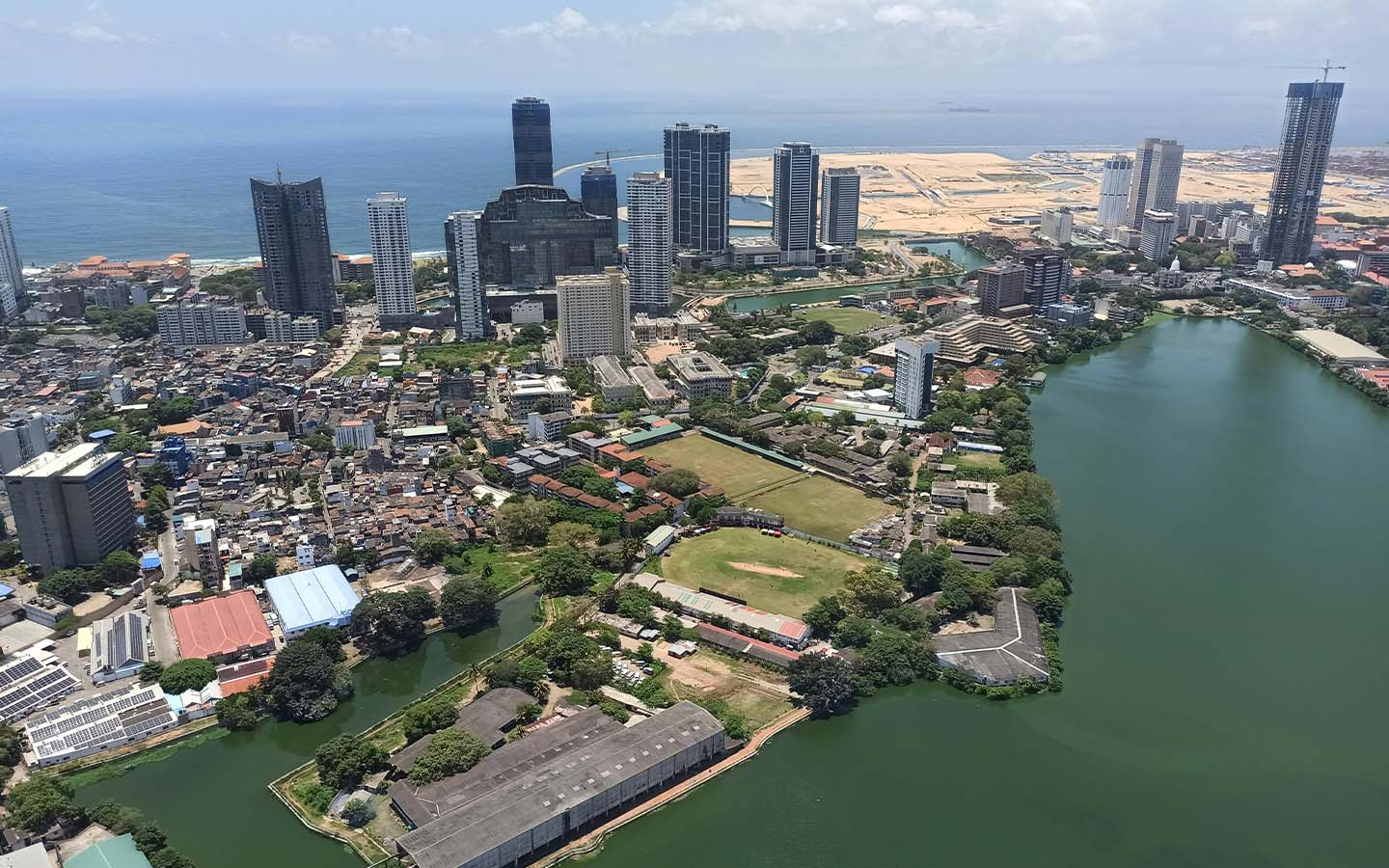
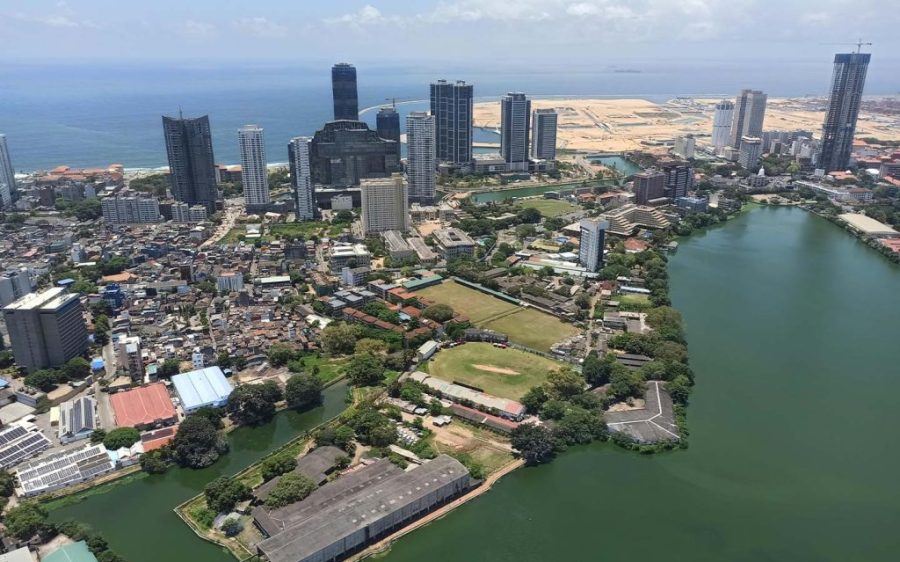
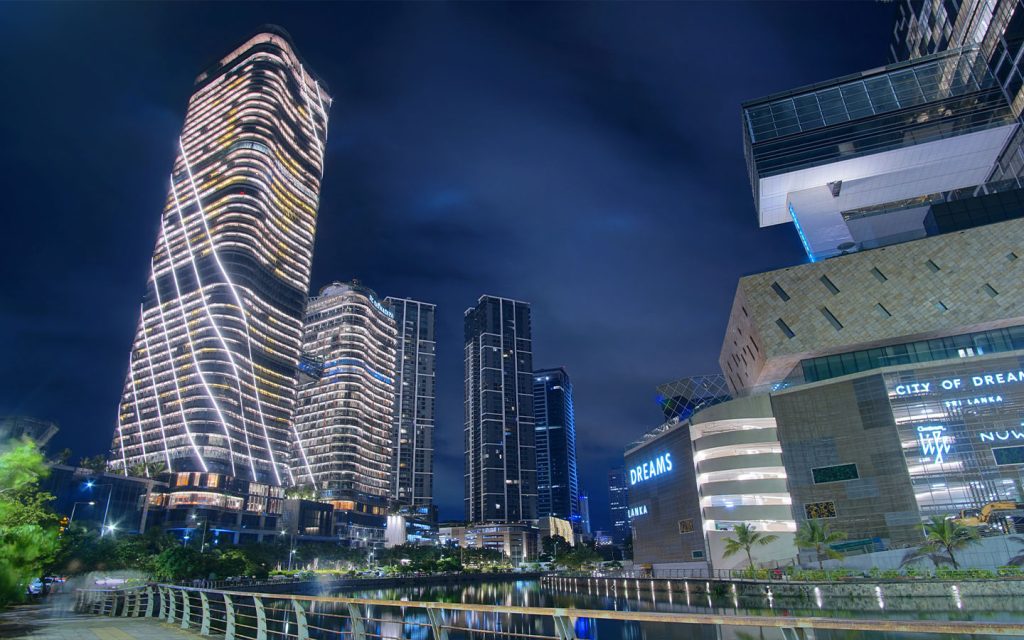
The focus of Aluwihare’s presentation was CHEC Port City Colombo, a $15 billion infrastructure project that aspires to reposition Sri Lanka’s economy by creating a commercial hub for service-related industries. The development, slated for completion in 2041, is campaigning itself as a “mini Singapore” of the region to serve nearly 2.5 billion adjacent people across South Asia, Southeast Asia, Africa, and the Middle East.
The pitch is inundated with challenges, as the vision collides with investor concerns over Sri Lanka’s debt burden and underutilised infrastructure. Heavy reliance on overseas loans has created repayment difficulties, fuelling debates about economic independence and national sovereignty.
Aluwihare clarifies the differences. “Unlike other undertakings, there is no foreign debt supporting Port City,” he says. “Instead, we are completely relying on foreign direct investments, having already secured $900 million since the end of last year.”
[See more: A monkey has been blamed for causing a nationwide blackout in Sri Lanka]
Originally envisioned as waterfront commercial real estate, the 269-hectare Port City is being constructed on reclaimed land from the Indian Ocean and ring fenced into a service-focused special economic zone (SEZ) characterised by tax incentives and multi-currency framework, including the strict exclusion of Sri Lanka rupees to hedge against volatile currency risks.
“The area is annexed to Colombo’s administrative district and governed by the Colombo Port City Economic Commission, a seven-member body appointed by the president to regulate and administer this new city,” Aluwihare explained when asked about debt diplomacy worries.
For its backers, Port City is a calculated bet, combining long-term capital commitment with institutional-grade regulation to chart a new course for Sri Lanka’s $100 billion economy. Based on an independent impact assessment by PwC, once fully operational, Port City Colombo is expected to inject close to $14 billion annually into Sri Lanka’s economy.
Template for Macao
Locally, the Port City endeavour offers itself as a template for other popular tourist destinations like Macao, particularly within the GBA framework, by showcasing how a master-planned SEZ can attract foreign investments and broaden an economic reliance beyond a single industry – in Macao’s case, gambling.
It is about facilitating growth not only locally but creating a spillover throughout the economy, comments Eduardo Buisson Loureiro, a Macao‑based lawyer and international arbitrator, in comments to The Bay (Macao News). “But there needs to be a safeguard architecture that facilitates investor confidence, since any SEZ requires a clear purpose and policy direction within an institutional framework and governance to uphold transparency and accountable oversight.”
He continued: “SEZs should have a differentiated regulatory regime for priority sectors, but this must be balanced with environmental, labour, and competition law standards to avoid race-to- the-bottom risk.”
Aluwihare admits that Port City cannot directly compete with established hubs like Singapore or Dubai, but its best strategy is to build out niche services that serve those economies. A similar analogy can be made with Macao’s capital market ambitions. While unable to compete directly with neighbouring Hong Kong’s deeper infrastructure, Macao can leverage its ties to Portuguese‑speaking countries and develop its emerging offshore bond market.
[See more: Here’s what you need to know about Indian cricket prodigy Vaibhav Suryavanshi]
“We are positioning ourselves to complement Singapore and Dubai, particularly from a cost and regional access perspective. Colombo’s proposition lies in being an accessible alternative, especially for companies looking to tap into South Asia’s growth,” Aluwihare said.
Beyond business, Aluwihare also pointed to cultural factors that elevate Colombo’s appeal, especially when it comes to major sporting events and rival teams. Back in February, Colombo hosted a major cricket match between India and Pakistan that drew in nearly 30,000 fans from outside the country to attend.
“The event highlighted Sri Lanka’s neutrality, allowing sports fans to enjoy the match without politics hanging above them.”
4 million tourists by 2030
Sri Lanka’s tourism landscape shares notable similarities with Macao, especially in customer concentration. Of the more than 2 million tourists who visited Colombo last year, the vast majority came from India, resembling a comparable feature to Macao’s arrival flow from China.
Geographic proximity is the key variable. “A flight from southern India to Sri Lanka is shorter than the two-hour domestic journey required to reach Mumbai or four-hour one to reach the capital of New Delhi,” Aluwihare noted.
[See more: Lawrence Ho: Sri Lanka ‘can be to India what Macao is to China]
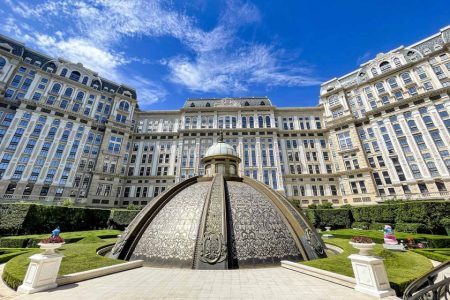
Colombo is targeting 4 million tourists by 2030, a figure Macao achieved in the first few weeks of 2026. To reach this goal, new attractions like Melco Resorts & Entertainment’s City of Dreams Sri Lanka, which opened last year, aim to draw additional Indian tourists while also pulling other visitors from beyond South Asia as well. Flights from Macao to the Sri Lankan capital would also certainly help this ambition.