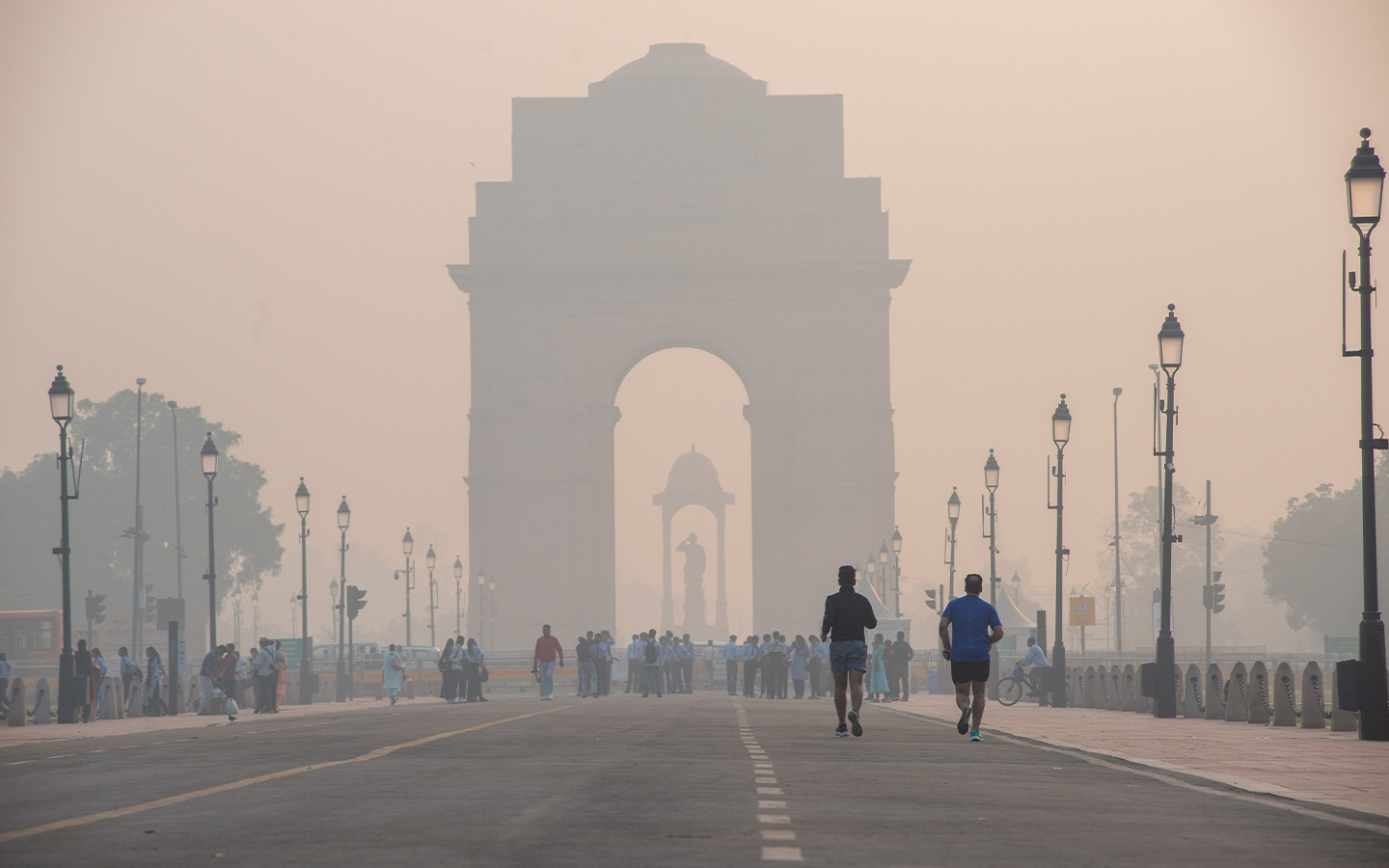
New research reveals that living somewhere with highly polluted air can slash the benefits of regular exercise, though not erase them, according to a press release from University College London (UCL).
For the study, published in the journal BMC Medicine, an international team of researchers analysed data from over 1.5 million adults from countries including the UK, Taiwan, China, Denmark and the US.
Armed with more than a decades-worth of data, they found that the protective effect of regular exercise on people’s risk of dying over a specific period – from any cause, although the team focused on cancer and heart disease – appeared to be reduced, not eliminated for those who lived in high pollution areas.
Air pollution was measured in terms of particulate matter (PM) with a diameter of less than 2.5 micrometres, with most PM2.5 coming from burning fossil fuels and fires. These tiny airborne particles are small enough to penetrate deep into the body, increasing the risk of respiratory diseases, cardiovascular diseases, neurological disorders and premature death.
[See more: How toxic is Macao’s air?]
“Our study shows that toxic air can to some extent block the benefits of exercise, although not eliminate them,” co-author Professor Andrew Steptoe, from UCL’s Department of Behavioural Science & Health. “The findings are further evidence of the damage that fine particle pollution can do to our health.
Tracking exercise habits and PM2.5 levels, the researchers found that participants who did at least 150 minutes of moderate or vigorous exercise each week cut their risk of dying by 30 percent. Those who lived in areas with high particulate pollution (above 25 micrograms per cubic metre), however, lost out on at least half of that risk reduction. Higher levels (above 35 micrograms per cubic metre) lost even more.
Nearly half the world (46%) lives in areas with fine particulate pollution exceeding 25 micrograms per cubic metre and over a third (36%) live in areas where the yearly average surpasses 35.
“We don’t want to discourage people from exercising outdoors,” co-author Professor Paola Zaninotto, from UCL’s Department of Epidemiology & Public Health, emphasised. “Checking air quality, choosing cleaner routes, or easing off intensity on polluted days can help you get the most health benefits from your exercise.”