

I was travelling from Macao to Hong Kong last year and walking past the temperature screening station at the ferry terminal in Central, when a port health officer stopped me, carefully scruitnised my appearance, and thought for a moment. Then he levelled his thermometer gun at my forehead. “Madam,” he said, “can I take your temperature?”
As a 185 cm, 93 kg, broad-shouldered transwoman, I don’t often pass as cis gender, so it’s always memorable when I do. Young men have held doors open for me. One time, when I unthinkingly spoke in a baritone voice, the checkout girl at my local supermarket exclaimed, “But I thought you were a woman!”
Then there was an evening at a restaurant, also in Hong Kong, when I asked the receptionist where the restroom was – and she walked me down a corridor to the ladies’ room. I continued toward the accessible restroom instead, because I often prefer gender-neutral facilities to preserve my peace and the peace of other customers. But the receptionist came after me and gestured again, insistently, at the door of the ladies’.
[See more: Thousands tie the knot as Thailand becomes first Southeast Asian nation to recognise same-sex marriage]
To me, incidents like this are like a hug of affirmation from the universe. They mean that my hair and makeup were on point that day – that my wardrobe was more style queen, less drag queen. I feel seen. But in many places, passing isn’t merely nice when it happens. It can make the difference between life and death.
In the US, trans people are over four times more likely to be victims of violent crime than cis people, and trans women face victimisation rates more than three times those of cis women. Across the EU, reports of hate‑motivated violence against LGBT people rose from 11 percent of such crimes in 2019 to 14 percent in 2023, with violence against trans people notably higher than against other LGBT groups. In Britain, police‑recorded hate crimes against trans people have hit record highs, fuelled by a climate of intense public and media hostility around trans issues. Globally, monitoring projects have recorded more than 5,000 murders of trans and gender‑diverse people since 2008, the vast majority transwomen or transfeminine people.
Living in China’s Greater Bay Area (GBA) is different, though. Don’t get me wrong. The absence of a specific hate‑crime law in China, and the lack of dedicated national monitoring, mean murders or hate attacks may be under‑recorded or not recognised as anti‑trans crimes. But the form of abuse appears to be of another kind. Much of the documented violence against trans people nationally is private and relational – from parents, family members and partners, who frame it as “discipline” or a “correction” of gender non‑conformity. Some surveys put the number of trans people who have suffered such violence at a disturbingly high 60 percent. It rarely takes the form of strangers attacking trans people on the street, however.
Why things are different for transwomen in China’s Greater Bay Area
Being a transwoman in the GBA is, for me, defined by relative public safety. That claim sits uneasily beside the undeniable reality that LGBT people in China still face structural discrimination, but both truths can coexist.
In Western discourse, progress is often measured by laws and language: marriage equality, gender recognition procedures, institutional visibility, and so on. China lags on those fronts. Same-sex marriage is not recognised, there are no explicit anti-discrimination protections for sexual orientation or gender identity, and LGBT activists have faced increasing pressure, including cancelled events and shuttered organisations. Trans people can encounter serious barriers in access to affirming healthcare. Any account of queer life here needs to bear all of that in mind.
And yet, for many of us, the daily experience of moving through public space can feel calmer, less exposed and less dangerous than in some “progressive” countries. Across Europe, trans people report very high rates of public harassment and violence, including street attacks, online abuse and hate crimes that have risen sharply in recent years. For what it’s worth, the UK is the only place where I’ve been beaten up – twice, for “looking faggy,” as my queer friend Bill puts it.
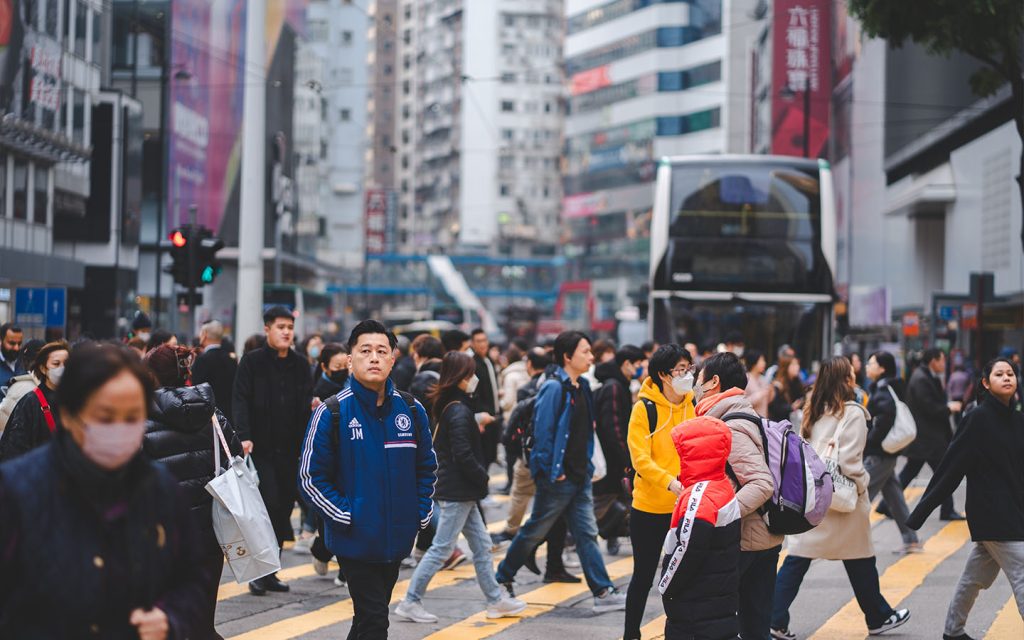
That is the paradox: in the West, affirmative legal language, progressive policies and support from liberals simply hasn’t translated into a sense of everyday safety. By contrast, in the GBA what I encounter is not hostility but pure indifference. People are busy, pragmatic and, in public at least, disinclined to challenge strangers. This is not the same thing as acceptance, but it does create a kind of social truce. I can ride public transport, go to the mall, sit in a café, and am never confronted. My very existence is not an invitation to argument or abuse. For many transwomen, this absence of open aggression is not a small thing; it is the difference between bracing for impact and simply getting on with our day.
[See more: The gradual rise of gender-neutral pronouns in Chinese]
The only prolonged hostile stares I’ve encountered in Hong Kong – the GBA city I live in – haven’t come from locals or mainland Chinese. They’ve only come from expatriates: always middle-aged white men, who seem to carry their ideological wars with them. Their microaggressions reflect their own culture, where everyone’s position on gender has become a public declaration, and trans existence feels politicised, even weaponised, from both left and right. Here, I can live outside that battlefield.
True, in the GBA I cannot change an “M” to an “F” on my identity documents without a fight – if at all. I cannot assume that my rights are fully protected in law if my employer or landlord decides they do not like who and what I am. But I can walk down the street without constantly scanning for threats. I can live in a denim skirt, in ballet flats, and in peace.
For International Women’s Day, that contrast should give us pause. We are used to narrating “progress” as a straight line from repression to freedom. The reality is far more nuanced. In Western democracies, trans existence has become a source of conflict, and transwomen’s bodies and lives are debated daily in the culture wars. In China, trans existence is less publicly argued over, but also less publicly named. Between those two imperfect models, I choose the one where my body is not a target every time I leave the house.
If my opinion sounds counterintuitive to you, perhaps that says less about China and more about the Western narratives we take for granted. Peace is not the same as justice: but on many mornings, as I step into a crowded GBA street and nobody pays me any attention, it feels like a decent place to start.
The opinions expressed in this article are those of the author and do not necessarily reflect the views of Macao News.