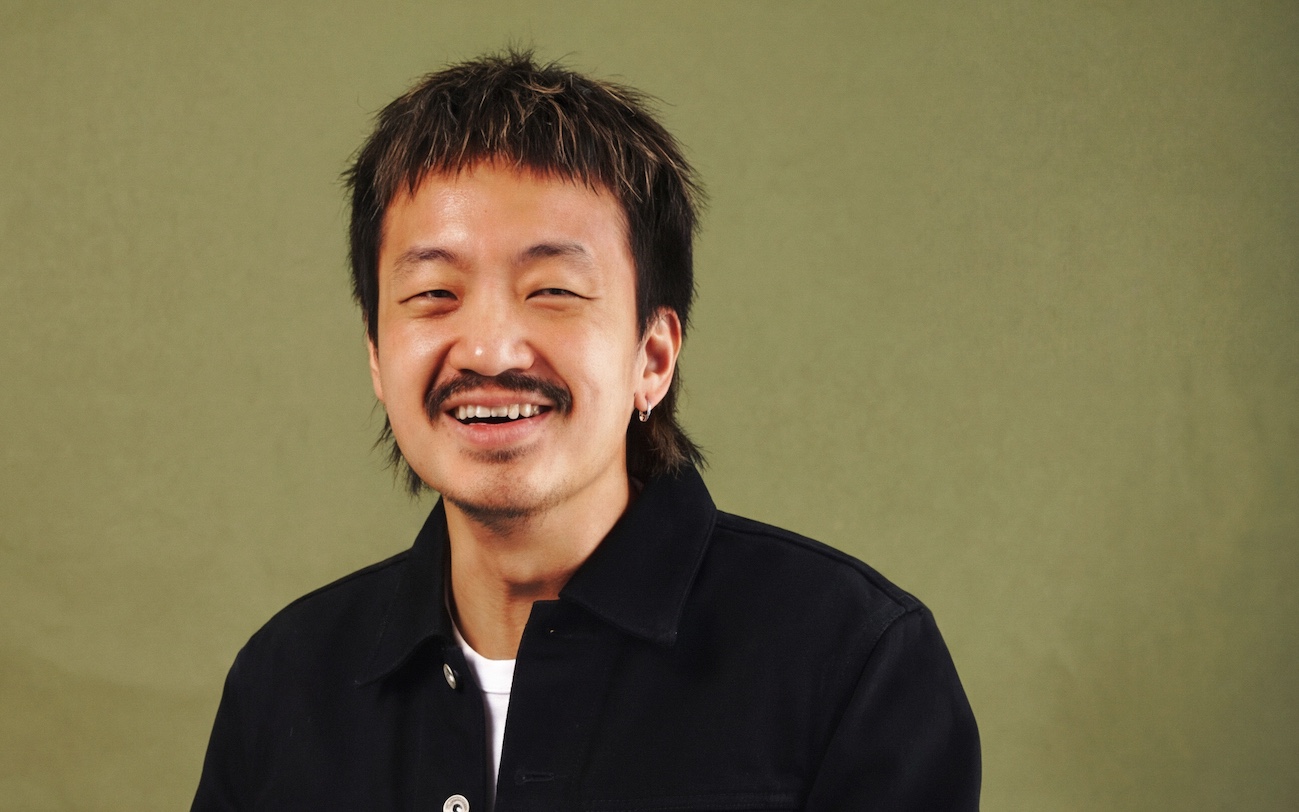
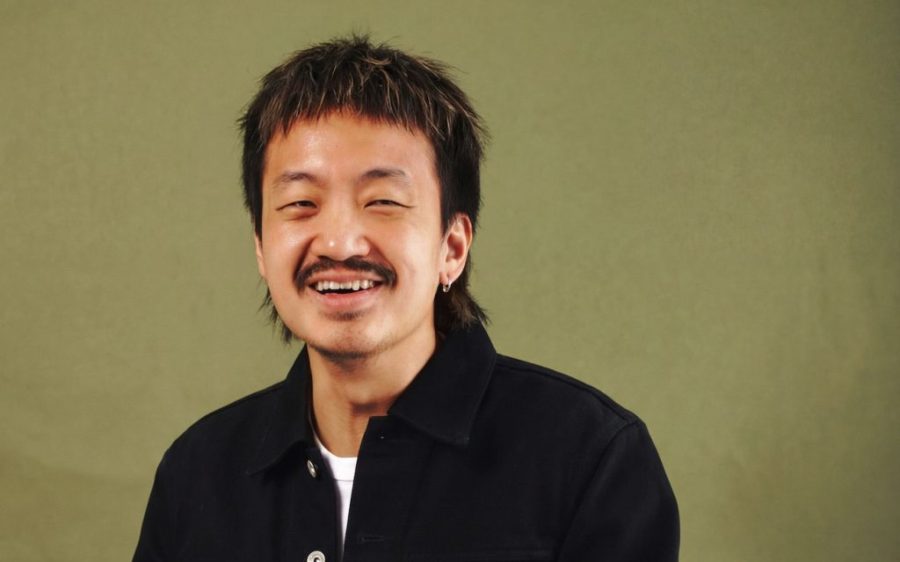
When standup comedian Jordan Leung picked up our video call, I was strangely surprised that he sounded exactly like his characteristic “low energy” standup shows. Perhaps it was because of how consistently humour trickled through his speech that I assumed his deadpan demeanour was deliberate, or perhaps it was because I’ve never come across an internet-famous person who was so down-to-earth.
By way of response, Leung said, “If I was pretending, I would pretend to be something way more charming.”
[See more: I Ask, You Answer with Hong Kong comedian Vivek Mahbubani]
Leung is a bilingual comedian who grew up in Hong Kong but relocated to America when he was 15. He returned to the SAR in 2020 during Covid with only “60 followers” on his Instagram account @69ranch, but has since amassed an impressive following of 104k people through his regular posts of local memes, skits, and snippets from his standup shows.
During our conversation, it was fascinating to learn that despite the fact that Hong Kong has limited infrastructure for comedians to survive, it was there that he reached heights of international success that his American counterparts could only dream of.
This interview has been edited for length and clarity.
How has your comedic style evolved in the six years you’ve been in Hong Kong?
One big thing is that a lot of my jokes are tailored to Hong Kong specifically. So when I do shows outside of Hong Kong, I’ll realise, like, Oh my God. Half of this is, like, stuff you only understand if you’re from Hong Kong.
[See more: Meet Instagram’s cutest Cantonese teacher: Aiden Tsang]
I’m also more influenced by local audiences because of social media. Before moving to Hong Kong, I’d do a show and that’ll be it. Now, however, I can read about myself online and I think that’s definitely had an effect on me.
What kind of experiences in your daily life have been inspiring your jokes lately?
I recently started dating again. That’s like such a huge, dramatic life change, you know? So when there’s a new trigger I tend to think of more things than when I’m stuck in a routine. Also, dating in my 20s versus my 30s, that’s another comparison I make.
You’ve mastered the art of performing in both Cantonese and English. When an idea pops into your head, how do you know which language it belongs to?
I try to write stuff that makes sense in both languages, because I’m kind of lazy as well. I think if something is funny enough, it should be humorous in both languages and it shouldn’t have to be super context dependent.
It is a little bit harder, so it’s kind of annoying sometimes, but I think I should embrace having the choice to do that.
What is Hong Kong’s comedy scene currently like?
I think English and Cantonese are like two separate scenes. In the Cantonese scene, everyone tries to start their own organisation, or equivalent to, like, a record label. They won’t do shows with each other, so they don’t have cross group shows.
[See more: Meet JinJin Xu: The interdisciplinary artist drifting between New York, Shanghai and Macao]
In the English scene there are more people. Then there are people who organise small shows in both Cantonese and English. And then there’s, like, a few people who headline, who can sell out a theatre or something like that.
There’s more people doing comedy now, but I still think it’s not that popular. It’s as popular as candlemaking.
Do you think you would’ve had the courage or opportunities to pursue comedy if you had never moved to the US?
I think about this all the time. I know for sure if I started in Hong Kong I probably would have quit after two years or something, because I think there’s just no infrastructure to take you there. There are no attainable goals. But I feel like, because I started in New York, I was able to see what a thriving comedy scene looks like, and I know what is possible and what to aim for … First you do this, then you do that, then you go to this club, then go to that club, then you go on TV.
Since you’ve had to carve out your own path in Hong Kong, what advice would you give an aspiring local comedian?
Actually, I think you have to be willing to move out of Hong Kong to develop your act. Or at least do comedy in English. I feel like the English scene in Hong Kong is better.
It’s so hard to do this thing in Hong Kong. I feel like it’s similar to local Olympic athletes. A lot of them actually train abroad, but represent us at the Olympics.
[See more: Indie forever: Chris B’s lifelong devotion to Hong Kong’s live music scene]
I’ve seen some Hong Kong people in places like Australia or Canada post stuff on Instagram, and they’re quite funny, because I feel like they go to places where they can actually develop their act.
What do you think is the main difference between American and Hong Kong humour?
American humour definitely has more political correctness. I mean, there are two extremes. You know, some people love it, but in America you kind of have to worry about stuff like that. But I feel like people in Hong Kong, in some ways, are more willing to laugh at something that in America, people would say, “Oh, you can’t say that. You can’t make fun of these people.”
I’ve also noticed that in Hong Kong, if the joke is kind of like wordplay, kind of clever, that people will appreciate it more. I have a theory that it is because people in Hong Kong love to tell “lan gag” (爛gag)*.
[See more: Zita Si Tou: Macao’s Gen Z poet anchors literature in the digital age]
*”Lan gag” (爛gag) refers to Cantonese slang for a bad, corny, or cheesy joke, often featuring a lame pun or punchline. Derived from the Cantonese word 爛 (lan, or broken) and the English gag (joke), this term is used to describe humour that is so poor it causes a groan rather than laughter.
Do you have any plans to perform in the Greater Bay Area?
The main thing is that my Mandarin is not very good. Language is probably the biggest barrier right now. Even if I do it in English, I feel like, in the short term, it’s not going to help me expand globally. But I don’t eliminate the possibility of doing it, because it’s just another audience to tell jokes to.
A few years ago, you said in an interview that you would probably want to move back to New York at some point to “see how you would measure up if you went back.”
That’s exactly what I’m planning to do right now, so yeah, I predicted the future. I mean, I’m already planning to do that at the end of this month. I’m moving back to New York, because there’s just more infrastructure and possibilities to do comedy in the US.
[See more: Meet Diwa’s Lam Wai Hong, who is nurturing the electronic music scene in Macao]
What opportunities has Hong Kong given you?
When I moved back to Hong Kong in 2020, I probably had 60 followers or something and most of them were my friends. During Covid, no one could leave or enter Hong Kong, so people paid more attention to stuff that was happening locally. So that was a huge contributing factor. There have been venues that I would never have been able to book if it hadn’t been for Covid.
Hong Kong has given me an opportunity to do a headline show for like a thousand people, because the city is so concentrated. In America, I know people who can sell tickets in many cities, but they can never sell a thousand in one place. So Hong Kong has given me that experience to know what it’s like.
I’ve also had opportunities to work with big brands like McDonald’s or Coca Cola in Hong Kong. But in America, I probably wouldn’t get those opportunities. I don’t even think successful comedians get to do that, only singers and actors do. My life changed completely in Hong Kong.