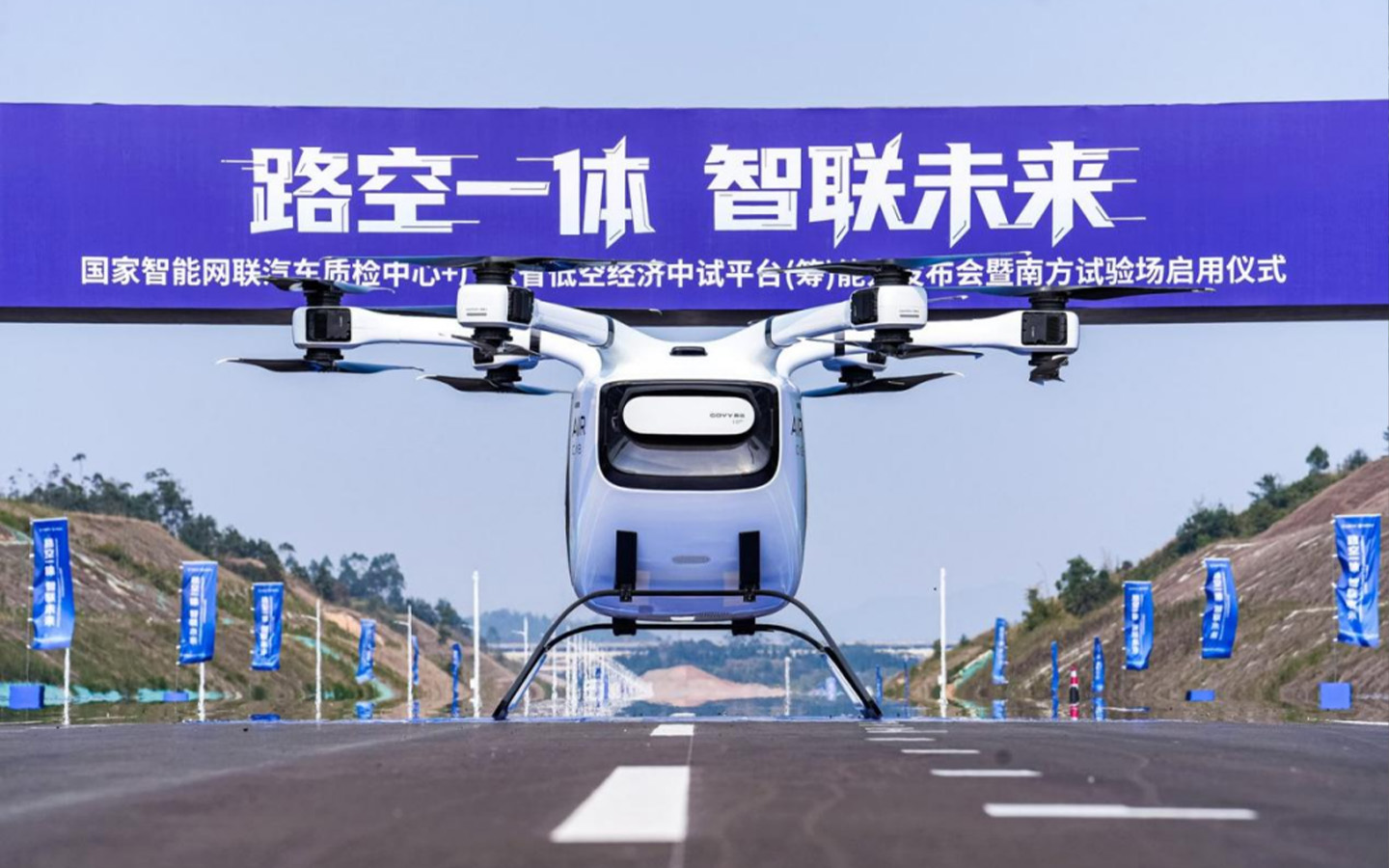
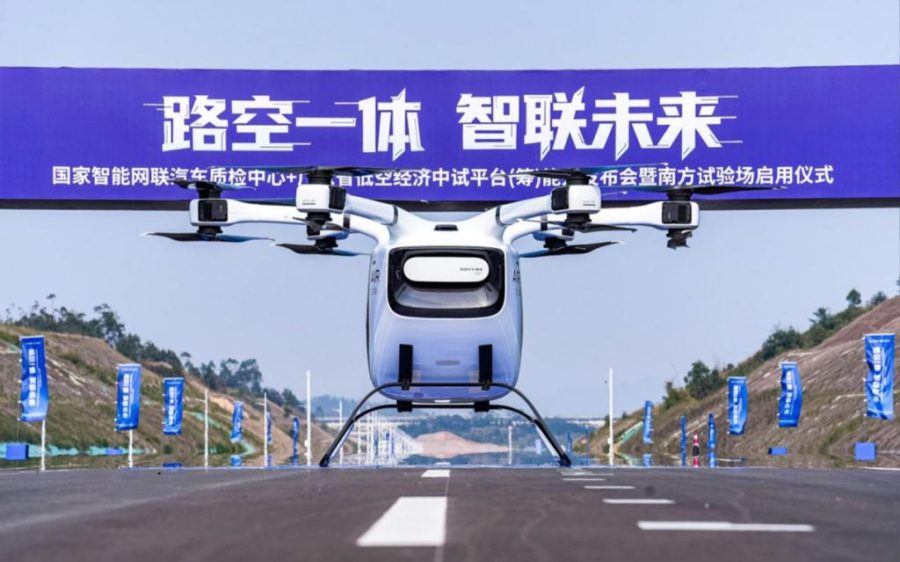
China’s first national road‑air integrated testing base has opened in northern Guangdong, giving the Greater Bay Area a flagship proving ground for both autonomous vehicles and flying cars. The facility, in Xinfeng county, Shaoguan, officially went into operation on 20 March and is the first large‑scale national testing ground in the country with its own approved airspace and combined road‑and‑air testing capabilities.
Jointly built by five partners including the China Automotive Engineering Research Institute and Guangzhou‑based GAC Group, the site covers about 573 hectares – around 1,400 acres – and represents a total investment of more than 3.6 billion yuan. It has been designated both as the National Intelligent Connected Vehicle Quality Inspection and Testing Center (Guangdong) and as a pilot platform for the province’s fast‑growing low‑altitude economy.
At its core is an intelligent connected new energy vehicle testing centre that doubles as China’s first national R&D and testing hub for flying cars. The complex uses a “three‑in‑one” architecture that integrates low‑altitude operations, physical test tracks and laboratories, allowing cross‑domain verification of vehicles, aircraft, networks and airspace on a single site. It can handle more than 100 test scenarios for autonomous and connected vehicles and low‑altitude aircraft, with maximum road test speeds of 280 km/h and flight tests up to 1,200 metres.
[See more: Guangzhou unveils 10-year plan to build ‘Sky City’ and boost low-altitude economy]
Infrastructure includes an 8.5‑kilometre high‑speed loop, a 300‑metre‑diameter dynamic plaza said to be the largest single test pad of its kind in China, an 1,800‑metre dynamic performance road and a comprehensive road section covering 34 types of pavement spectrum. On the aviation side, the base provides at least six long straight taxiways, more than four vertical take‑off and landing pads, a 3,645‑square‑metre integrated service hangar and a dedicated flying‑car powertrain laboratory. Supporting systems include 240‑kilowatt fast‑charging piles, 5G‑Advanced base stations, all‑weather monitoring and a low‑altitude digital supervision platform.
Developers have already begun using the site to validate next‑generation mobility products. In July 2025, the L4‑level Robotaxi jointly developed by Didi Autonomous Driving and GAC Aion completed what was described as the industry’s first durability and reliability test conducted entirely in autonomous‑driving mode at the centre. Didi executive Tao Haiyan said the facility’s road spectra and local support team allow “one‑stop” validation across the full development cycle for L4 Robotaxi models.
The launch of the Shaoguan base comes as Guangdong moves aggressively to build a low‑altitude economy worth more than 300 billion yuan by 2026, backed by a provincial action plan that calls for 2,500 new drone take‑off and landing points and 20 helicopter pads this year. Provincial officials say the new testing ground fills a gap in national infrastructure for integrated road‑air verification and will support the Greater Bay Area’s ambitions in intelligent vehicles, eVTOLs and related supply chains.