Experts predict that significant infrastructure upgrades and stronger industry integration will unlock greater potential for the partnership between Shenzhen and Hong Kong.
The Shenzhen government’s 2026 work report, delivered on Monday, outlined the city’s commitment to deeper cross-boundary connectivity, prioritising the Hetao technology park and service trade cooperation within Qianhai. The innovation hub also vowed to enhance collaboration with nearby municipalities to propel both regional and national development, China Daily reports.
In a move aimed at fostering “closer and more pragmatic” ties with Hong Kong, Shenzhen intends to open the newly refurbished Huanggang Port this year. The renovation is expected to dramatically improve customs clearance, reducing the processing time for passengers from a previous half-hour to just five minutes.
Situated within the Shenzhen section of the Hong Kong-Shenzhen Innovation and Technology Park, the new facility is a 24-hour crossing designated for passenger-only inspection, with a projected peak daily capacity of 300,000 travellers.
Zhang Guoping, an associate researcher at the Shenzhen Academy of Social Sciences, told China Daily that the Huanggang Port’s upgrade does more than simply improve efficiency; it integrates the port’s services with international science and technology innovation, thus achieving a “value re-creation” of the zone between Shenzhen and the SAR.
[See more: Greater Bay Area emerging as Asia-Pacific’s next nexus of growth, says top economist]
The port’s completion will also free up approximately 500,000 square metres of land for the Hetao technology park’s expansion. Furthermore, to ease travel for researchers and the transport of scientific apparatus, Shenzhen is accelerating the construction of a river-crossing bridge in western Hetao and upgrading a dedicated immigration passage known as the “No 1 Channel.” Zhang believes these Hetao initiatives will help establish a complete technology transfer ecosystem and create a closed-loop innovation system between the two cities.
Luohu and Sha Tau Kok are also undergoing modernisation as part of Shenzhen’s strategy to develop its checkpoints. These areas are planned for transformation into new centres for cross-boundary tourism and consumer partnerships, serving as key connections to Hong Kong’s Northern Metropolis programme.
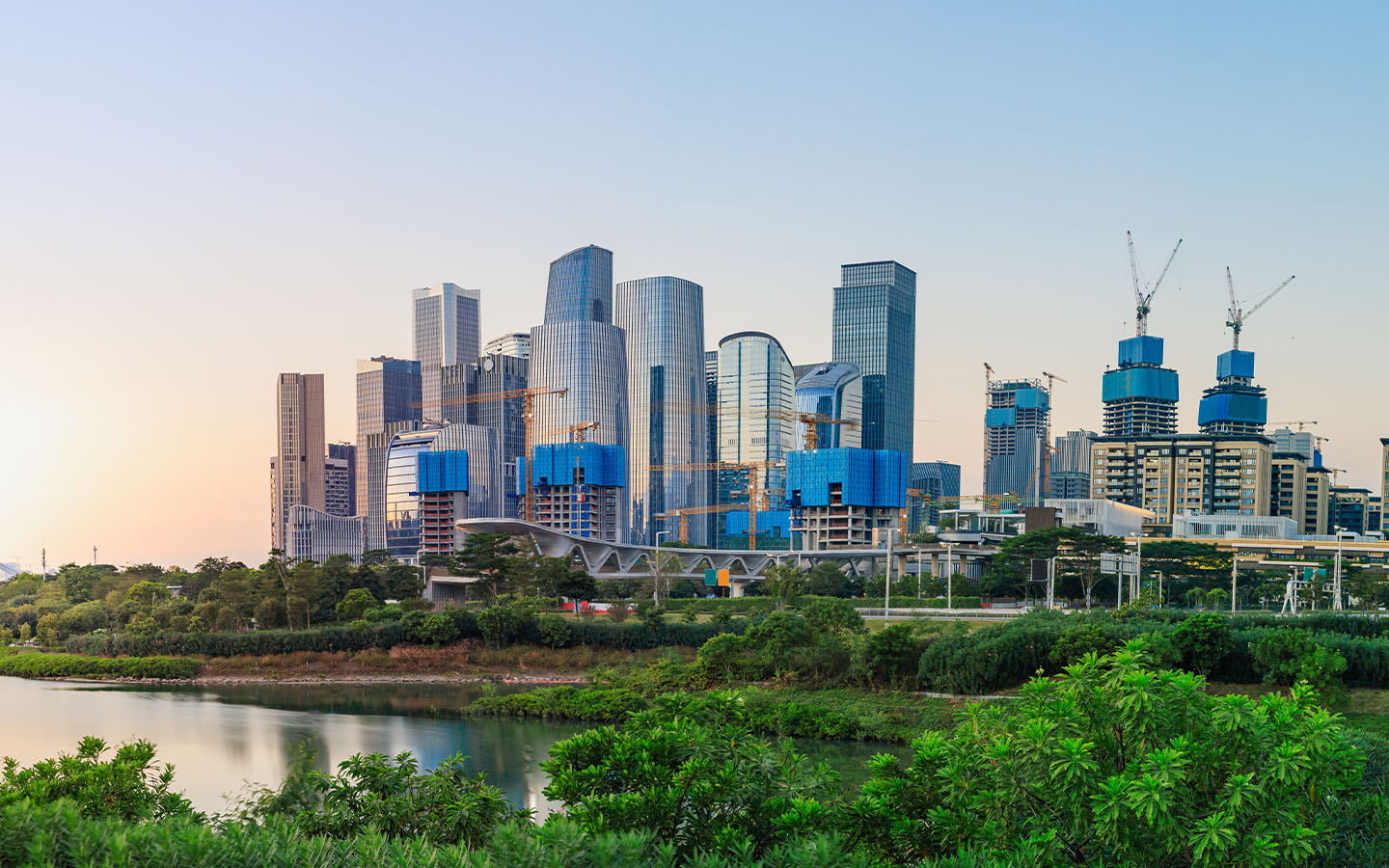
The work report further emphasised the need for comprehensive reforms in Qianhai, including accelerating the development of the Shenzhen-Hong Kong International Service City – a project aimed at promoting international economic and trade cooperation. Zhang expects Qianhai to become a highly integrated and efficient cooperation platform, aligning talent, capital, technology, and legal frameworks with both domestic and international markets.
Looking ahead, Zhang said that Shenzhen’s role as host of this year’s Asia-Pacific Economic Cooperation (APEC) summit presents fresh opportunities for the collaboration to reach new levels. He encouraged Shenzhen to leverage the conference to study Hong Kong’s expertise in promoting service trade, extending these practices to other mainland Chinese cities to support mainland enterprises in their global expansion.