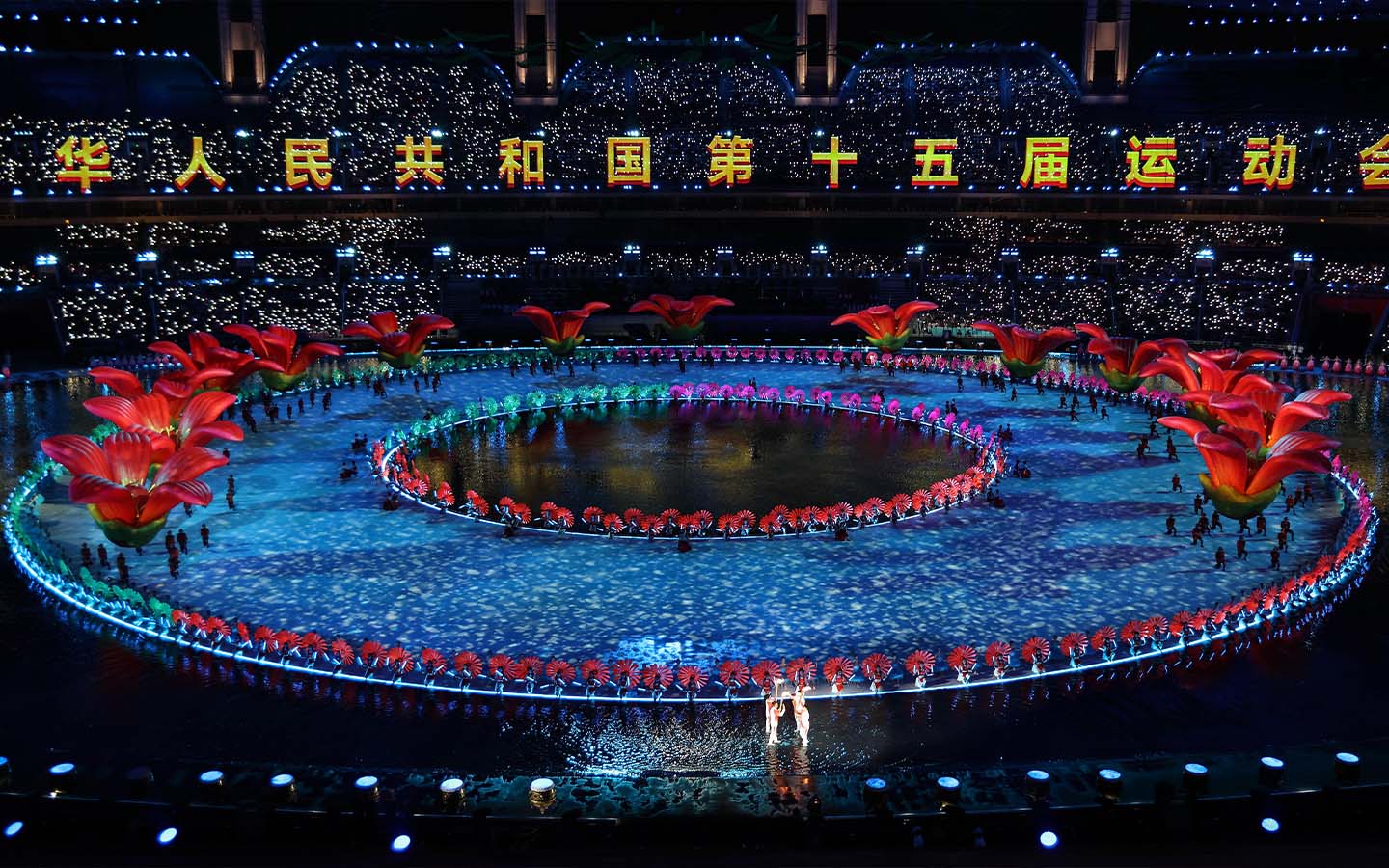

Macao and Hong Kong need to “review, improve and develop” their sports policies, especially following their co-hosting of the 15th National Games of China alongside Guangdong province.
That was the argument put forward by the University of Hong Kong academic, author and political commentator, Sonny Lo, who was speaking at the final 2025 breakfast gathering of the France Macau Chamber of Commerce (FMCC), which was held this morning.
According to Lo, the two SARs have traditionally adopted a “laissez faire” or “relatively decentralised system of sports government” that puts the onus of sports policy development and implementation on sports associations. This is in stark contrast to mainland China, where the sports sector is centrally regulated by the government, with a clear-cut and comprehensive sports law.
However, the academic pointed out that the model was starting to change, with the two cities now implementing a “hybrid model, combining central-level governance with association-level administration.” Moreover, the 2025 policy addresses of Macao and Hong Kong’s Chief Executives made mention of sports policy, which Lo said was “a good sign.”
Still, he called for further reform, pointing out that “the sports authorities in both SARs should consider a more dynamic and interactive approach to dealing with a variety of sports associations.” He added that “I personally hope that they [Macao and Hong Kong] can imitate and study the Chinese sports law.”

Lo offered several suggestions on how Macao and Hong Kong could strengthen their sports policies. Firstly, he called for sports associations to improve transparency by submitting yearly reports and allowing scheduled auditing and annual supervision.
He also recommended improved handling of scandals and controversies involving a local sports association, before suggesting a “top-down and bottom-up process” when it comes to the funding of sports associations, which involves the government assessing the performance of the various sports entities through annual key performance indicators (KPIs) and granting more funding to those that earn a high rating.
“Each sport federation should come up with the KPI – how the sports association be measured by the public, by the government and by themselves,” the professor noted.
Meanwhile, he called for indirectly-elected legislators representing the sports sector to pressure the government to do more and for the government to make sports policy “a higher priority” by giving more detail in the policy address.
Lo added that local sports facilities such as the Macao East Asia Dome and university football stadiums needed to undergo a government-backed review “for adequacy or inadequacy,” so as to “maximise” their potential.
[See more: Macao athletes shine at the National Disability and Special Olympics Games]
He further proposed that the SAR governments address the fostering of private sector involvement in sports and enabling sports associations to maximise the potential of local sports programme graduates.
Lo suggested employing tax-incentives to encourage private sector involvement in the sports sector and having Macao’s gaming concessionaires organise their own sports teams that participate in sporting events.
He also called for the SARs to leverage the success of the 15th National Games. He singled out the recent sports cooperation agreement signed by the three co-hosts, stressing that “sports associations in the two cities should capitalise on this agreement to collaborate with Greater Bay Area (GBA) cities in a more intensive manner.”
Lastly, the expert suggested that Macao and Hong Kong co-host more regional events, a task which has been made all the easier thanks to Beijing’s backing. As an example, Lo stated that Macao could consider staging a sports competition for Portuguese-speaking countries.
In his speech, Lo also highlighted the benefits that Macao and Hong Kong would reap from a stronger sports policy. The academic argued that sports can be used to facilitate social development, economic growth and a stronger local and Chinese national identity.
The next FMCC talk of 2026 is scheduled to take place on 28 January.