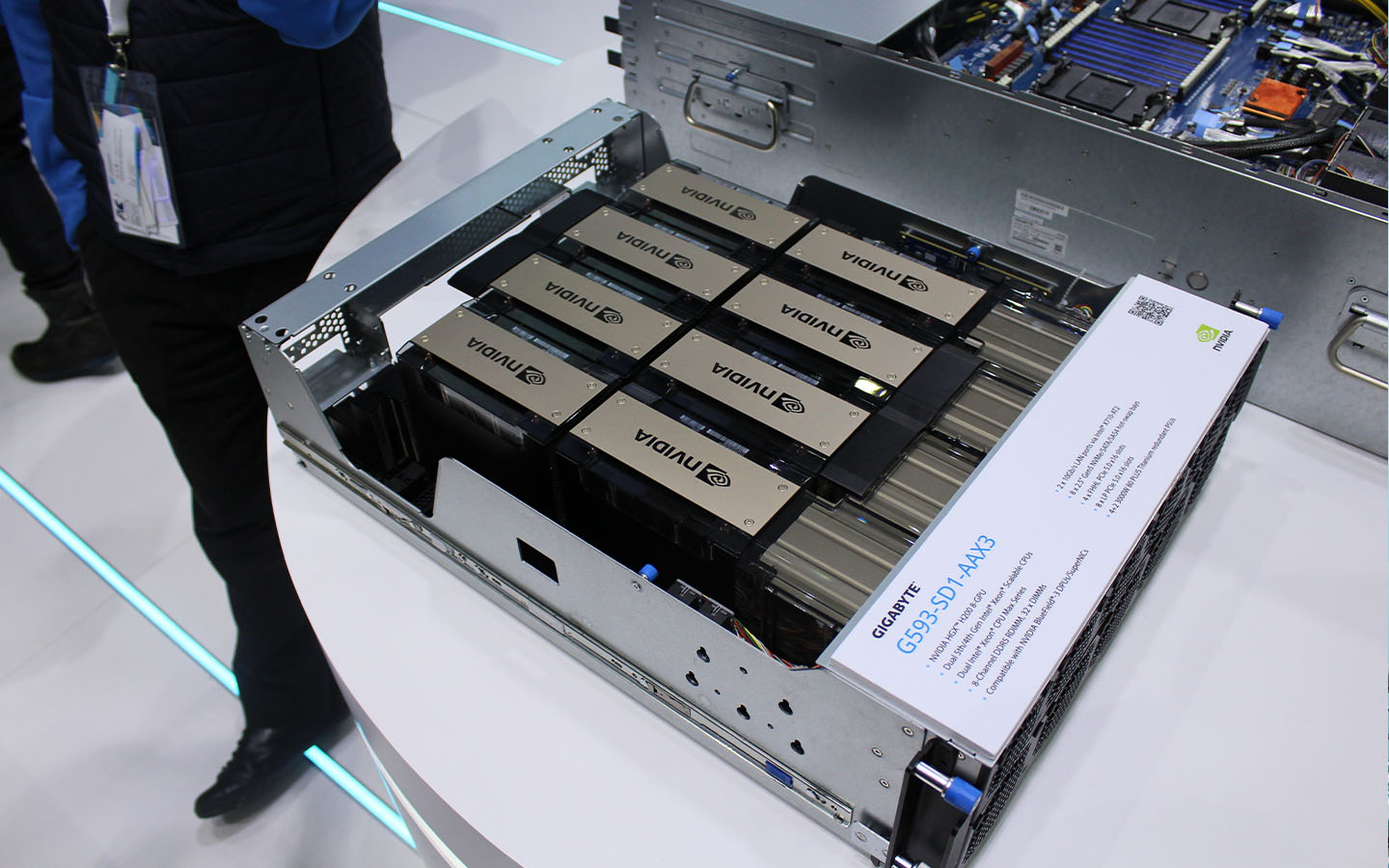
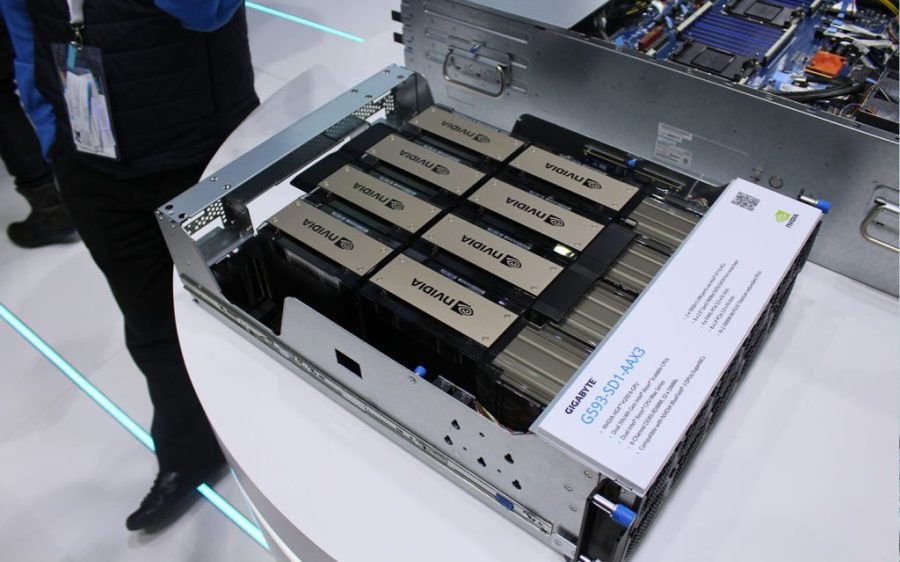
US President Donald Trump has announced he will no longer bar Nvidia from selling its advanced H200 AI chips to China. The move is a dramatic about-face from his earlier efforts to stymie China’s advancement by restricting Beijing’s ability to acquire powerful technology.
In a Truth Social post today, the US President said Nvidia’s second-most powerful chip would be sold to “approved customers” in China and other nations “under conditions that allow for continued strong National Security.”
Trump noted that Nvidia’s most advanced chips, the Blackwell and the yet-to-be-released Rubin, would not be included in the deal. This is consistent with the leader’s stance that the most cutting-edge chips would remain exclusively for domestic use.
Meanwhile, the US is set to receive a 25 percent cut from the sale of the H200 chips. This arrangement is similar to a deal struck in August in which Nvidia and AMD agreed to give the US government 15 percent of their chip sale revenue in exchange for licenses to export Nvidia’s H20 and AMD’s MI308 chips to China.
The president mentioned that the H200 deal was in the process of being finalised by the Department of Commerce. He added that similar arrangements would be implemented for other American chip makers such as AMD and Intel.
[See more: ‘China is going to win the AI race,’ says Nvidia boss]
“We applaud President Trump’s decision to allow America’s chip industry to compete to support high paying jobs and manufacturing in America,” Nvidia said in a statement provided to various media outlets. “Offering H200 to approved commercial customers, vetted by the Department of Commerce, strikes a thoughtful balance that is great for America.”
Following Trump’s announcement, Nvidia’s stock experienced a slight bump of more than 2 percent.
Once in place, the deal is expected to result in significant financial gains for the US chip manufacturer, which has seen its revenue weakened due to trade restrictions. Earlier government restrictions on its less advanced H20 chips resulted in the firm reporting a revenue loss of US$8 billion.
Speaking to Al Jazeera, Chinese tech expert Tilly Zhang said that Trump’s decision to approve the export of the H200 chips appears to be the result of two factors – the overriding practicalities of boosting the US’s market share and revenue, and lobbying from Nvidia head Jensen Huang.
Huang had previously voiced frustration over US chip export restrictions, warning that Chinese firms would simply substitute the Nvidia line of products with domestically-made chips.
America’s chip curbs are part of the ongoing US-China trade war, which escalated considerably earlier this year after Trump threatened to impose 100 percent tariffs against Chinese goods. A series of talks have helped to reduce tensions, culminating in a trade truce in October that saw both sides make concessions.