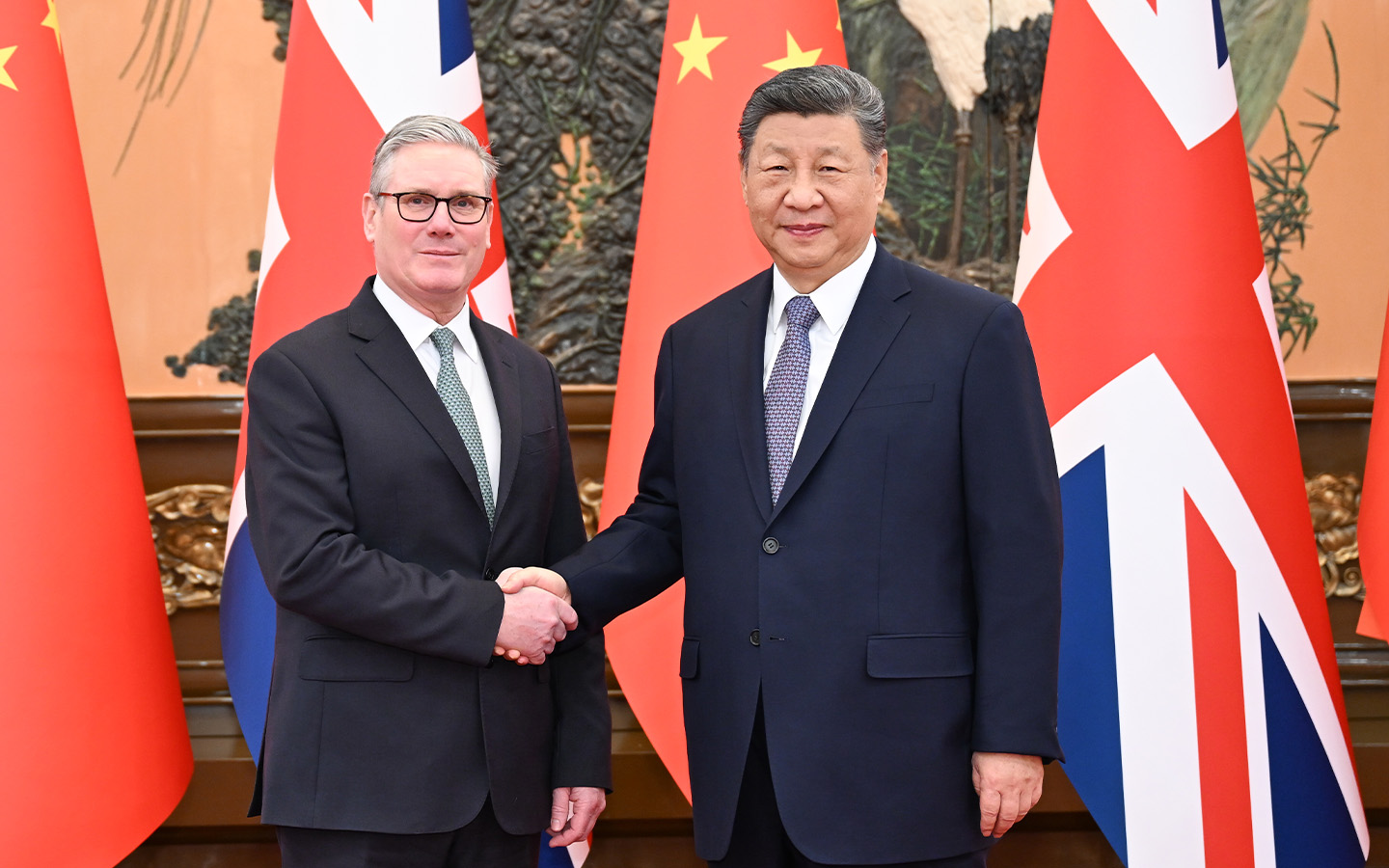
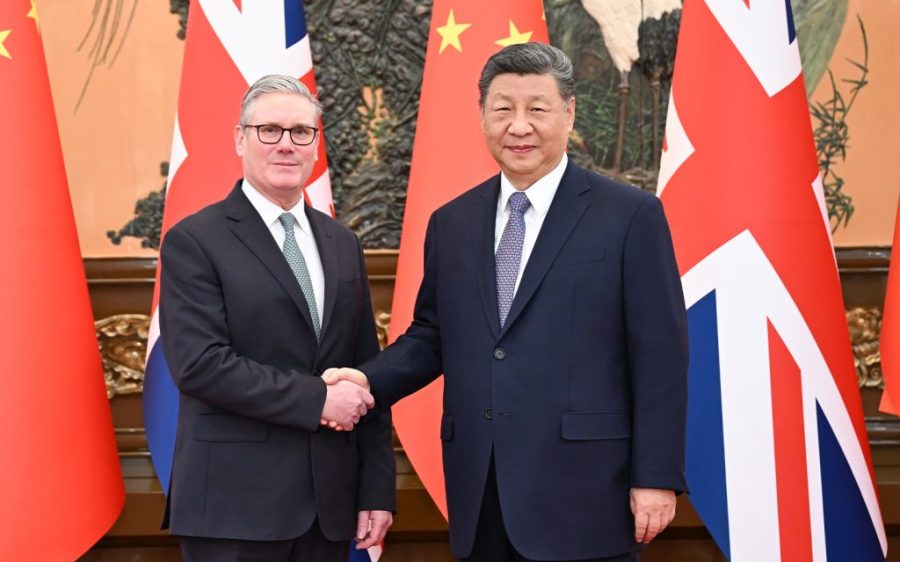
China and the UK have announced several concrete measures since UK Prime Minister Keir Starmer arrived in Beijing on Wednesday, marking the most substantive thawing in bilateral relations in nearly a decade. These cover trade concessions, access to China for UK passport holders, and business deals, multiple media outlets report.
During Starmer’s 80-minute meeting with President Xi Jinping in Beijing yesterday – double the scheduled time – Xi noted that the two countries had “experienced twists and turns in previous years,” which weren’t in either’s interest. “In the current turbulent and ever-changing international situation … China and the UK need to strengthen dialogue and cooperation to maintain world peace and stability,” he said.
Beijing has agreed to cut import tariffs on UK whisky from 10 percent to 5 percent, while the UK-headquartered drug company AstraZeneca announced it would invest US$15 billion in China through 2030. More than 50 business executives from the UK accompanied Starmer on his state visit, eager to improve access to the massive Chinese market – particularly for professional and financial services.
Officials have also announced British passport holders will be granted visa-free entry to China for stays of up to 30 days, as soon as technical arrangements are finalised, bringing the UK into line with around 50 other countries already covered by China’s unilateral visa relaxation policy.
[See more: UK Prime Minister Keir Starmer is the latest European leader to court Beijing]
Following Starmer’s talks with Premier Li Qiang, the two sides witnessed the signing of cooperation documents covering economy, trade, agriculture, food, media, education and market regulation. Li said China was willing to deepen cooperation in finance, clean energy, artificial intelligence, advanced manufacturing and the digital economy, while calling for fair treatment of Chinese firms operating in the UK.
Law enforcement cooperation was another focus for Starmer’s visit, which saw Britain and China agree to work together to disrupt the supply chains of small boat engines and related equipment used by migrant smuggling networks operating across the English Channel. More than 60 percent of engines seized from smuggling gangs last year were branded as Chinese-made.
While relations between China and the UK had deteriorated sharply in recent years over issues including Hong Kong’s governance, national security concerns linked to Chinese technology firms, and Beijing’s ties with Russia, both sides appear eager for a reset amid growing global unpredictability and fragmentation caused by US President Donald Trump.
Starmer’s China visit – the first by a UK Prime Minister in eight years – follows a flurry of similar diplomatic efforts by Western leaders seeking to diversify their trade ties. This month alone saw Xi meet with Canadian Prime Minister Mark Carney, Finnish Prime Minister Petteri Orpo and Irish Taoiseach Micheál Martin. France’s President, Emmanuel Macron, visited Beijing in December while German Chancellor Friedrich Merz is expected to head there in late February.