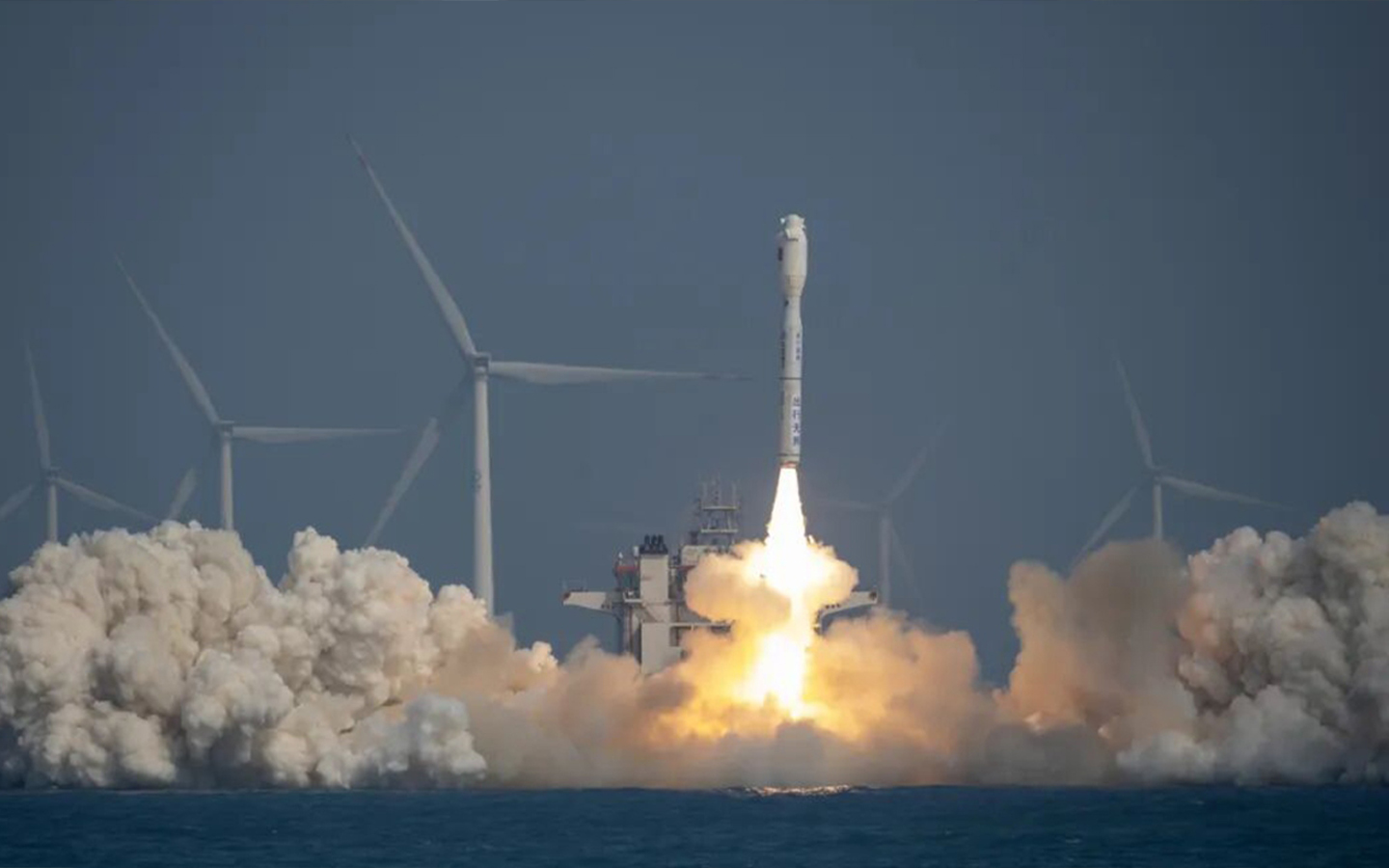
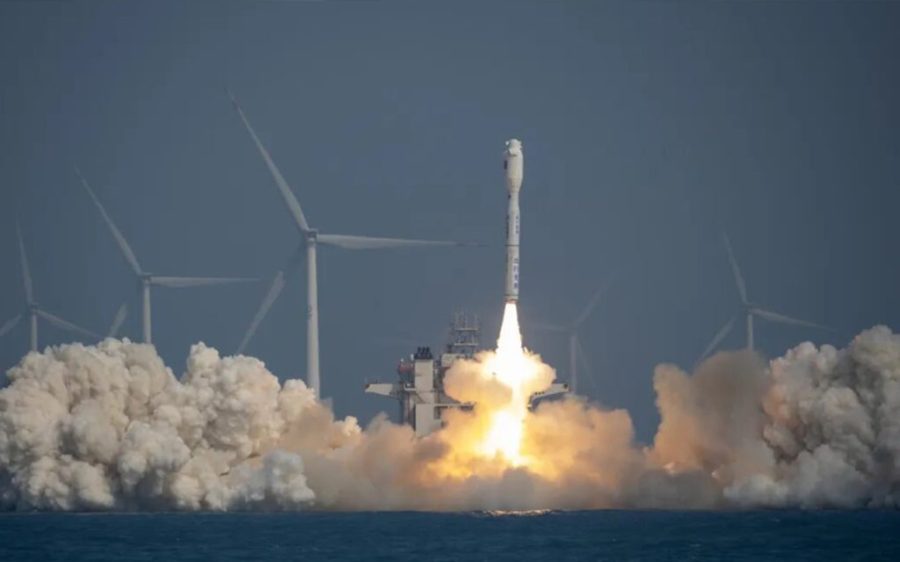
A single rocket launched seven satellites on Thursday from waters near the city of Yangjiang, Guangdong, heralding a new milestone for intelligent remote-sensing technology due to the inclusion of the CUHK No.1 satellite.
CUHK No.1 is the world’s first artificial intelligence large-language-model satellite dedicated to urban sustainable development, the Global Times reports. The Earth-observation satellite, developed in collaboration with the Chinese University of Hong Kong (CUHK), uniquely integrates high-resolution remote sensing with AI
The satellite is the first globally to successfully realise the onboard deployment of the DeepSeek large language model. This groundbreaking capability allows the satellite to conduct near-real-time data analysis and information extraction while in orbit. As a result, the technology overcomes the traditional process of sending vast amounts of raw data back to Earth for processing, which often leads to delayed results.
Ma Peifeng, the chief designer for the project, told the Times that his team optimised and streamlined the DeepSeek model to run directly on the satellite. This enables the satellite to identify targets and extract features from multispectral data in orbit, shifting the process from simple data collection to producing usable, timely information.
[See more: Brazil defies US pressure to create a joint space lab with China]
The Jielong-3 carrier rocket successfully carried the payload into its planned orbit after launching from the South China Sea. CUHK No.1 will also link up with an existing experimental satellite to establish Hong Kong’s first low-Earth-orbit constellation.
Equipped with a high-resolution multispectral optical remote-sensing camera, the satellite will provide refined environmental monitoring data, the Times says.
Once operational, it will offer high-precision geospatial information services for smart transport, emergency response, and environmental monitoring across the Greater Bay Area and other major international cities. It will also help support the future establishment of an International Satellite Data and Application Centre in Hong Kong.
Local authorities in Yangjiang said the successful sea launch marked the fourth commercial multi-satellite rideshare mission for the Jielong No.3 rocket.