
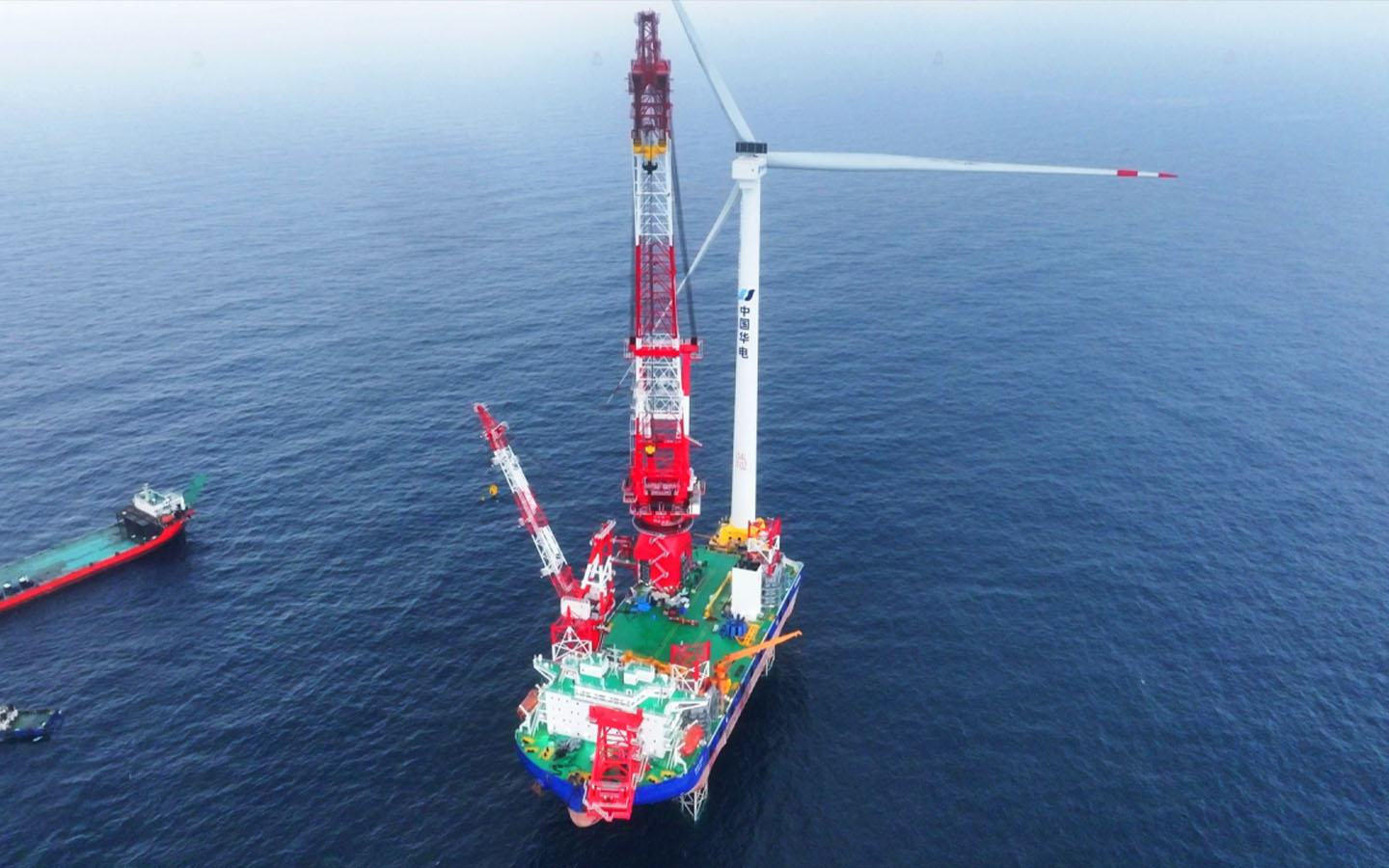
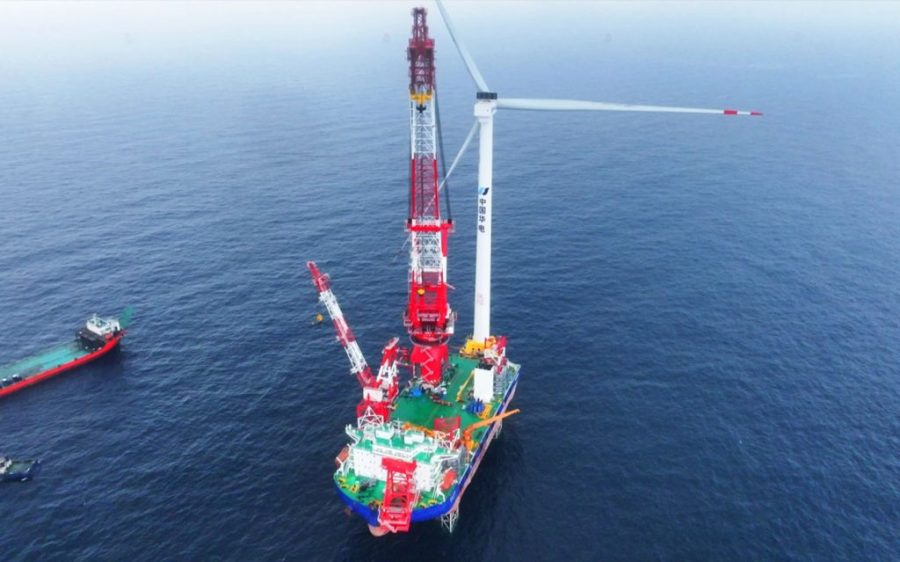
Construction has commenced on China’s farthest offshore wind power project, situated in waters south of Hailing Island in Yangjiang, Guangdong.
The installation of the first turbine on Thursday signalled the beginning of full-scale construction for the 500-megawatt facility, which is a key component of China’s extensive efforts to scale up its offshore wind generating capacity and accelerate the national transition towards green energy, the Global Times reports.
This wind farm, developed by China Huadian Corporation, is specifically designed to service the Greater Bay Area (GBA). Once operational, the project will help optimise the region’s energy mix by providing approximately 1.6 billion kilowatt-hours of clean electricity annually. The output is sufficient to meet the yearly demand of around 700,000 households, while simultaneously saving 500,000 tonnes of standard coal and mitigating 1.26 million tonnes of carbon dioxide emissions.
[See more: A major part of China’s economic growth in 2025 was powered by clean energy: analysis]
Located in the South China Sea, the wind farm covers an area of 54 square kilometres, with water depths ranging from 46 to 50 metres. Its centre is positioned 82 kilometres from the shore, reaching up to 89 kilometres at its farthest point, the Global Times says.
The project will install 31 individual turbines, each rated at 16.2 megawatts. This marks a technological breakthrough, as it is the country’s first use of 16.2 MW offshore wind turbines. Furthermore, the facility is designed to incorporate intelligent algorithms and big data for real-time condition monitoring, fault diagnosis, and co-ordinated operations and maintenance.
These technological features are anticipated to boost power generation by about 2 percent, decrease the overall failure rate by 20 percent, and increase the wind farm’s returns by between 5 and 10 percent.