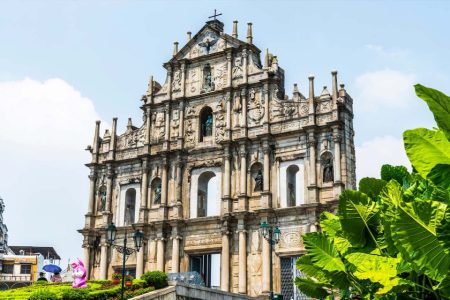
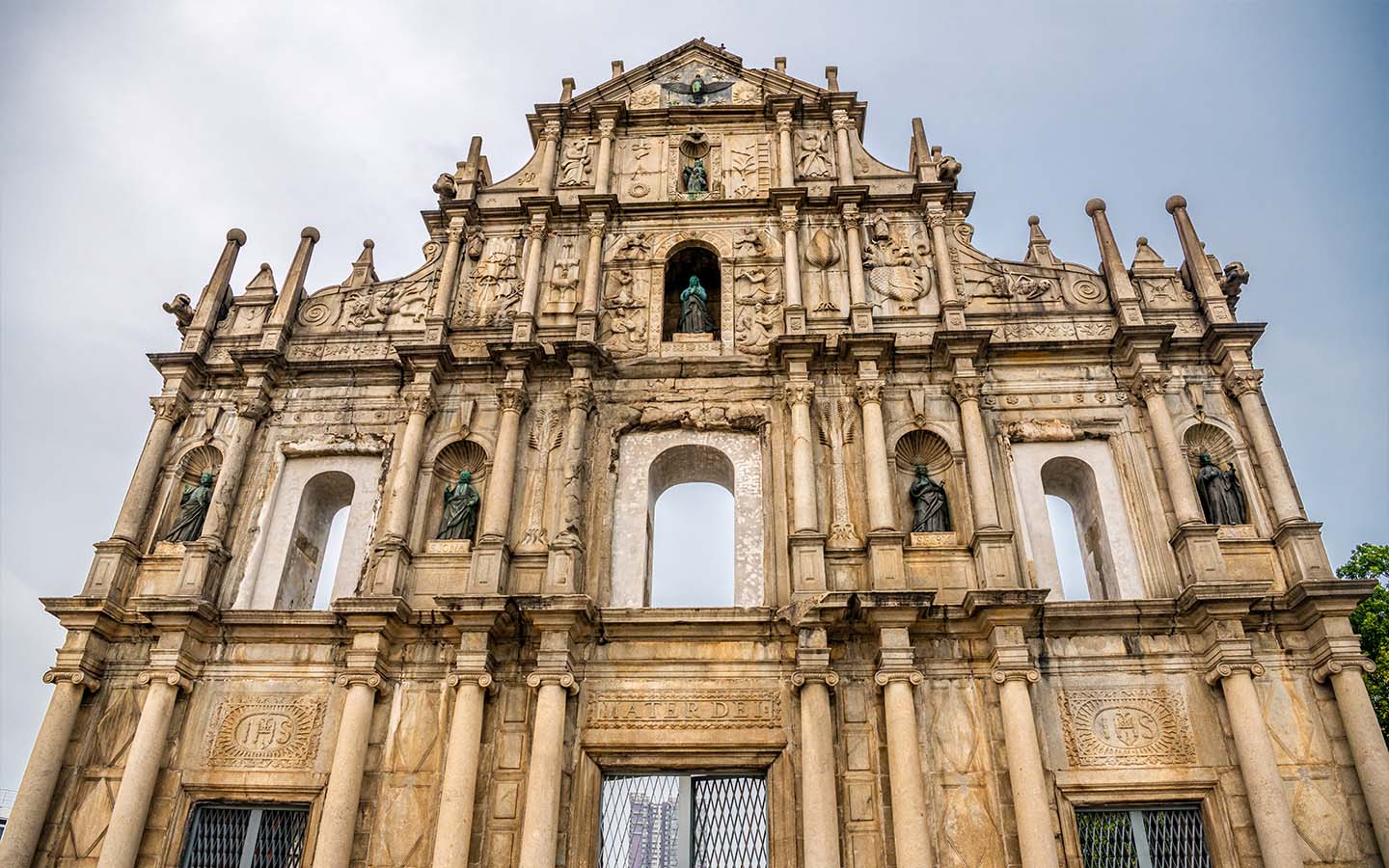
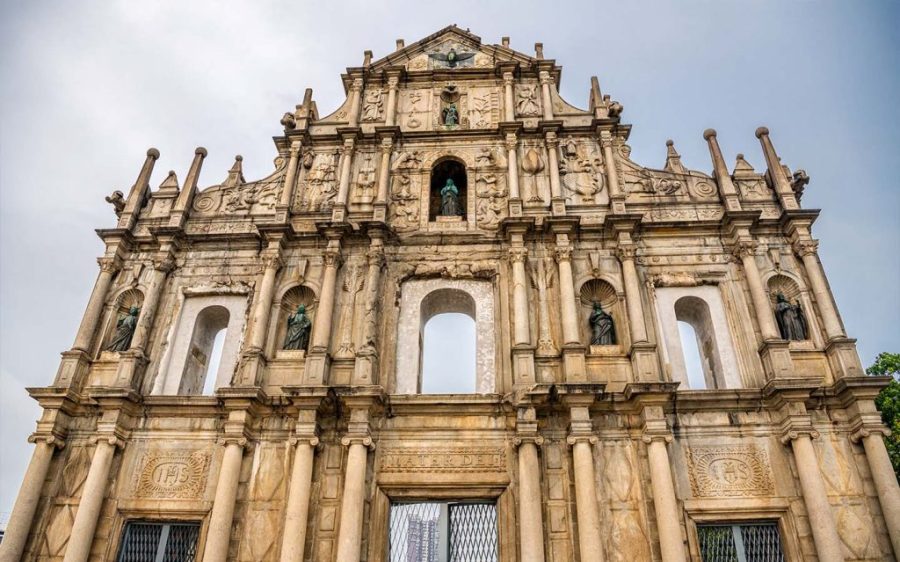
The latest phase of restoration work on the Ruins of St Paul’s is expected to be completed by mid-February, with specialists currently finishing repairs to the site’s bronze statues, including one of the highest and most deteriorated pieces on the façade – a dove.
Architectural heritage conservator Ip Kin Hong said on Sunday that the dove had been particularly challenging, requiring the involvement of structural engineers and bronze conservation experts, according to the Macau Post Daily.
Ip was speaking on the sidelines of a one-day symposium on cultural heritage conservation held at the Macao Museum of Art, where experts involved in the Ruins of St Paul’s restoration shared case studies and technical approaches drawn from the mainland and overseas.
She said the project reflected the integration of scientific analysis with traditional restoration methods, with teams first identifying the underlying causes of deterioration through testing and instrumentation before carrying out targeted repairs – rather than focusing solely on surface appearance. Ip noted that weather-related damage to the Chapel of Our Lady of Guia meant it would likely require similar work in the future.
[See more: These are things we’d really like to see on Macao’s List of Intangible Cultural Heritage]
She also highlighted Macao’s shortage of heritage restoration professionals, encouraging local science and engineering students to take on technical support roles in the field.
Speaking at the symposium, Cultural Affairs Bureau president Deland Leong Wai Man said the ruins’ façade was chosen as the first major project of the bureau’s heritage preservation centre.
She pointed to the UNESCO World Heritage site’s role as a symbol of centuries of cultural exchange between China and the West, noting that the restoration process continued this dialogue through use of traditional and contemporary techniques from different cultural backgrounds.
Leong said the centre aimed to assemble multinational teams for future projects and use Macao’s cultural heritage as a platform for broader international exchange.