
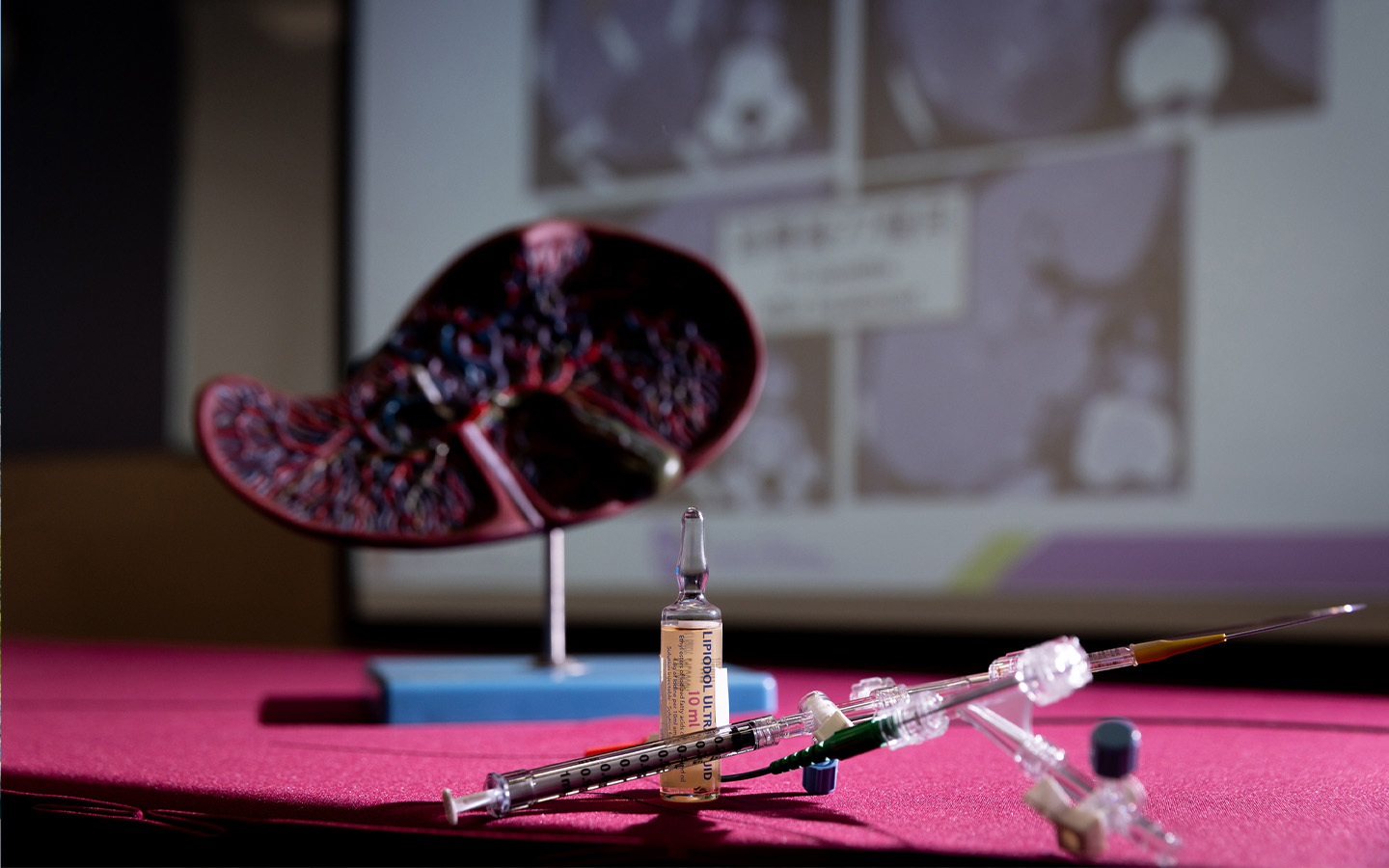
A new drug formulation developed by the Faculty of Medicine at The Chinese University of Hong Kong (CU Medicine) has demonstrated exceptional results in treating the most common form of liver cancer, intermediate-stage hepatocellular carcinoma (HCC).
The new treatment, known as aTACE, builds on an existing therapy (cTACE) by using a dehydrated form of the chemotherapy drug cisplatin, mixed with a fatty oil called lipiodol. Unlike the standard approach, where the drug is water-based and quickly carried away by the bloodstream, aTACE dissolves slowly. As a result, it can remain concentrated within the tumour for much longer, allowing it to keep working more effectively.
In a multicentre randomised trial involving 77 patients between 2016 and 2023, aTACE achieved a complete tumour response rate of 90 percent on imaging – nearly double that of conventional therapy. The median overall survival exceeded 53.3 months, a significant increase of 17.3 months compared to the cTACE group.
[See more: GBA Voices: Talking Dongguan with entrepreneur and racer Moritz Berrenberg]
Side effects were also generally fewer with aTACE, with most liver function abnormalities resolving within two weeks.
Professor Simon Yu Chun-ho from CU Medicine’s Department of Imaging and Interventional Radiology noted that despite decades of effort since the introduction of conventional chemoembolisation 39 years ago, significant breakthroughs had been lacking until now.
Dr Lee Kit-fai, Clinical Associate Professor in Hepatobiliary and Pancreatic Surgery at CU Medicine, said aTACE offered an ideal new option for managing intermediate-stage liver cancer, while Professor Stephen Chan Lam highlighted the therapy’s potential to benefit more patients through larger-scale trials.
Liver cancer ranks third among cancer deaths in Hong Kong. According to the Hospital Authority, more than 1,400 of the 1,700 new cases recorded in 2023 were HCC, with nearly half diagnosed at stages too advanced for surgical removal.